
Bestiary: the big beasts
Here are the heavyweights of the bestiary — the hoofed and the thick-skinned, beasts of a serious calibre. The African savanna and the Asian forest, from the elephant dreaming of its pension to the mouse-deer barely bigger than a pigeon. Some are dangerous, some are touching, and some behave astonishingly like us. The name and the camera settings are under each frame; the characters, as always, speak for themselves.
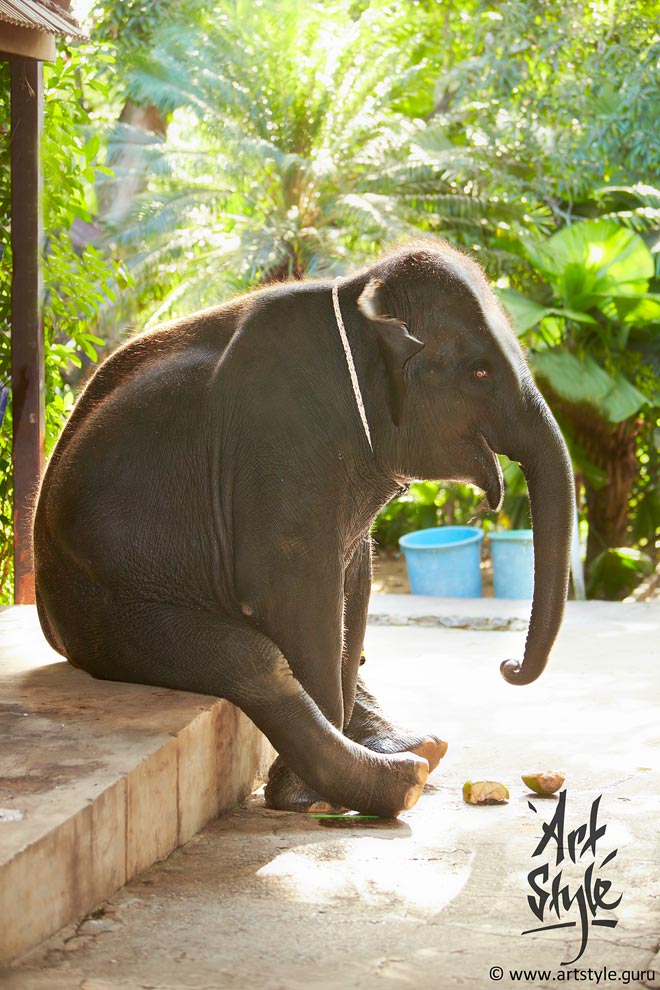
Indian Elephant
Canon EOS 5D Mark II + EF 70-200/2.8 L IS · 95 mm · f/2.8 · 1/100 s · ISO 640
The elephant is worn out after the show and is plainly thinking of one thing only: “When do I finally get to retire?” And his wish will come true: in Thailand, elephants are released from work at the age of fifty and sent to see out their days in a special sanctuary.
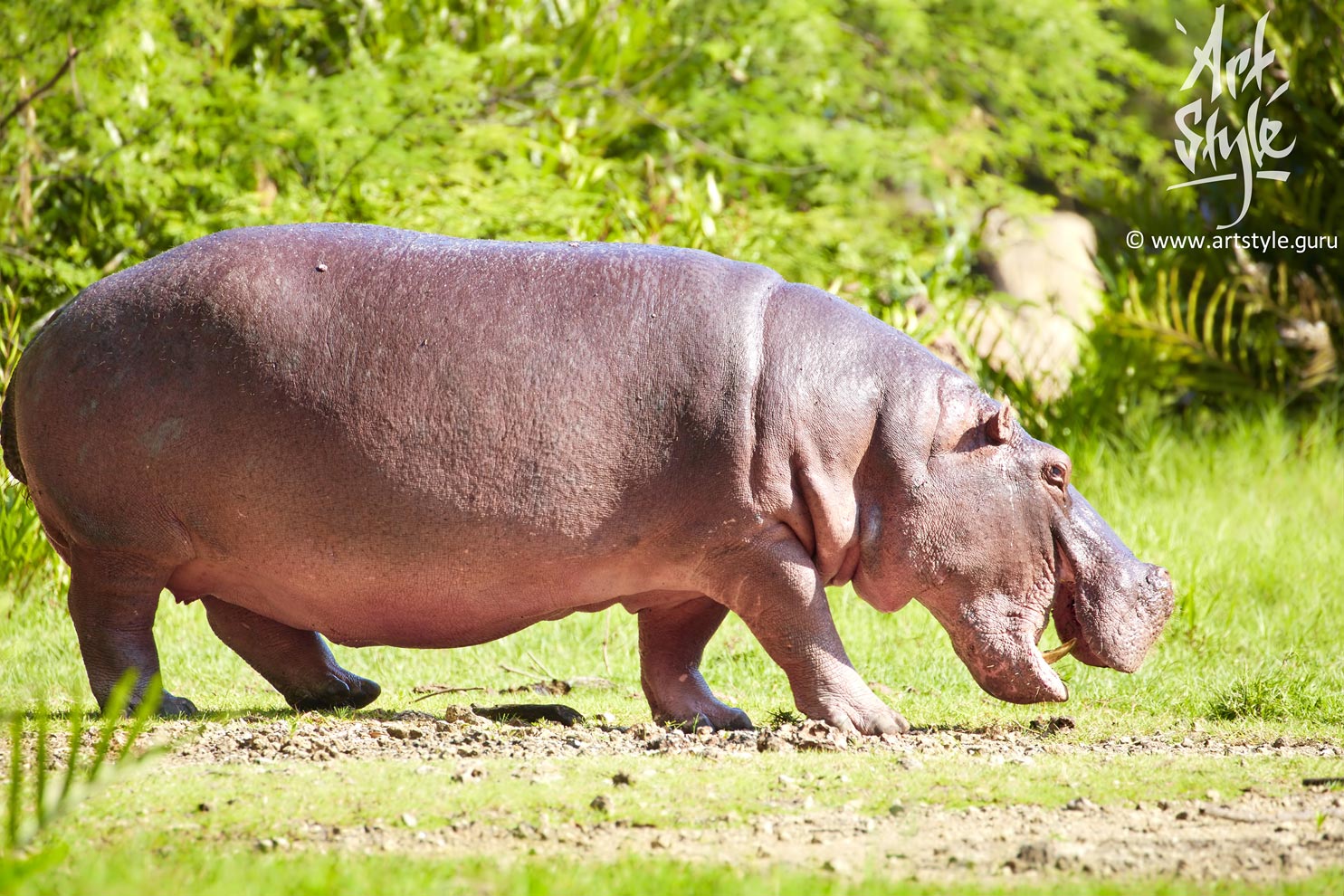
Hippopotamus
Canon EOS 5D Mark III + EF 100-400/4.5-5.6 L IS II + 1.4 ext III · 560 mm · f/8 · 1/200 s · ISO 400
One of the largest land mammals there is: only elephants and a few rhinos outweigh it, and a seasoned male tips the scales at nearly three tonnes. And yet, in the wild, hippos behave like the trashiest package tourists on holiday: they're loud, they snort, they wolf down whatever's going, and they relieve themselves on the move — flinging the lot in every direction with a brisk spin of the tail. The build and the skin colour only complete the resemblance. Modern biology, incidentally, holds the whale to be the hippo's closest relative — though, going by its manners, I'd file it the old-fashioned way, with the pigs.
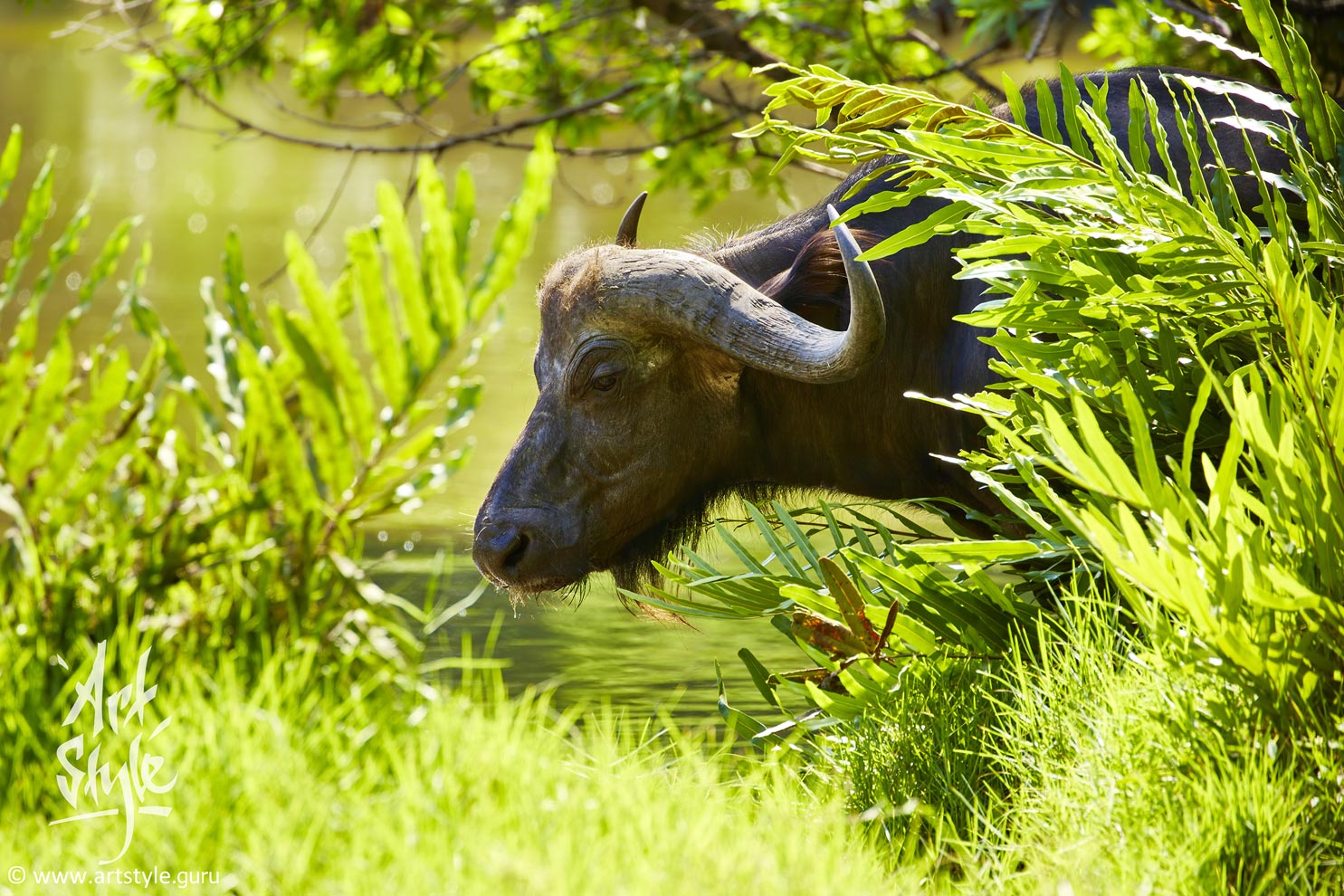
Cape Buffalo
Canon EOS 5D Mark III + EF 100-400/4.5-5.6 L IS II + 1.4 ext III · 560 mm · f/8 · 1/100 s · ISO 200
The Cape buffalo is a herbivore, yet across Africa it has more human lives to its name than the lion, the leopard and the Nile crocodile combined. The reason is simple: buffalo have been hunted since time immemorial, and they know it perfectly well. Following the motto “strike first or be nothing,” a buffalo that spots an armed human will often attack first, without waiting to be shot — and a wounded one charges every single time, no exceptions. Its eyesight is poor, and it can't really tell a hunter with a rifle from a peasant with a hoe (nor does it care to). Killing a charging buffalo is hard even with a gun: the hide on its head runs up to two centimetres thick, and the horns fuse into solid armour shielding a brain that is small and entirely unfazed by concussion. So every African country sets a minimum legal calibre for buffalo hunting — the sort of round special forces sometimes use to punch through heavy armour like a Hummer's.
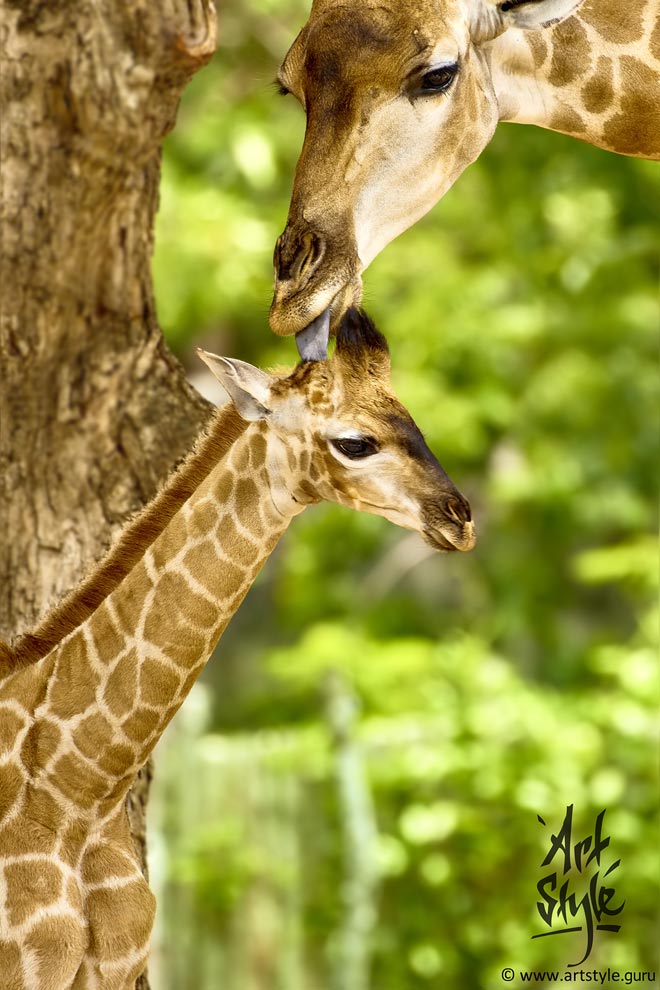
South African Giraffe (mother love)
Canon EOS 7D Mark II + EF 100-400mm f/4.5-5.6L IS II USM · 400 mm · f/5.6 · 1/200 s · ISO 200
Giraffe society is a harsh one: the female gives birth much as a Soviet collective-farm woman did a century ago — out in the field and standing up. As a result, the first thing a newborn giraffe experiences is a two-metre drop. Were it not for the soft bones and cartilage of the newborn, such a landing would mean a guaranteed fracture. When they communicate, giraffes can hum — a low-frequency, meditative drone; what for, science hasn't yet worked out (the Search for the Giraffe God lies beyond the scientific goals of Humanity). And come exam season, many a student becomes a bit giraffe-like too — a giraffe needs only 10 to 120 minutes of sleep a day.
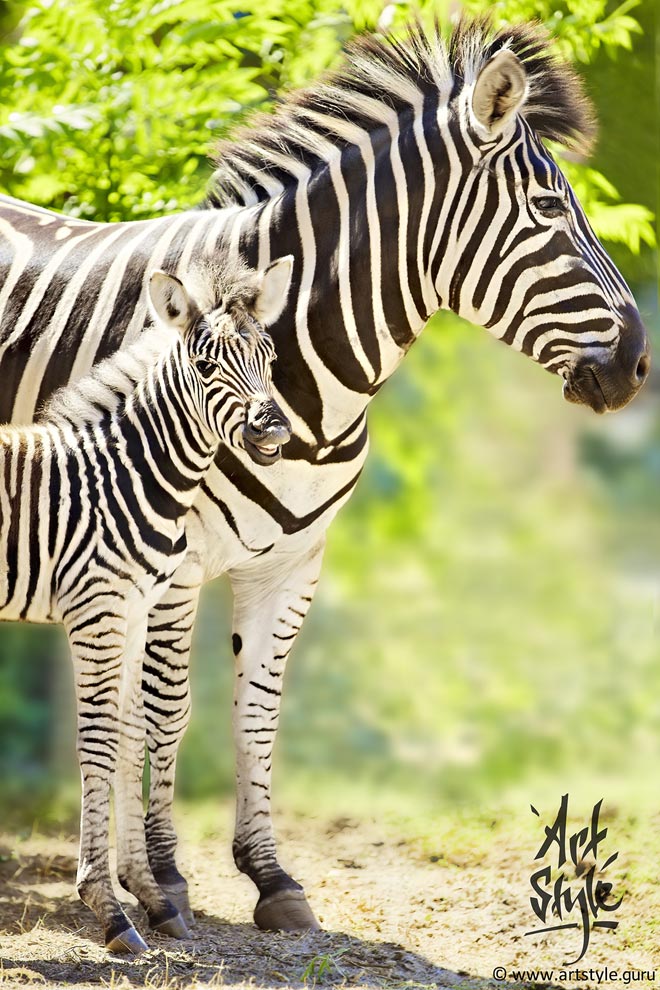
Plains Zebra with her foal
Canon EOS 5D Mark III + EF 70-200/2.8 L IS II + 1.4 ext III · 280 mm · f/4 · 1/200 s · ISO 320
A plains zebra with her three-day-old foal — being allowed to photograph one this young is a real privilege. While he's still so small, he and his mother are kept in a separate enclosure at Khao Kheow, away from visitors and from the other zebras alike.
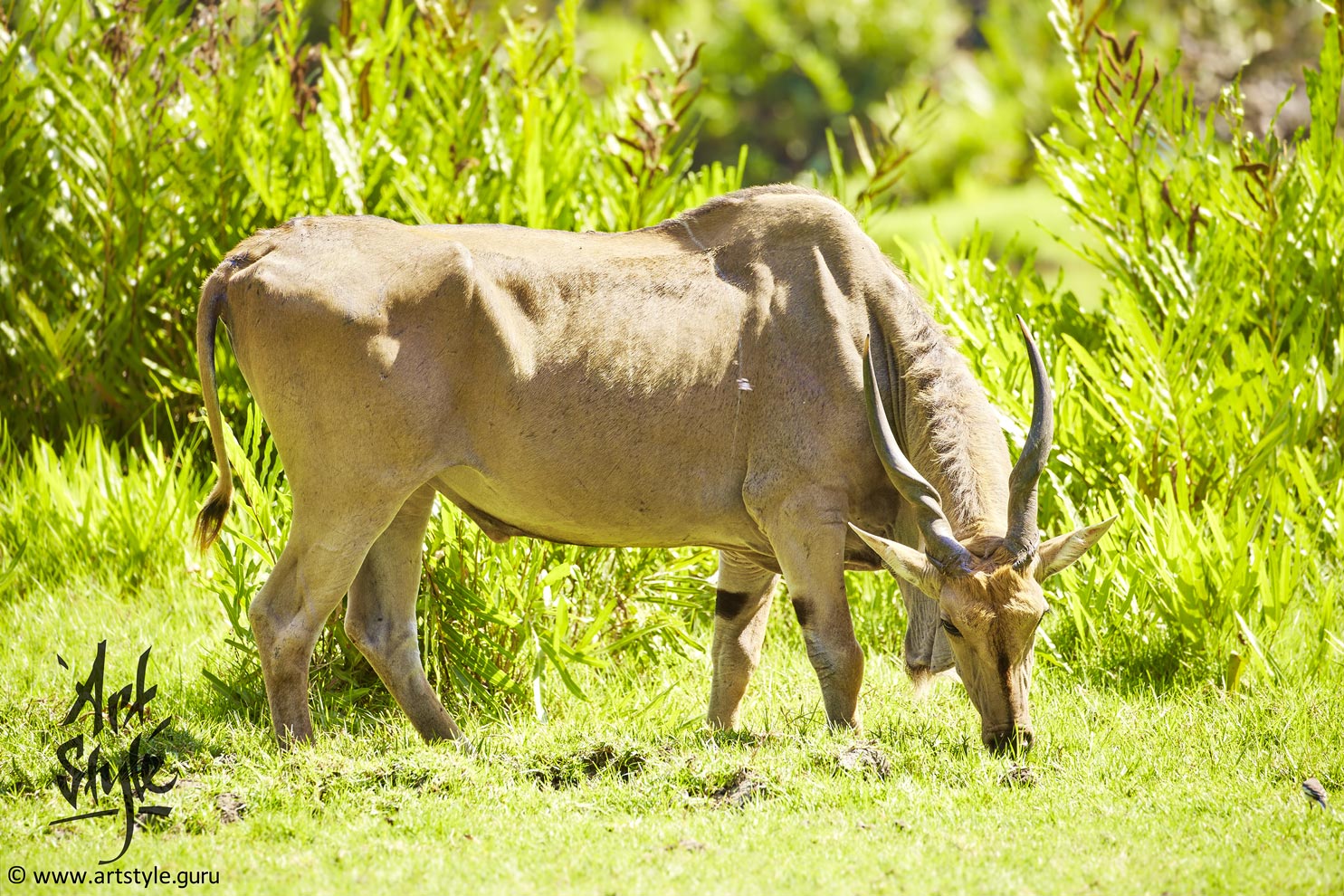
Common Eland, male
Canon EOS 5D Mark III + EF 100-400/4.5-5.6 L IS II · 321 mm · f/5.6 · 1/200 s · ISO 200
The eland is the largest of the antelopes, and it comes with a built-in biological rheostat: in a drought its body temperature climbs by a full 7 °C, which spares it from losing moisture through sweat. This male's hide is a mass of scars — the marks of fights over water with ostriches (and the ostrich is a dim, powerful and thoroughly domineering bird). The one thing that saves an eland in such a brawl is a sudden, loud bark: yes, these antelopes can bark.
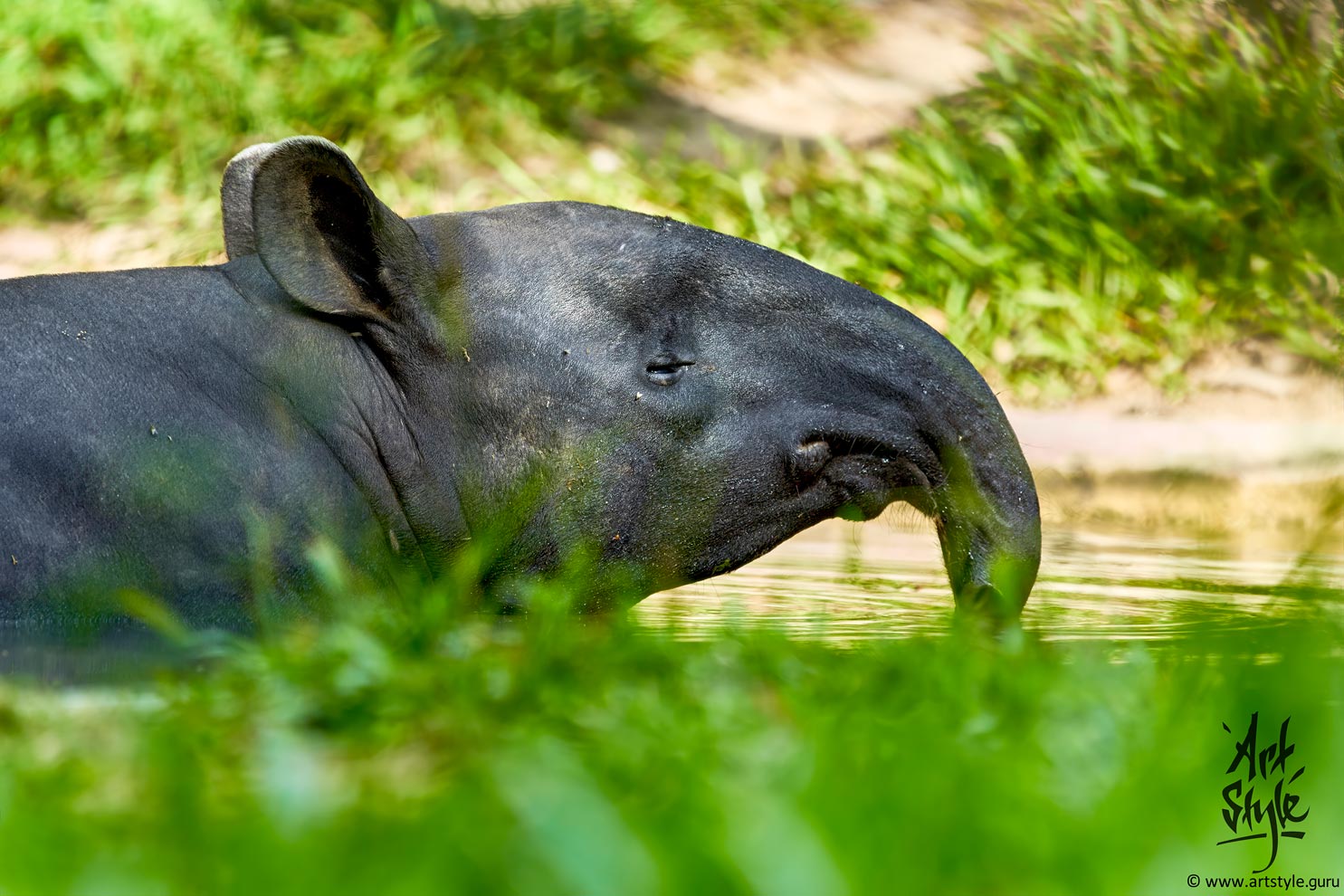
Malayan Tapir
Canon EOS 5D Mark III + EF 70-200/2.8 L IS II + 1.4x III · 280 mm · f/4 · 1/100 s · ISO 160
The Malayan tapir is an excellent swimmer and diver, and it uses its little trunk as a snorkel: when it dives, it keeps the tip above the surface and breathes away quite calmly.
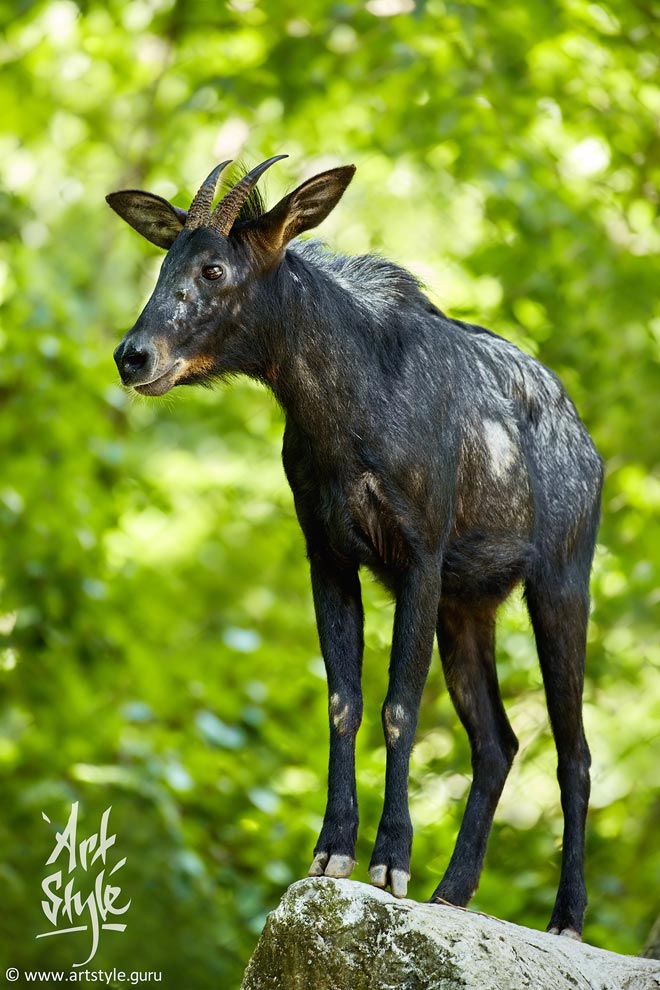
Sumatran Serow
Canon EOS 5D Mark III + EF 100-400/4.5-5.6 L IS II · 400 mm · f/5.6 · 1/100 s · ISO 640
The serow belongs to the goat tribe, and a good deal about it is remarkably human: in its marriages, for one, both sexes wear the horns. A grown animal holds a personal plot of some twenty hectares (among people, only the very richest old goats permit themselves as much). And don't confuse the serow with the chamois — they're altogether different genera.
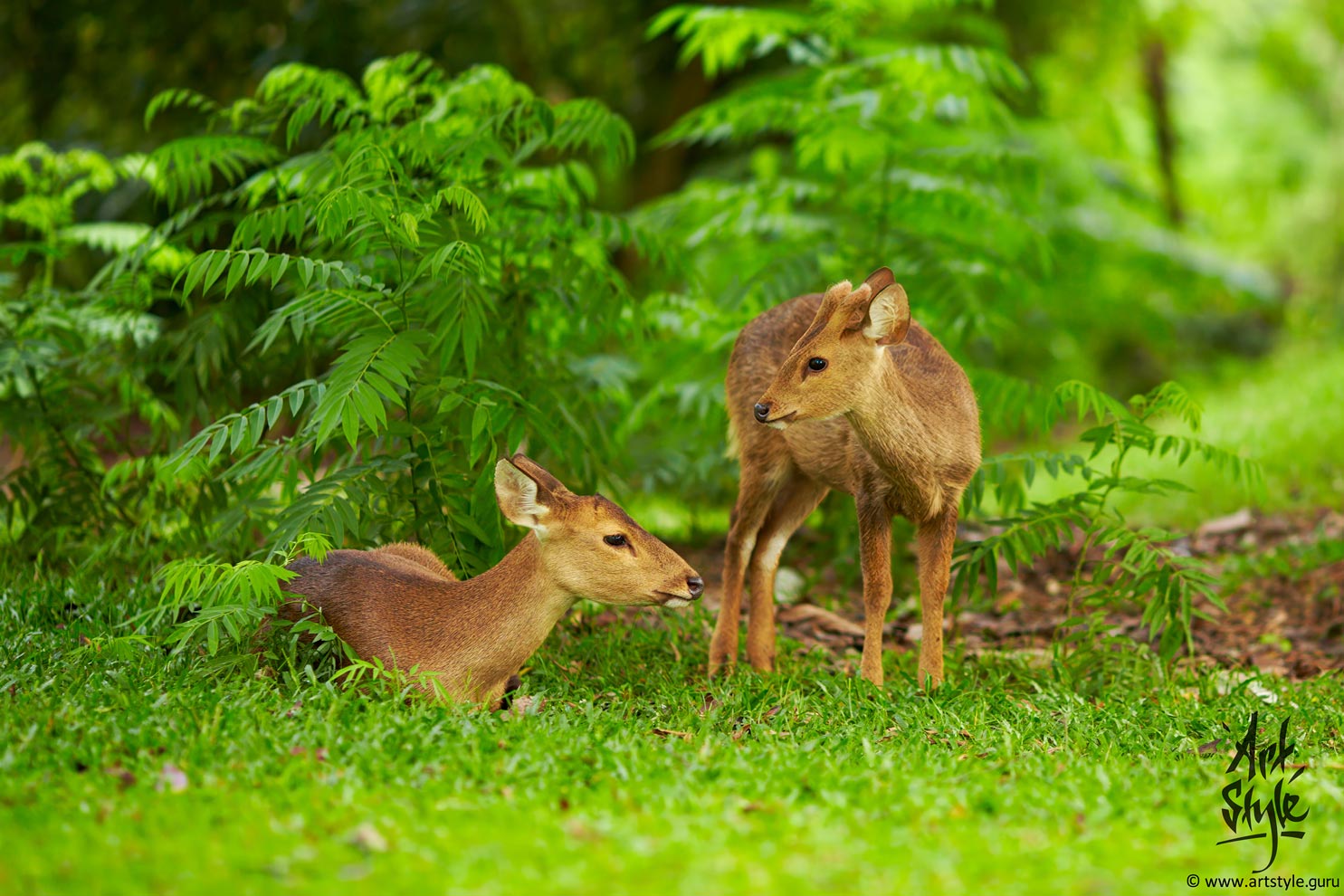
Barking Deer (muntjac), male & female
Canon EOS 5D Mark II + EF 135/2L · 135 mm · f/2 · 1/200 s · ISO 640
They earned the name “barking” for the sharp, distinctly dog-like cry with which they raise the alarm. The buck's antlers are short, so he fights for territory not with those but with his “tusks” — the downward-curving upper canines. And muntjacs mark their patch with scent glands, the facial ones included: with these they tag the ground, and now and then an inattentive neighbour into the bargain.
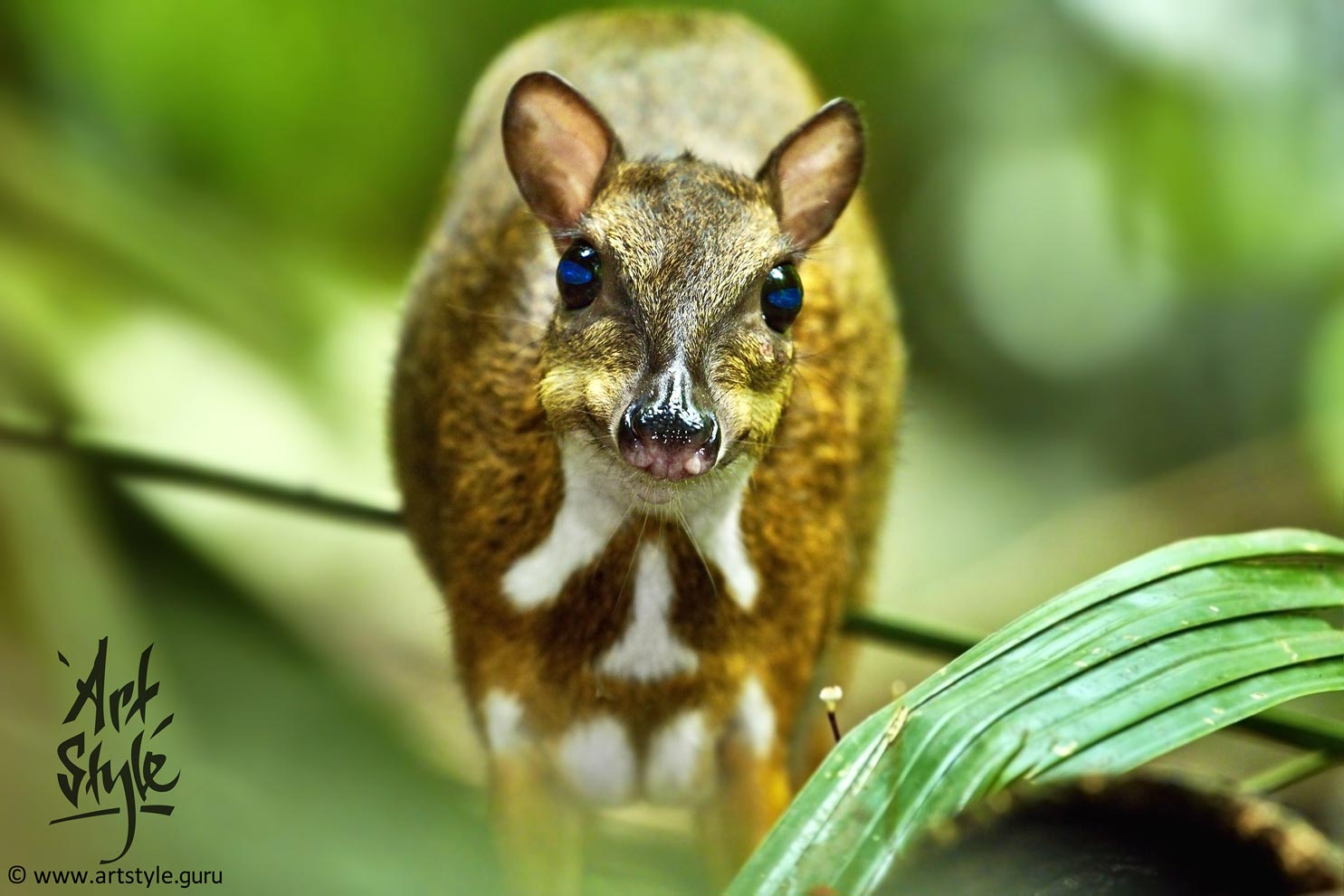
Lesser Mouse-deer (Kanchil), female
Canon EOS 5D Mark III + EF 100-400/4.5-5.6 L IS II + 1.4 ext III · 560 mm · f/8 · 1/160 s · ISO 2500
The smallest deer in the world — barely bigger than a pigeon. It's shy to the point of absurdity, which has earned it the nickname “the scaredy-deer” among photographers. The males have little tusks that come into play when danger threatens. The females, though, are remarkable for something else: they can fall pregnant a mere couple of hours after giving birth, so many of them go through life permanently expecting (we've met the type — I had a classmate rather like that back in high school).