
Bestiary: herons, egrets & the water's edge
Wherever fresh water meets the land, the habitat is always a rich one. Photographers love such places not just for the biodiversity but for the chance to get close enough for a good frame (in a forest or thick undergrowth, animals notice a human long before the human notices them). This set gathers the dwellers of that water's edge — from the largest heron on earth to the snakebird that swims with nothing but its neck above the surface. The name and the camera settings are under each frame; the characters, as always, speak for themselves.
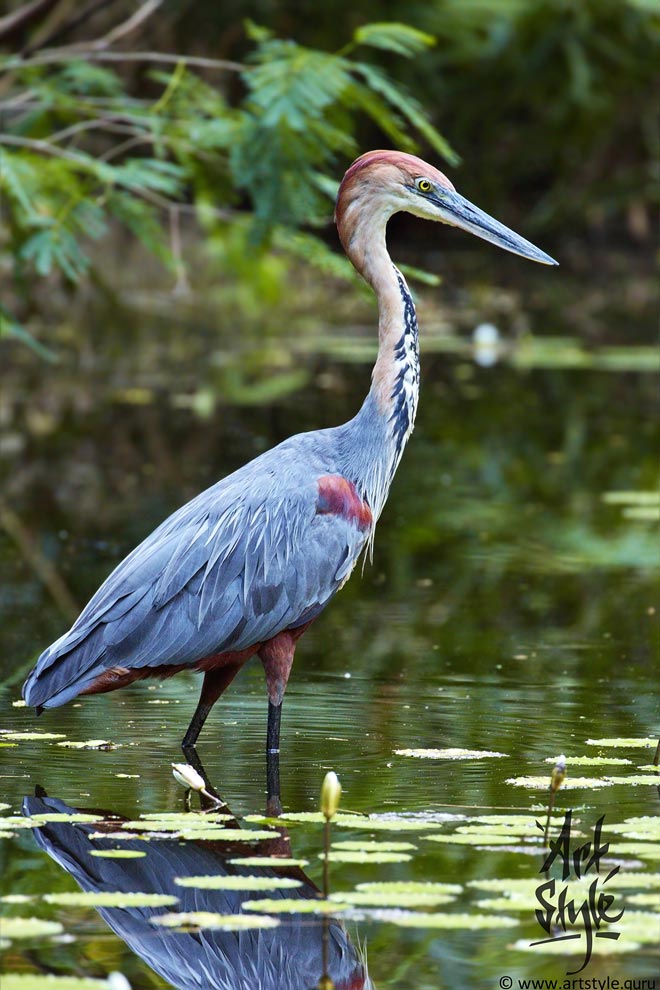
Goliath Heron
Canon EOS 5D Mark III + EF 100-400/4.5-5.6 L IS II + 1.4 ext III · 560 mm · f/8 · 1/60 s · ISO 3200
The largest heron in the world — up to a metre and a half tall, a wingspan of over two metres, as much as seven kilos in weight. It ranges across all of sub-Saharan Africa, rarely strays far from water and would sooner fly along a river than over dry land. Its voice is a deep bark you can hear a couple of kilometres off. And it eats anything it can catch, venomous mambas and monitor lizards included — which, at that size, surprises no one.
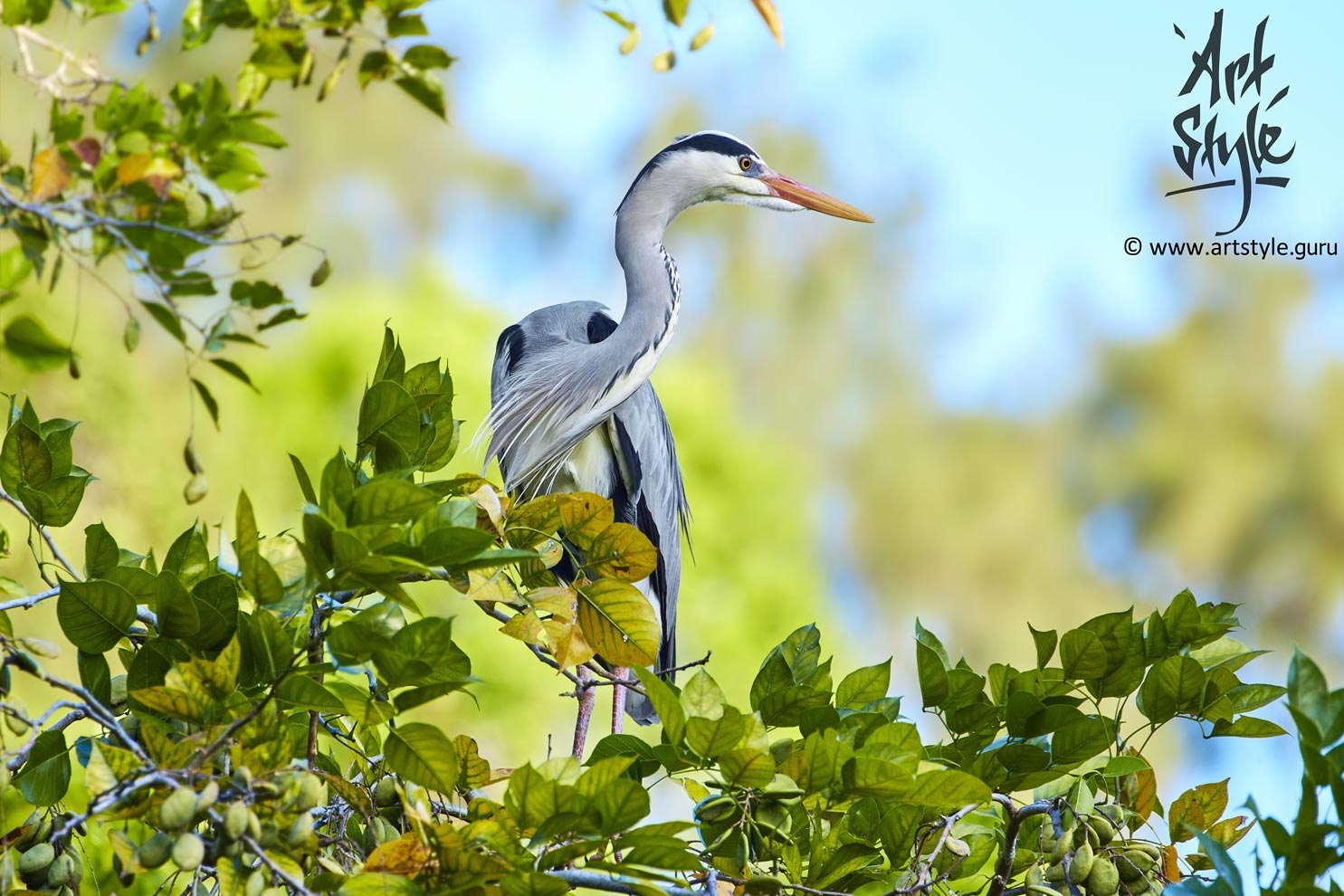
Grey Heron
Canon EOS 5D Mark III + EF 100-400/4.5-5.6 L IS + 1.4 ext III · 560 mm · f/8 · 1/100 s · ISO 200
For all its harmless looks, the grey heron is a savage hunter: it takes anything it can swallow, ducklings and the chicks of other birds included. (I've known women rather like this heron, too — only they hunt rich men of any age and appearance.) It has another curious feature: the feather tips on its breast, belly and groin are forever breaking off and crumbling into a microscopic powder. No, it isn't some chronic ailment — that's simply how the heron dresses its plumage so it won't clog with fish slime. And, like a true fashion-plate, it applies the powder with a special elongated, serrated claw on the middle toe.
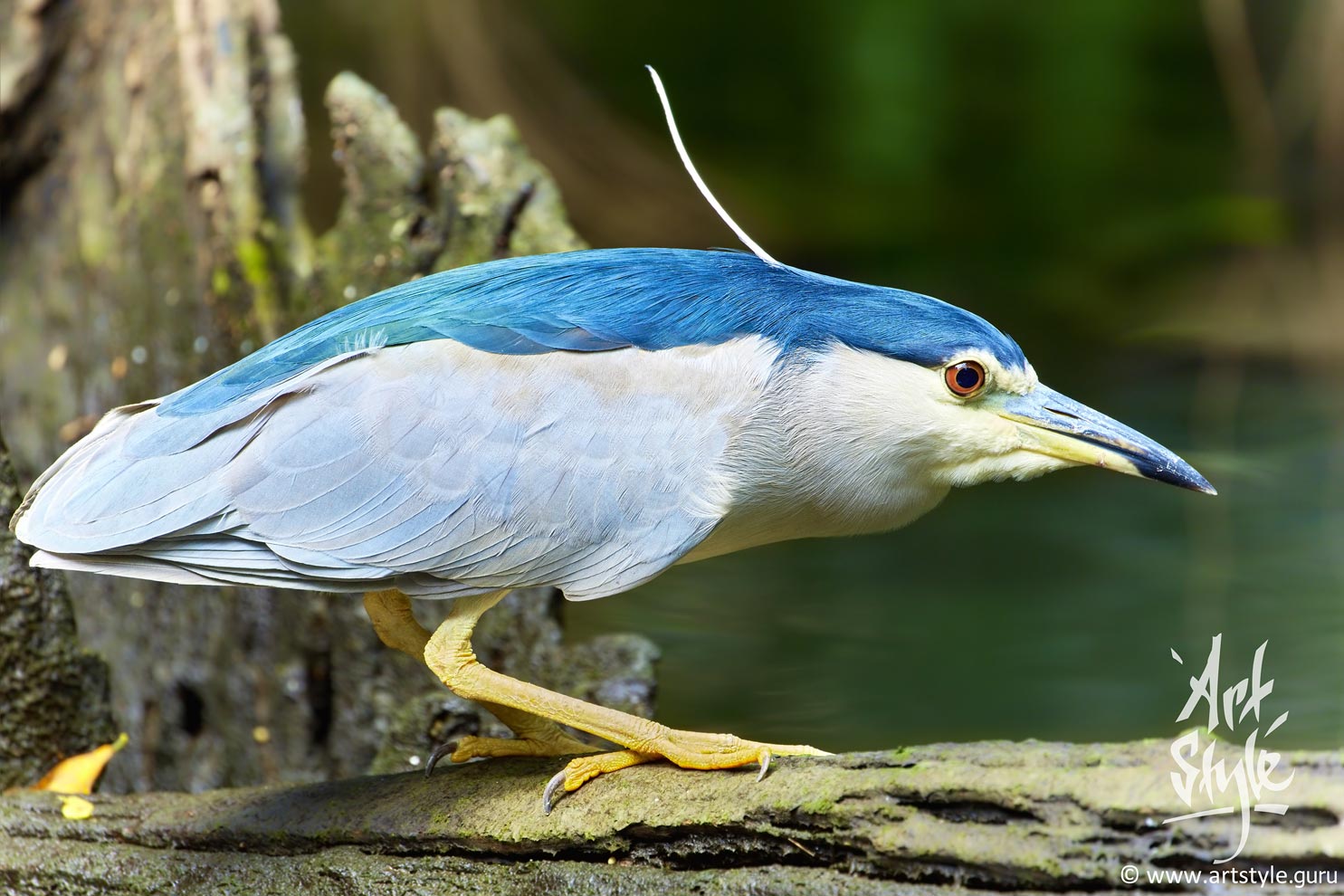
Black-crowned Night Heron
Canon EOS 5D Mark III + EF 100-400/4.5-5.6 L IS II + 1.4 ext III · 560 mm · f/8 · 1/40 s · ISO 400
Night herons are decidedly advanced birds: to communicate among themselves they've mastered both radio and echolocation. One to four long plumes grow from their backs, used not only for gestures (a sort of greeting) but also serving as vibrissae. Vibrissae are specialised sense organs: the base of each is set in a follicle ringed with venous cavities, and hundreds of nerve endings run to it; on the head the vibrissae are innervated by the trigeminal nerve, and each is allotted its own area of the brain. Air currents reflect off nearby objects and are picked up by the vibrissae — which lets the bird, independently of sight, locate things and avoid obstacles without touching them, even in total darkness. The nerve impulses travel to the brain, which sums the signals from the two systems and, on that basis, builds a three-dimensional picture of the surrounding world.
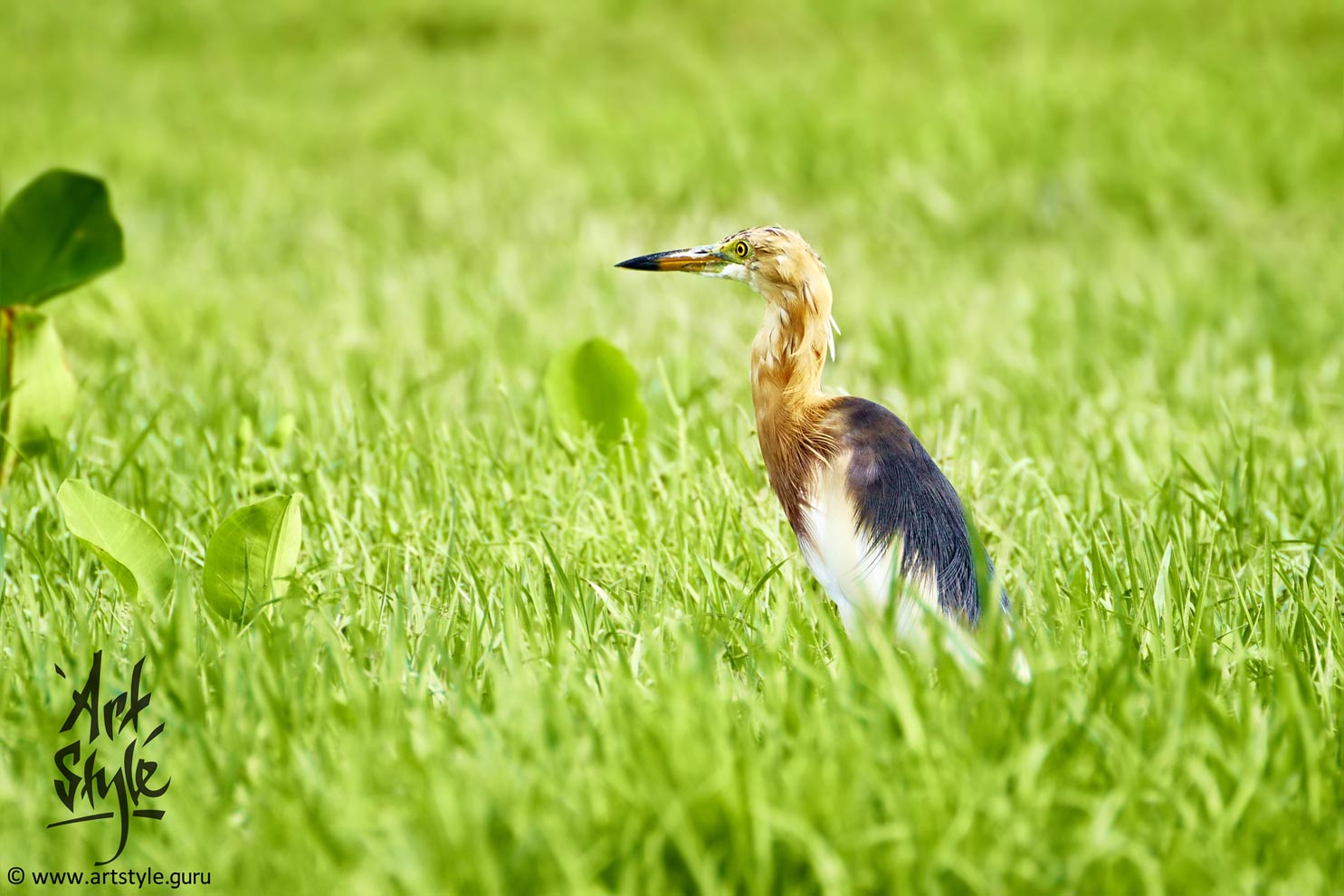
Javan Pond Heron, breeding plumage
Canon EOS M3 + EF 100-400/4.5-5.6 L IS II + 1.4 ext II · 560 mm · f/9 · 1/125 s · ISO 200
This is one of the smallest of the herons: the little thing weighs a mere 130–170 grams and is exceedingly shy with it. I managed to shoot it only from sixty metres away, and a 2× crop in post pushed the equivalent focal length all the way to 1800 mm. It hunts with downright Buddhist patience: it can stand stock-still over the water longer than many an angler will sit with a rod in a lifetime — which makes it, for Thailand, the perfectly spiritual bird.
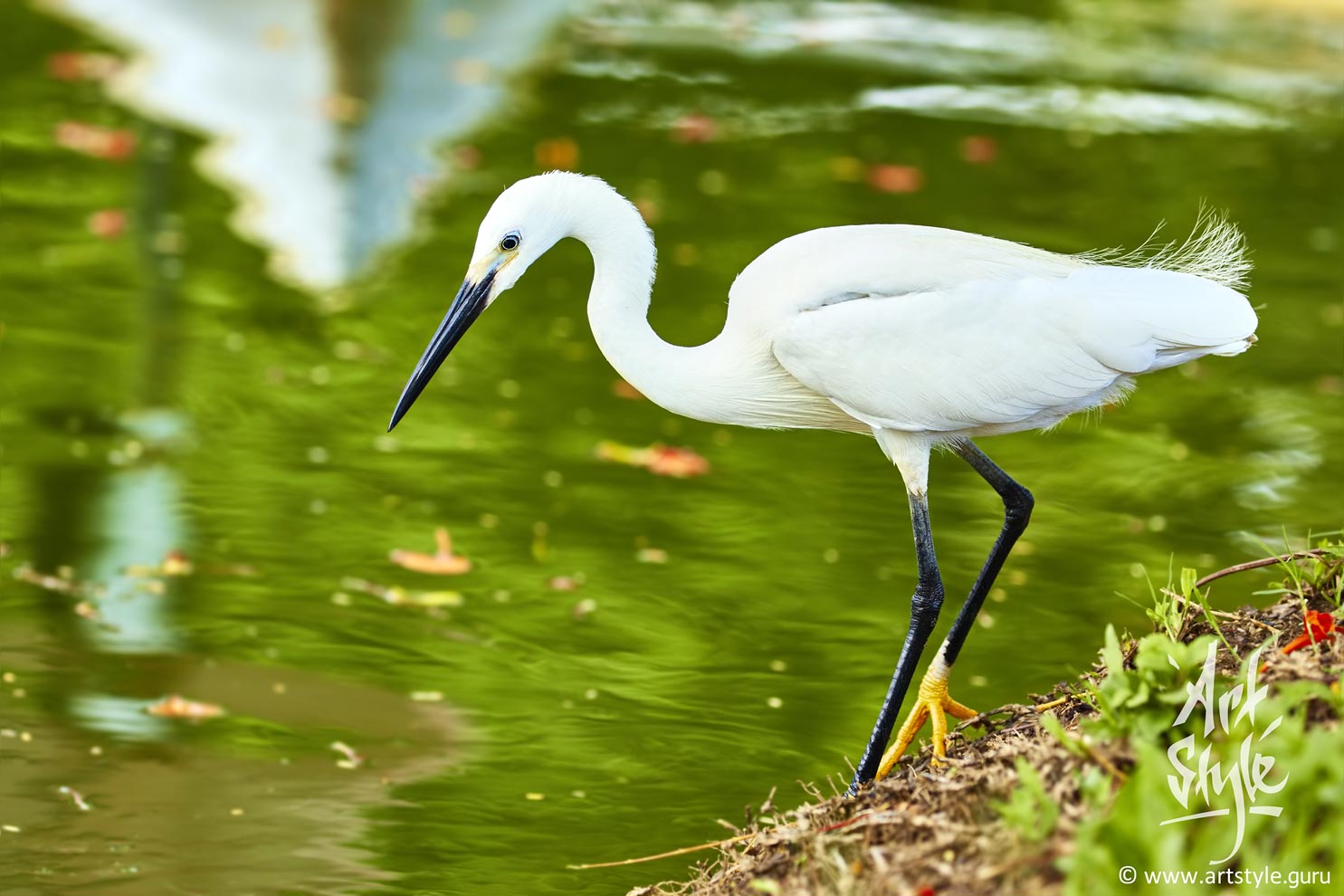
Little Egret (adult), subspecies Garzetta
Canon EOS 7D Mark II + EF 100-400/4.5-5.6 L IS II · 164 mm · f/5 · 1/160 s · ISO 400
Officially the little egret lives even in Europe (Belarus included), only it isn't much of a patriot: at the first hint of cold it hurries off to the warm resorts of Asia — Thailand among them. Perhaps it remembers how, some fifty years ago, it was very nearly wiped out for the plumes on fashionable ladies' hats. These days the fashion runs to peacock feathers rather than the modest white egret plume, so it has nothing left to fear. Despite the name, the little egret can also be black — biologists romantically call this mutant a “morph.” Away from the colony it's silent and unsociable, but in the colony it's a chatterbox: the voice is a loud, drawn-out cawing mixed with short, hoarse questions. Just like glamorous girls at a fashion sale.
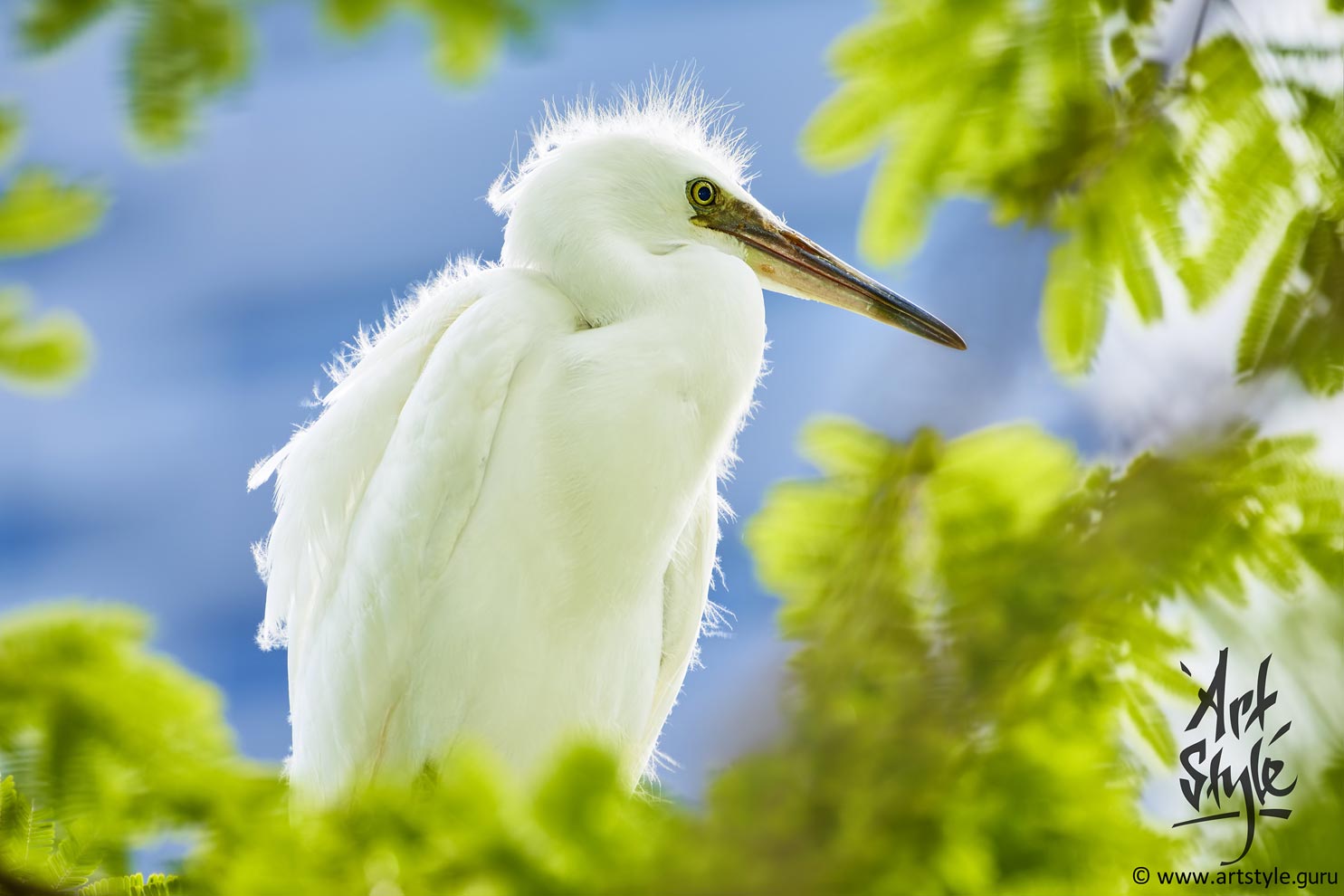
Little Egret (chick), subspecies Garzetta
Canon EOS 7D Mark II + EF 100-400/4.5-5.6 L IS II · 400 mm · f/5.6 · 1/125 s · ISO 100
In Thailand the little egrets' breeding season is tied to the rains. The nest is built with a clear division of labour: the male hauls the building material, the female lays it in place (just as in any model family). They incubate in turns, though the female spends far more time on the nest — not that the role of mother troubles a modern metrosexual father in the least; rather the opposite. Both feed the young, lovingly regurgitating food beak to beak. After about three weeks the chicks begin clambering out onto neighbouring branches by day: they can't yet fly or feed themselves, but they hold their own outside the nest well enough. Real flight comes at forty to forty-five days (before that, strictly speaking, they can fly too — only downward, and only once). And soon enough they leave the nest for good and gather into little flocks on the feeding grounds.
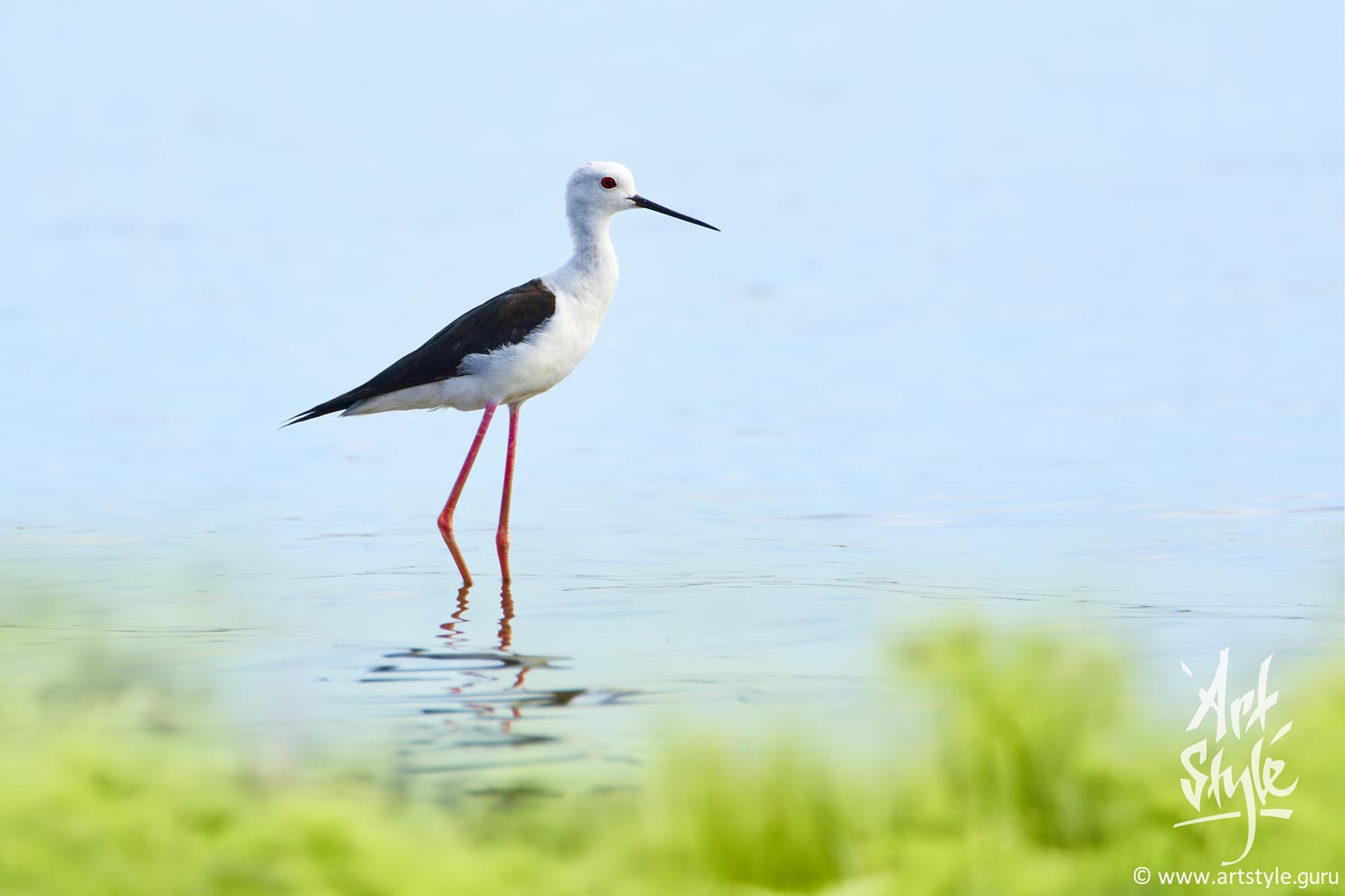
Black-winged Stilt
Canon EOS 7D Mark II + EF 100-400/4.5-5.6 L IS II + 1.4 ext II · 560 mm · f/8 · 1/250 s · ISO 200
The black-winged stilt is a wily sort of wader. Curiously, our northern stilts will sing the praises of their home marsh and yet spend most of the year in warmer parts, or at least by the sea. For all their proletarian origins, they've taken rather well to democratic values: they dine on mussels and oysters, and the males barely differ from the females in either looks or manners. But the real pride of these blondes is their legs: by length relative to the body, the stilt comes second in the world, right after the flamingo.
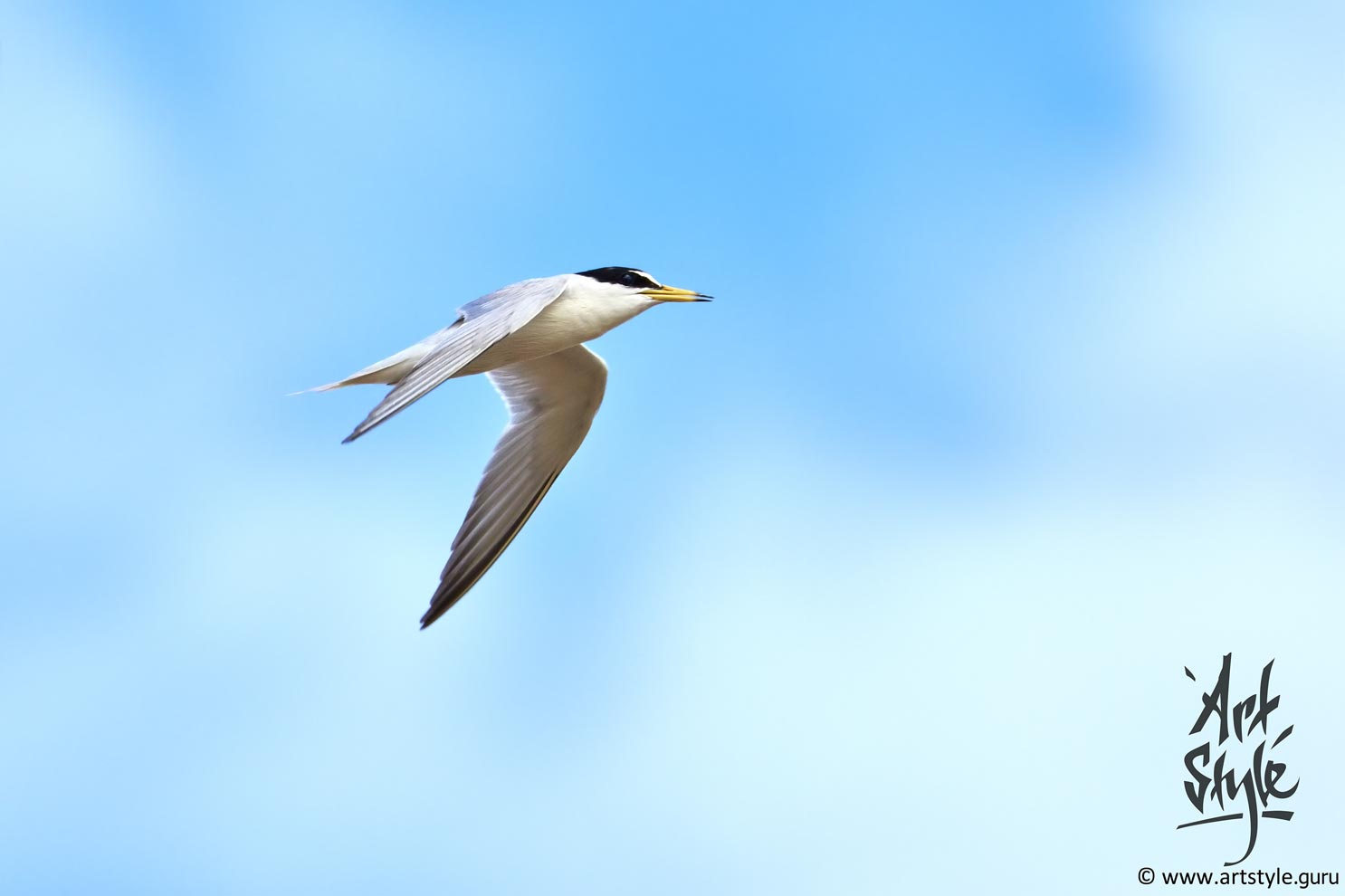
Little Tern, subspecies Sinensis, breeding plumage
Canon EOS 7D Mark II + EF 100-400/4.5-5.6 L IS II + 1.4 ext III · 560 mm · f/8 · 1/1600 s · ISO 800
The little tern has almost no natural enemies — humans included. No wonder: it's a tiny bird of some forty-five grams, and a swift, darting one at that. Rather like the proverbial outlaw nobody bothers to chase — uncatchable precisely because no one wants him. The males, though, are small but mighty: they court the ladies with great ceremony and present them with a fish as a wedding gift. The females, naturally, pick the suitor whose gift is the bigger one — which, come to think of it, is exactly how it works with people too.
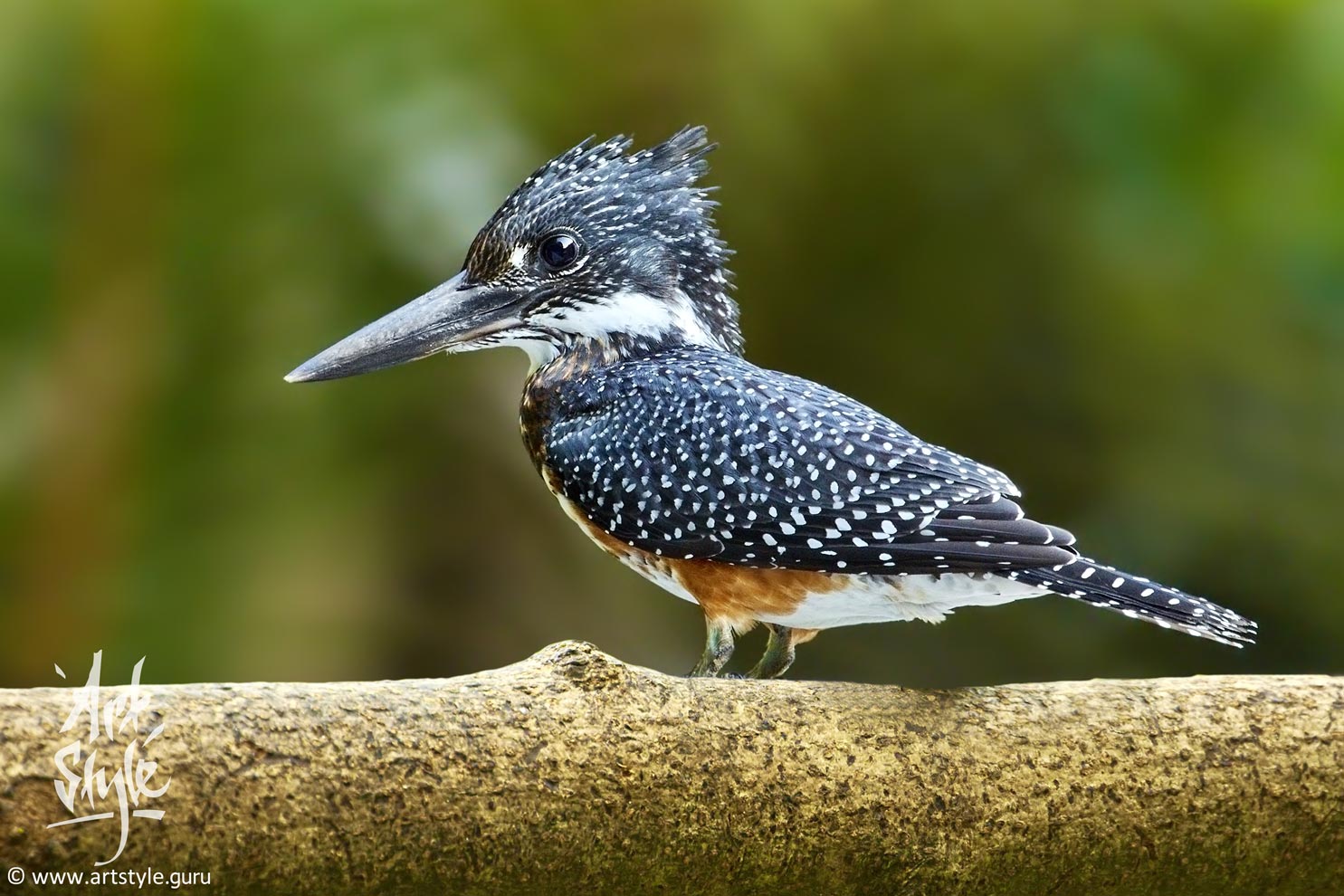
Giant Kingfisher, female
Canon EOS 5D Mark III + EF 100-400/4.5-5.6 L IS II + 1.4 ext III · 560 mm · f/8 · 1/80 s · ISO 1600
The giant kingfisher grows to some 46 cm and is reckoned the largest kingfisher in Africa. This frame is also one I'm quietly proud of, technically: it was shot at a focal length of 1075 mm — the longest reach I've so far managed to pull off cleanly.
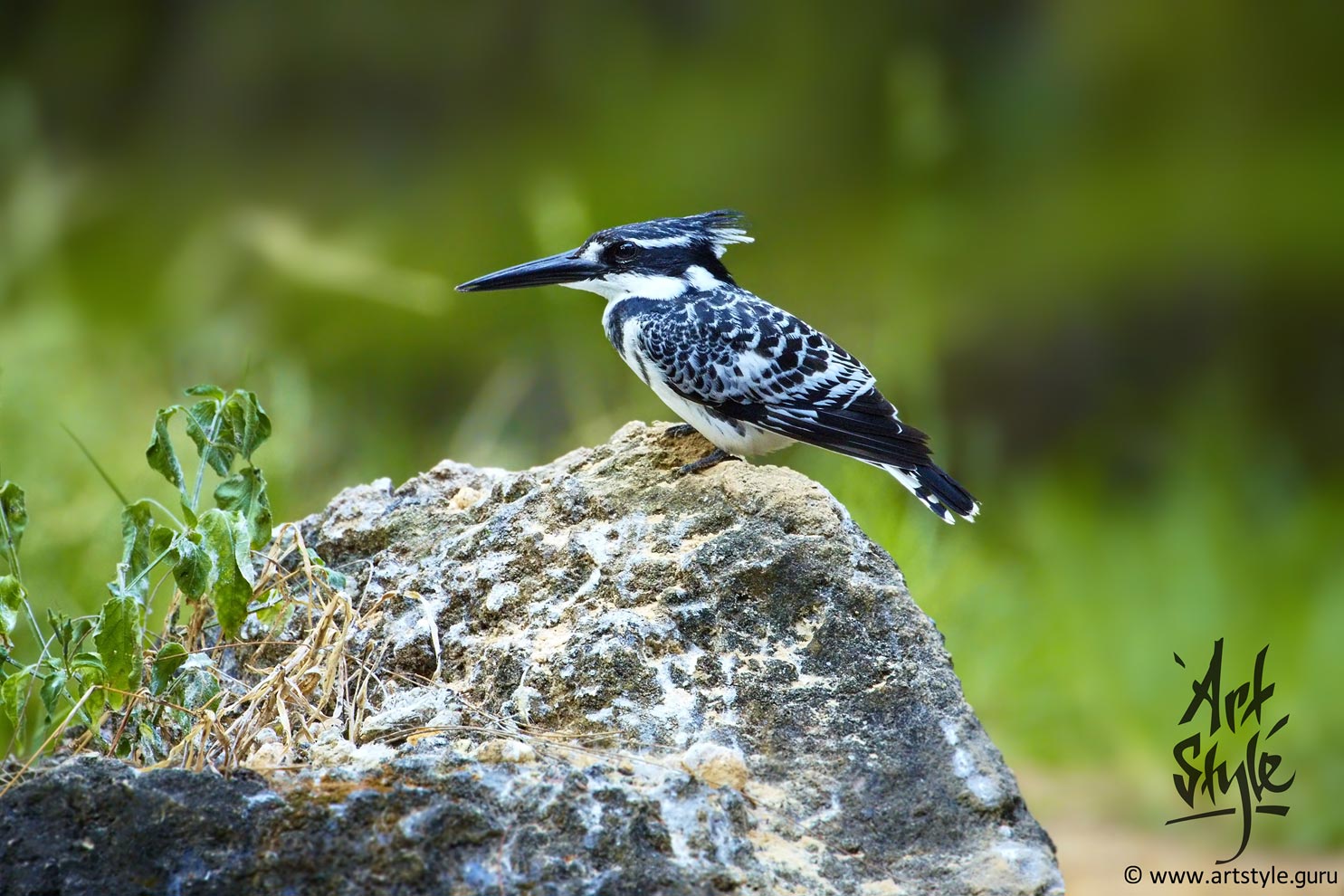
Pied Kingfisher
Canon EOS 5D Mark III + EF 100-400/4.5-5.6 L IS II + 1.4 ext III · 560 mm · f/8 · 1/60 s · ISO 1600
For all that the English name crowns it a king-fisher, this bird is hardly of royal proportions: a little thing of some twenty-five centimetres weighing 70–110 grams. It is, curiously, a distant — and much-shrunken — relative of the hornbills. It hunts by hovering over the water and then dropping straight down, bill-first.
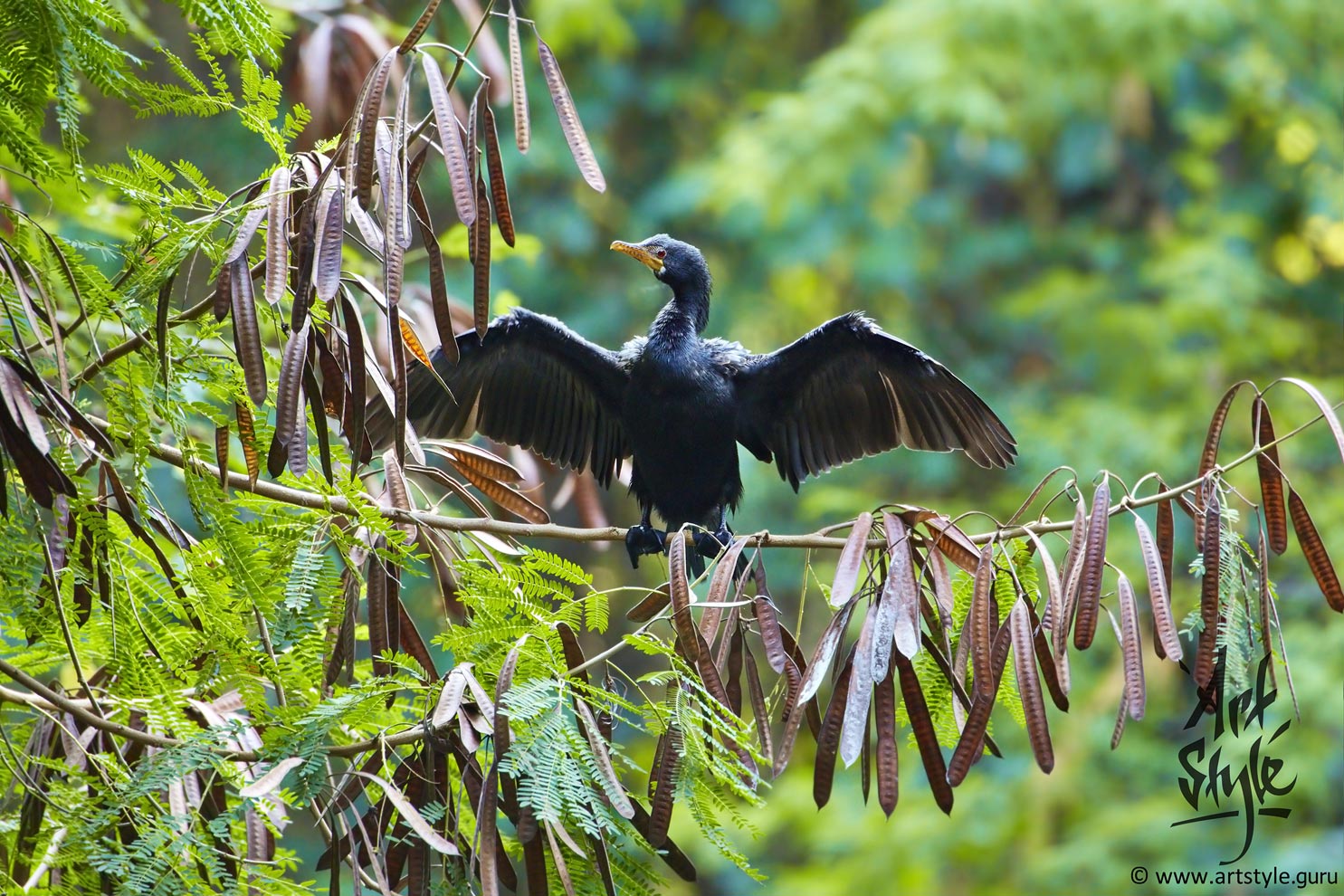
African Darter (Snakebird)
Canon EOS 5D Mark III + EF 100-400/4.5-5.6 L IS II + 1.4 ext III · 560 mm · f/8 · 1/60 s · ISO 1600
A seasoned zoologist will tell you at a glance that this is a male: male Homo sapiens have been known to freeze in much the same pose somewhere in a park — coat thrown open over bare skin — evidently to attract females of their own. The truth, though, is more prosaic: unlike other waterbirds, the darter's feathers soak through completely. This is a great help in diving, but it chills the body fast and makes taking off afterwards a chore — so once it has dived, the bird climbs onto a high branch and spends a long while drying its outstretched wings in the sun, side by side with the cormorants. And in the breeding season, once it has found a mate, the darter changes its signage: the throat pouch turns from pinkish-yellow to black, and the bare skin of the head goes turquoise. The notice “available!” gives way to “nothing to catch here” — darters are monogamous.