
Bestiary: a cast of characters
The longer you photograph animals, the more often you catch yourself thinking that a bestiary is really a mirror. The hyena and her matriarchy, the freeloading bear, the lion who has offloaded every chore onto the females — every other creature here behaves in an uncomfortably familiar way. This chapter is about character: big cats, a hyena, a bear, a sloth, a meerkat, a koala and a couple of wallabies, bound not by kinship but by temperament. The name and the camera settings are under each frame; the animals tell the rest themselves.
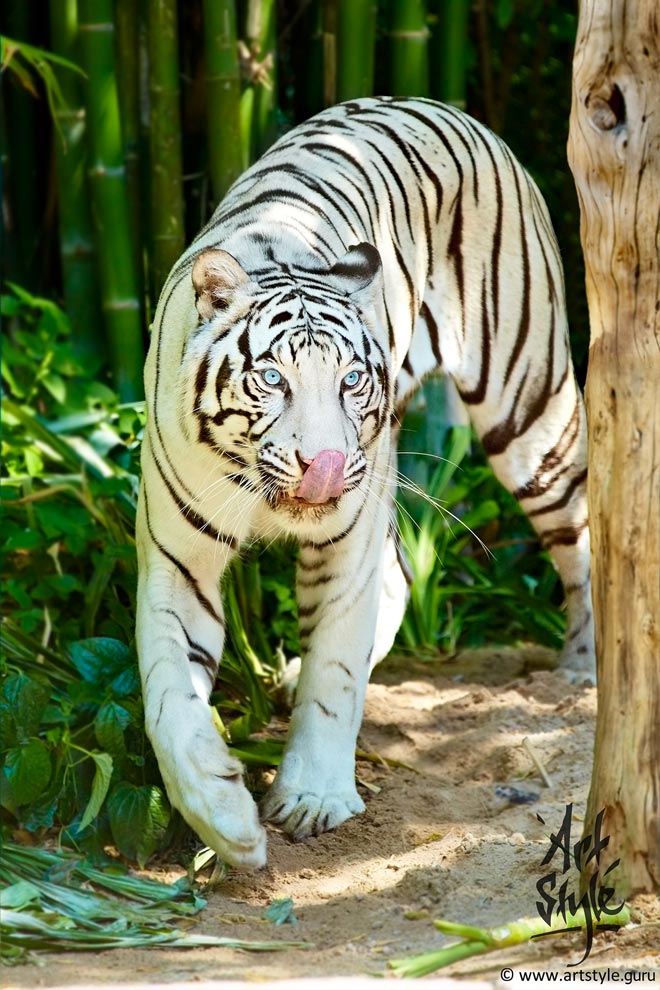
White Bengal Tiger
Canon EOS 5D Mark III + EF 100-400/4.5-5.6 L IS II + 1.4 ext III · 280 mm · f/4 · 1/320 s · ISO 640
This is no albino: were he one, his eyes would be red and his stripes white. The blue eyes, though… the real cause — a spice habit — was hinted at long ago by Frank Herbert in Dune. And a tiger's whiskers aren't just for hunting: like many a moustachioed gentleman, he uses them to impress the ladies too.
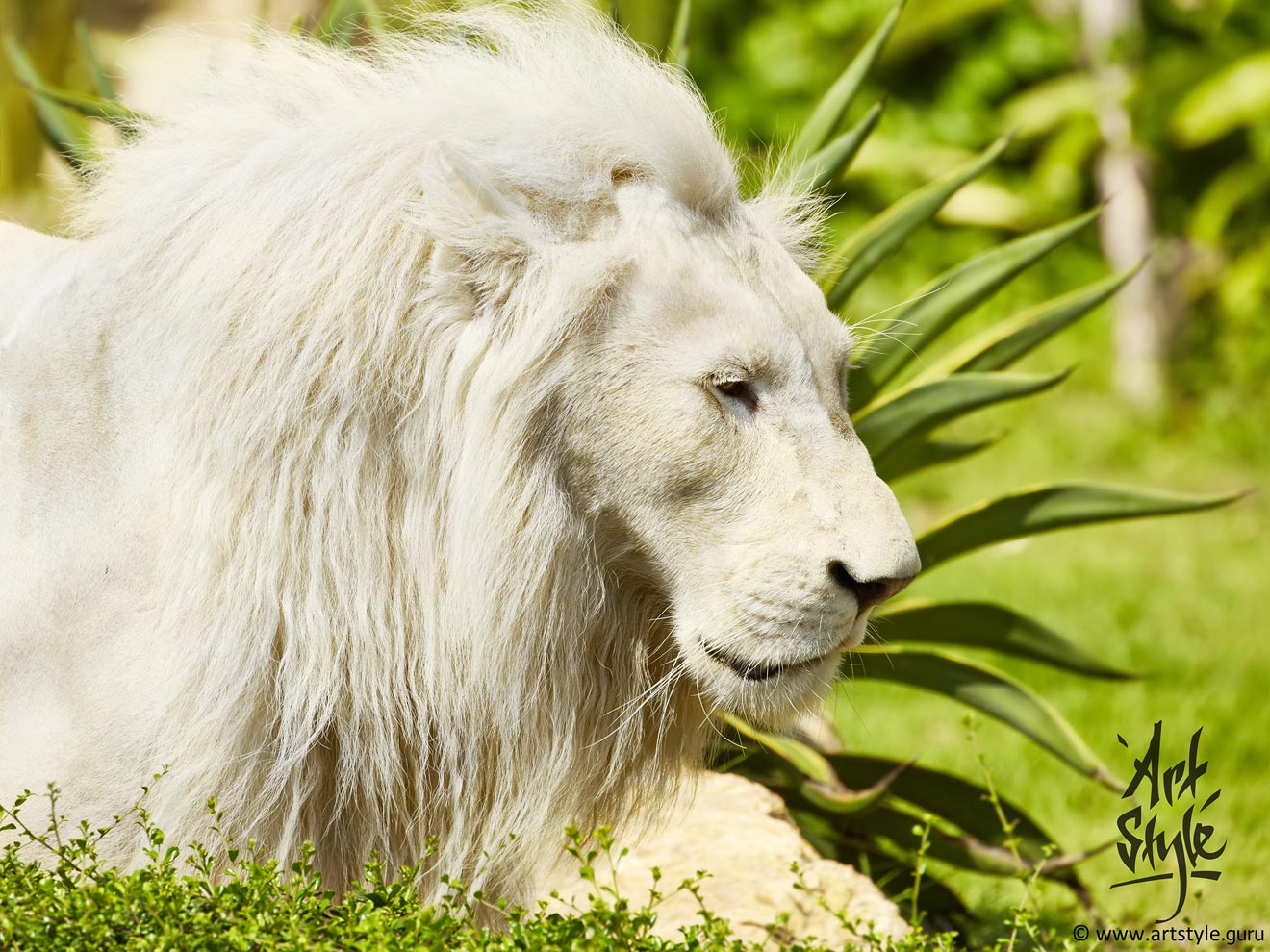
White Lion, male
Canon EOS 5D Mark III + EF 100-400/4.5-5.6 L IS II + 1.4 ext III · 560 mm · f/8 · 1/640 s · ISO 400
The white lion isn't a separate subspecies but a colour form: leucism lightens the coat, as in the white tiger, yet it's not albinism — eyes and skin are normally pigmented. The same mechanism in reverse, melanism, gives us black panthers; all lions, by the way, are panthers too. A male white lion is just about the ideal for the male Homo sapiens to aspire to: he doesn't hunt (that's the lionesses' job), doesn't raise the young (lionesses again), but does reliably father new cubs. And he gets away with all of it — because he's rare and handsome, much like the men of Belarus after the war.
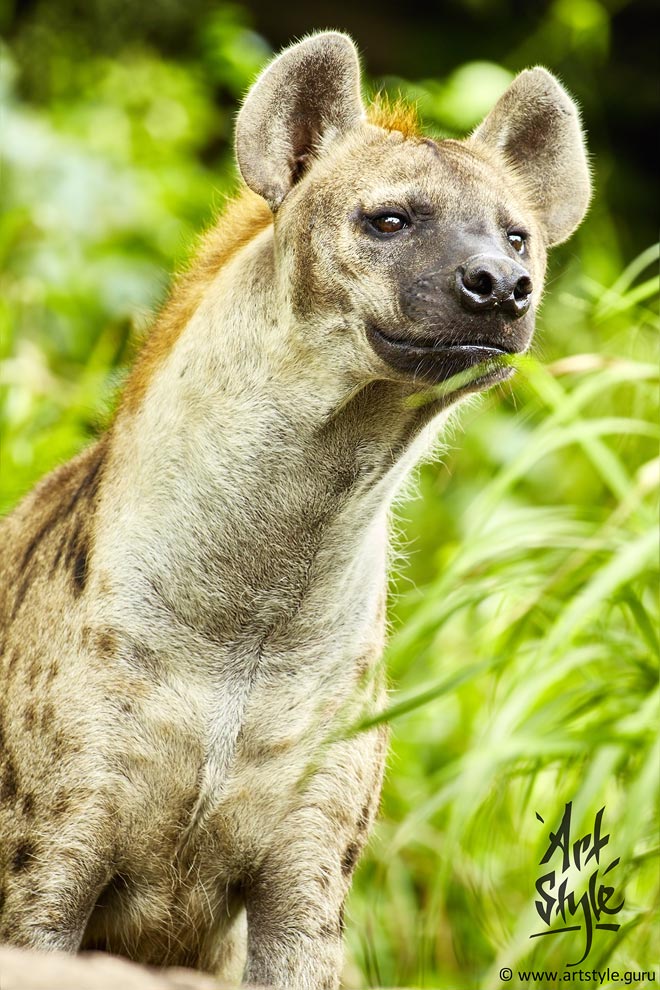
Spotted Hyena
Canon EOS 5D Mark III + EF 100-400/4.5-5.6 L IS II + 1.4x III · 560 mm · f/8 · 1/160 s · ISO 1250
Don't wrinkle your nose just yet: spotted hyenas are remarkably clever beasts — on cooperative tasks they outscore even chimpanzees, and they clearly plan their hunts in advance. Their jaws are the strongest of any mammal, up to 80 kg/cm², and crack any bone going. But the real marvel comes next: the hyena's digestive system is one of the most efficient in the animal kingdom. Its stomach acid is corrosive enough to dissolve bone outright — not just the marrow but the whole of it — to digest hide, hooves and horn, and to kill off pathogens that would lay a lesser scavenger low. Nothing goes to waste; the dung comes out chalk-white, bleached by digested bone. The clan runs on a strict matriarchy: the females carry more testosterone than the males, which makes them larger by 15–20%, tougher in temper, and decidedly masculine in their anatomy — the female's clitoris is the size of a male's penis and can become erect during dominance displays. The clan “queen” is chosen with disarming directness: the females quite literally measure their manhoods. The winner laughs in earnest at the losers — that famous hyena “laugh” also decides who eats after whom and defuses needless fights. A trace of all this survives in Homo sapiens too — only morality has edited it, so these days it's mostly the males who square off, plainly demonstrating whose car is bigger.
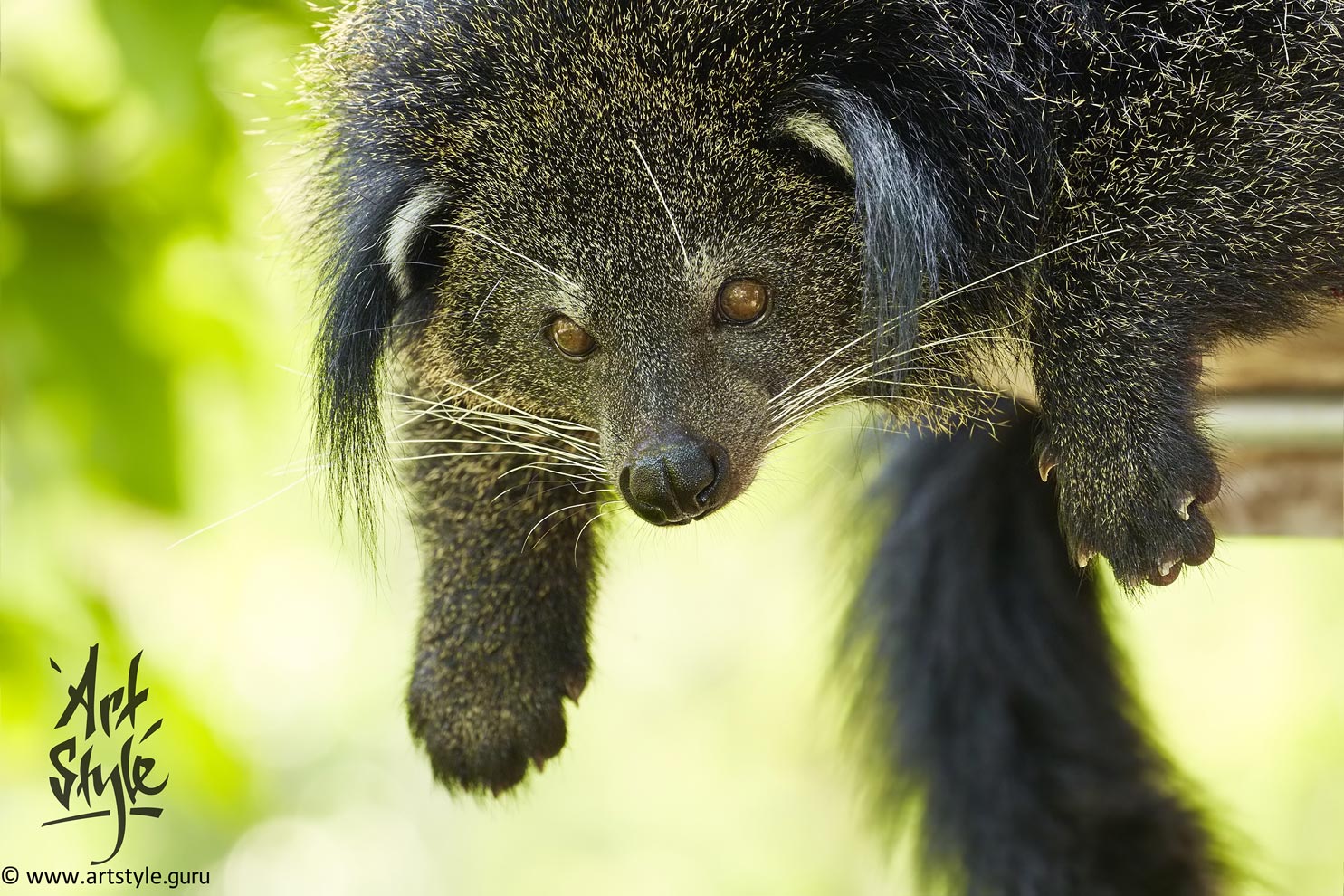
Binturong
Canon EOS 5D Mark III + EF 100-400/4.5-5.6 L IS II · 300 mm · f/8 · 1/100 s · ISO 800
The binturong, or bearcat, has spotted a chocolate bar and is steeling himself for the pounce. He's an unhurried creature, gripping the branches with a long prehensile tail — and using that same tail to talk: with scent glands at its base he marks the neighbourhood with skunk-like persistence. The paradox is that this oily substance smells of… popcorn — which is partly why binturongs are sometimes kept as pets (strictly outdoors, mind). They're also sweet-toothed to a fault: their blood sugar is barely self-regulated, so after a single marshmallow a binturong tips into hyperactivity, all running and leaping — and when the sugar crashes, he simply “switches off” and falls asleep wherever it catches him.
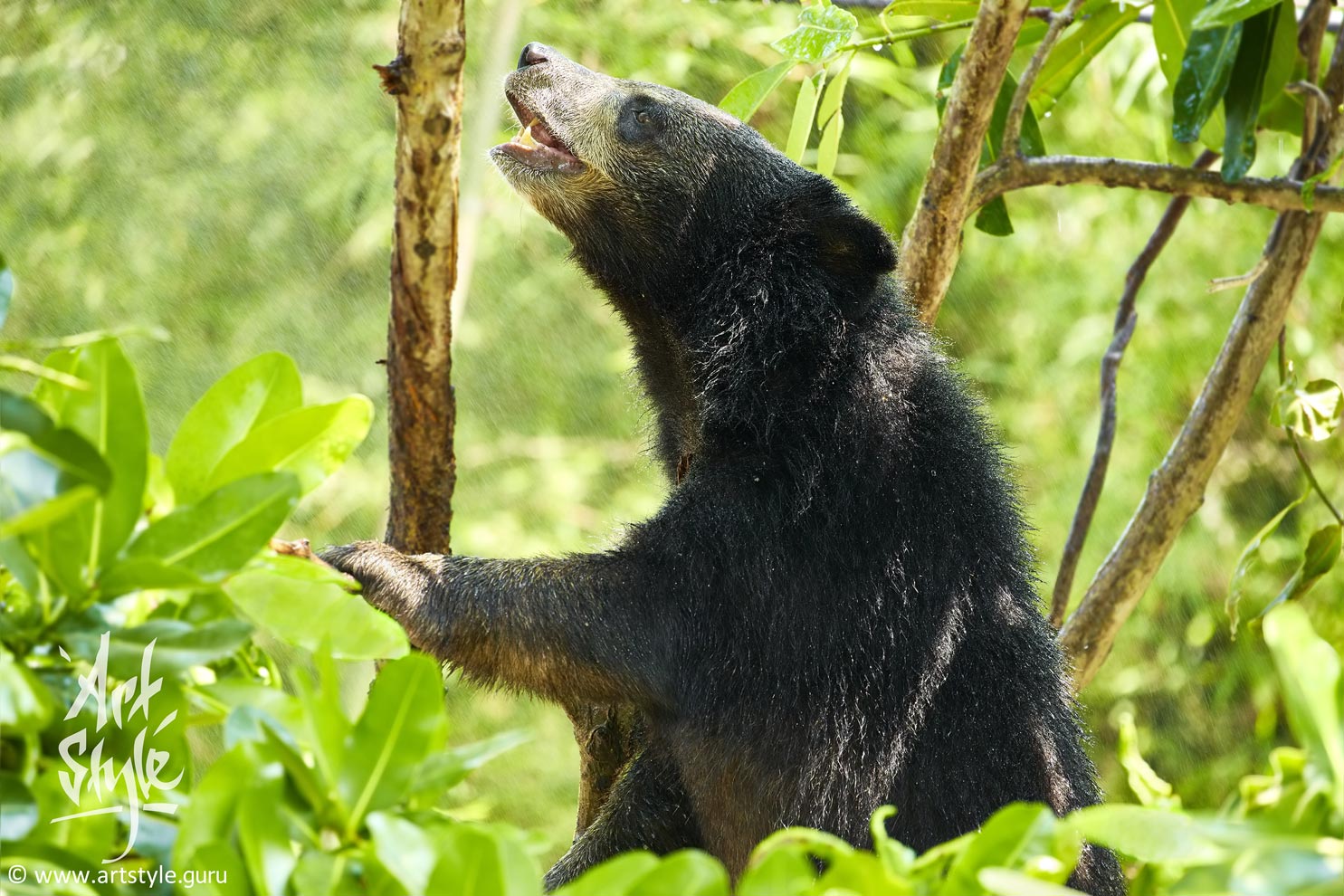
Tibetan Black Bear
Canon EOS 5D Mark III + EF 100-400/4.5-5.6 L IS II · 400 mm · f/5.6 · 1/200 s · ISO 800
“What I'd give for a spot of honey… and then a girl! Actually, no — just the honey!” The Tibetan black bear's range reaches as far as Thailand. It differs markedly from the brown bear, that symbol of the Russian people: smaller, mostly vegetarian, spending most of its life up in the trees, moderate at the table and rarely running to fat in the heat. Much the way Thais differ from Russians, really. And where brown and black bears live side by side, a telling little scene plays out: the black bear climbs the tree and knocks down the cones, the brown bear waits patiently in the bushes, and once the harvest is in, chases off the labourer and tucks into the free meal. Which is rather how certain Russians coexist with the Thais in Pattaya.
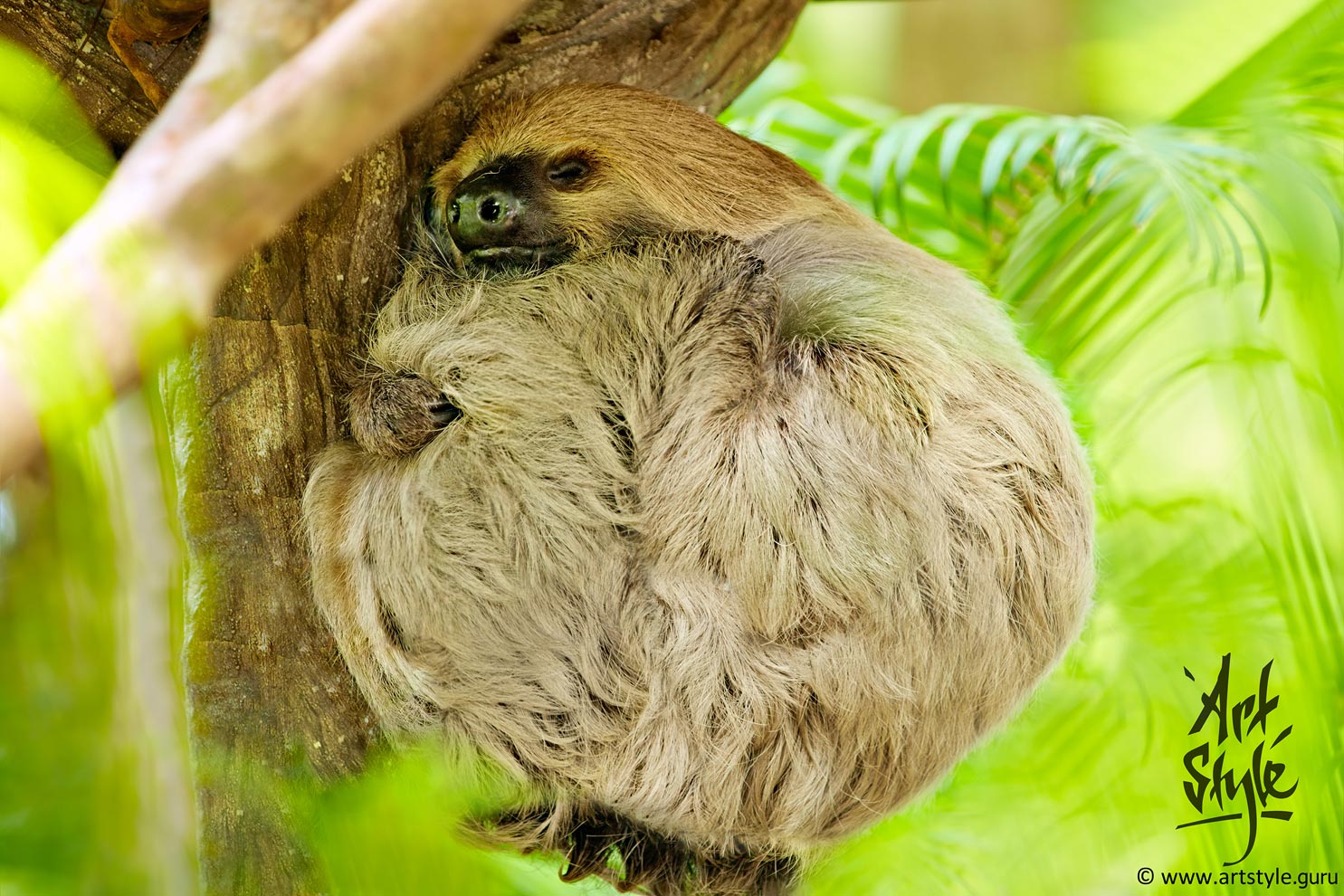
Two-toed Sloth
Canon EOS 5D Mark III + EF 70-200/2.8 L IS II + 1.4 ext III · 280 mm · f/4.5 · 1/60 s · ISO 640
The sloth can't walk at all — it gets about only along the branches, and always upside down. Its metabolism is so slow that it holds a rather unflattering record: up to 30% of its body weight is… the contents of its gut and bladder (and there I was, my whole life thinking that record belonged to people). It can't shiver against the cold either — too little muscle, a metabolism barely ticking over, and a body temperature that depends largely on how warm it happens to be outside.
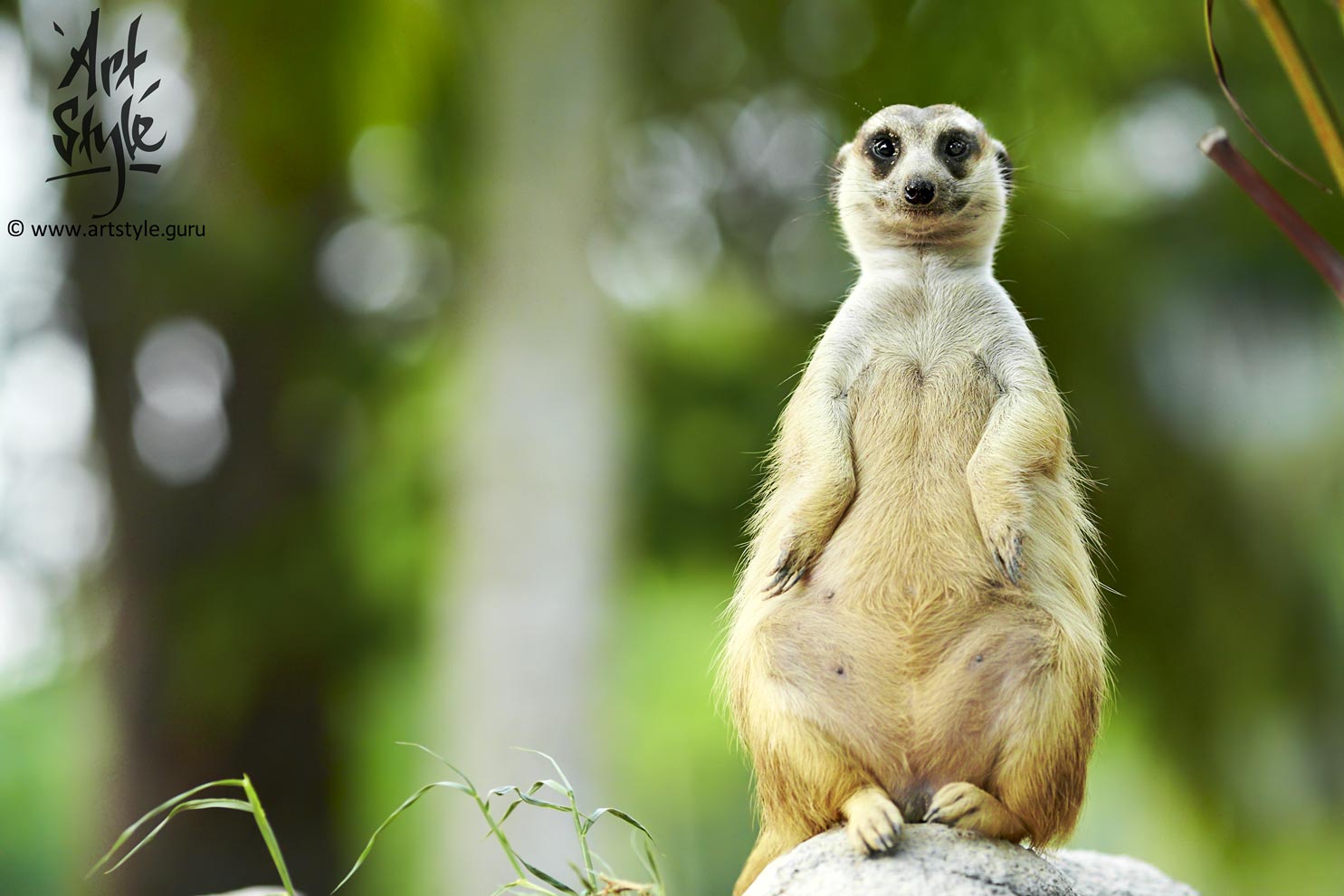
Slender-tailed Meerkat (Suricate)
Canon EOS 5D Mark II + EF 135/2.0 L · 135 mm · f/2.8 · 1/160 s · ISO 1250
This one's on duty. While the rest of the gang are digging up breakfast, one meerkat always stands bolt upright on watch — scanning the sky for a hawk, and keeping an eye on you into the bargain. The sentries take turns; discipline in the clan is iron.
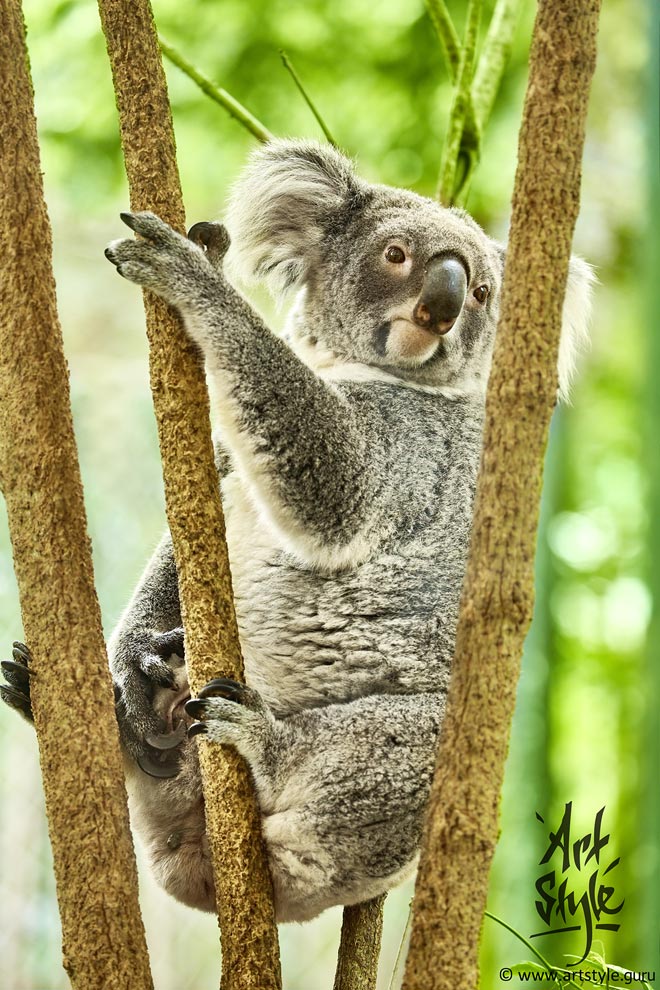
Koala, female
Canon EOS 5D Mark III + EF 100-400/4.5-5.6 L IS II · 170 mm · f/5 · 1/100 s · ISO 1250
The koala lives on eucalyptus leaves alone — which, mind you, are nothing but phenols, terpenes and, in the young shoots, prussic acid, a poison to most animals. The koala digests the lot, but some of the toxins still reach the brain — which is exactly why she's the famous slowpoke: dozing away most of the day, and spending all of fifteen minutes a day on “socialising” with her own kind. And don't be alarmed if you notice the female holding on to something down there — nothing improper about it: THERE, in the pouch, rides a baby. A live one. The koala is a marsupial, after all.
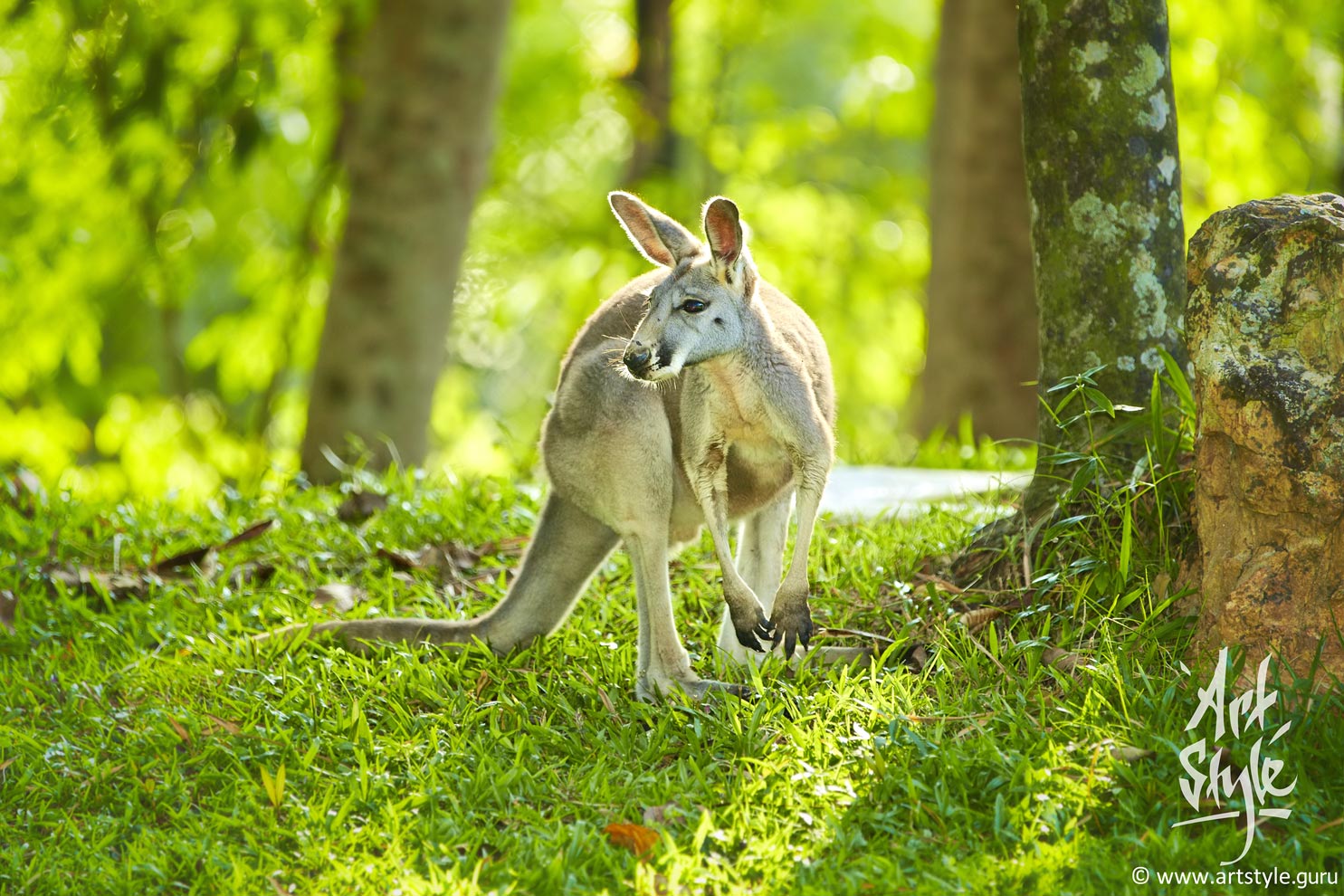
Bennett's Wallaby
Canon EOS 5D Mark III + EF 70-200/2.8 L IS II + 1.4 ext III · 280 mm · f/4 · 1/125 s · ISO 320
A wallaby is essentially a kangaroo in miniature. Perhaps that's why the rugged Australians don't bother fighting wallabies, preferring to box their strapping kangaroo cousins instead.
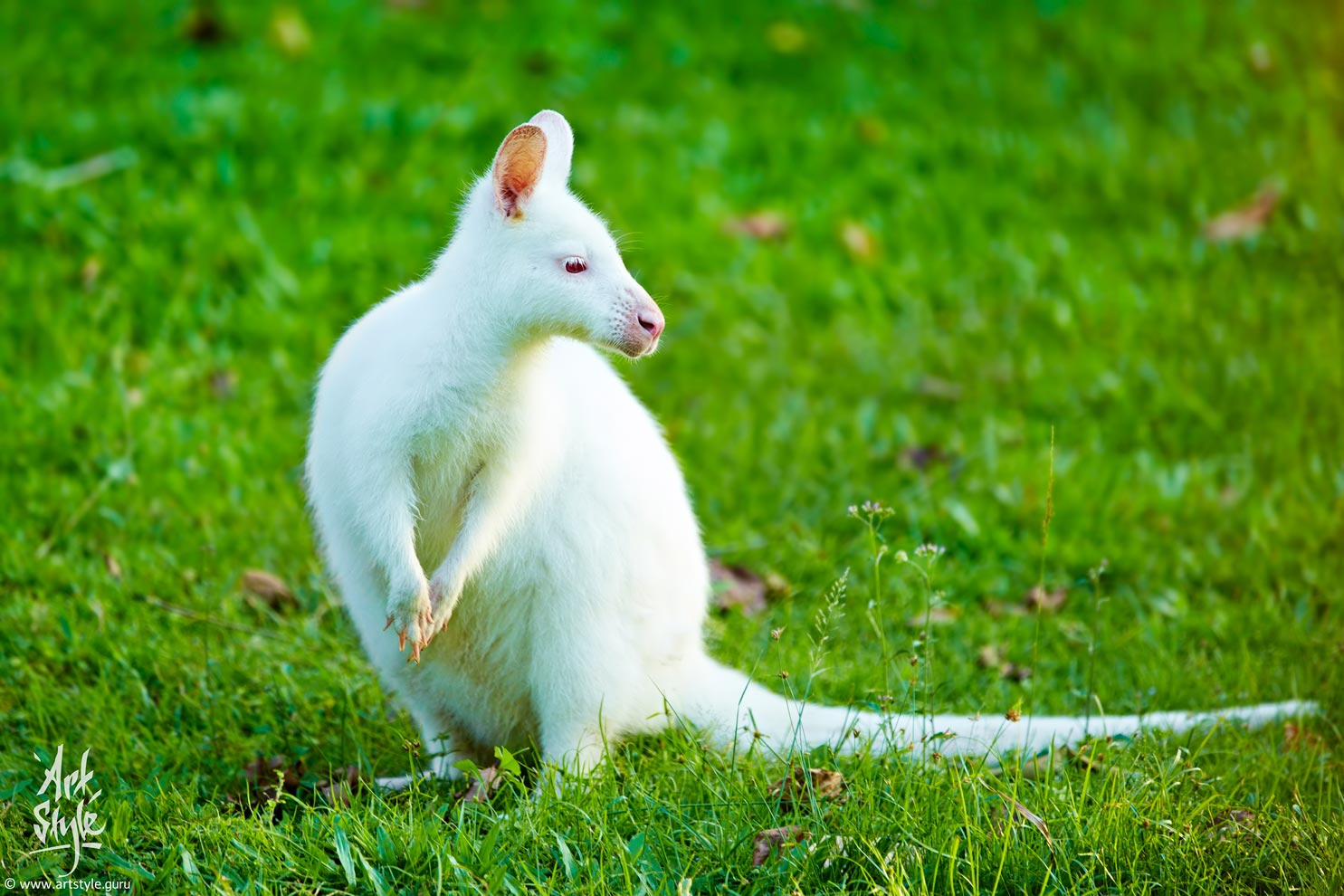
White Bennett's Wallaby
Canon EOS 5D Mark III + EF 70-200/2.8 L IS II + 1.4x III · 280 mm · f/4 · 1/100 s · ISO 640
We'll close on the same white note we opened with. White Bennett's wallabies are a rare pale form; such colonies can be counted on one hand (the best-known lives on Bruny Island, off Tasmania). Against green grass this pale one is visible from afar — handsome, conspicuous and therefore vulnerable: camouflage has plainly been sacrificed to good looks. A fitting finale, surely, for a chapter that opened with a white tiger and a white lion.