
Real estate: interiors, mirrors & making space
If the exterior sells the dream from afar, the interior has to hold up to a closer look. Shooting a room so it reads larger, brighter and more expensive than it really is is a craft of its own: perspective, the light from the windows, and a little honest trickery with mirrors. A few tricks of the trade — woven through with my own remarks on the beautiful life.
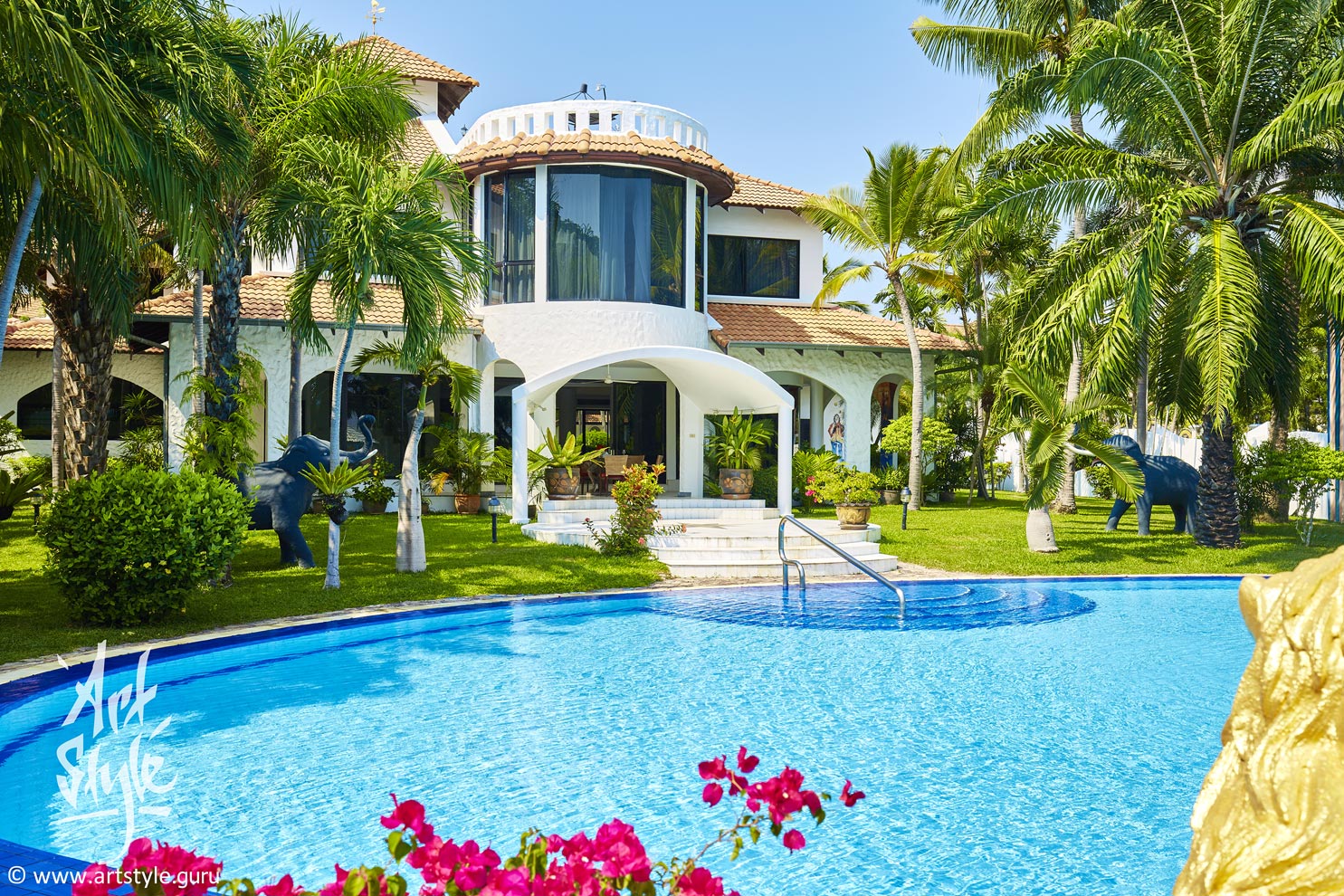
In architectural photography it's traditionally held that the wider the lens, the better. It isn't true. Here the key subject sits in the background, so the classic perspective wins — 35–50mm on full frame. A wide-angle would have pulled the space apart and dragged the eye off to the sides.
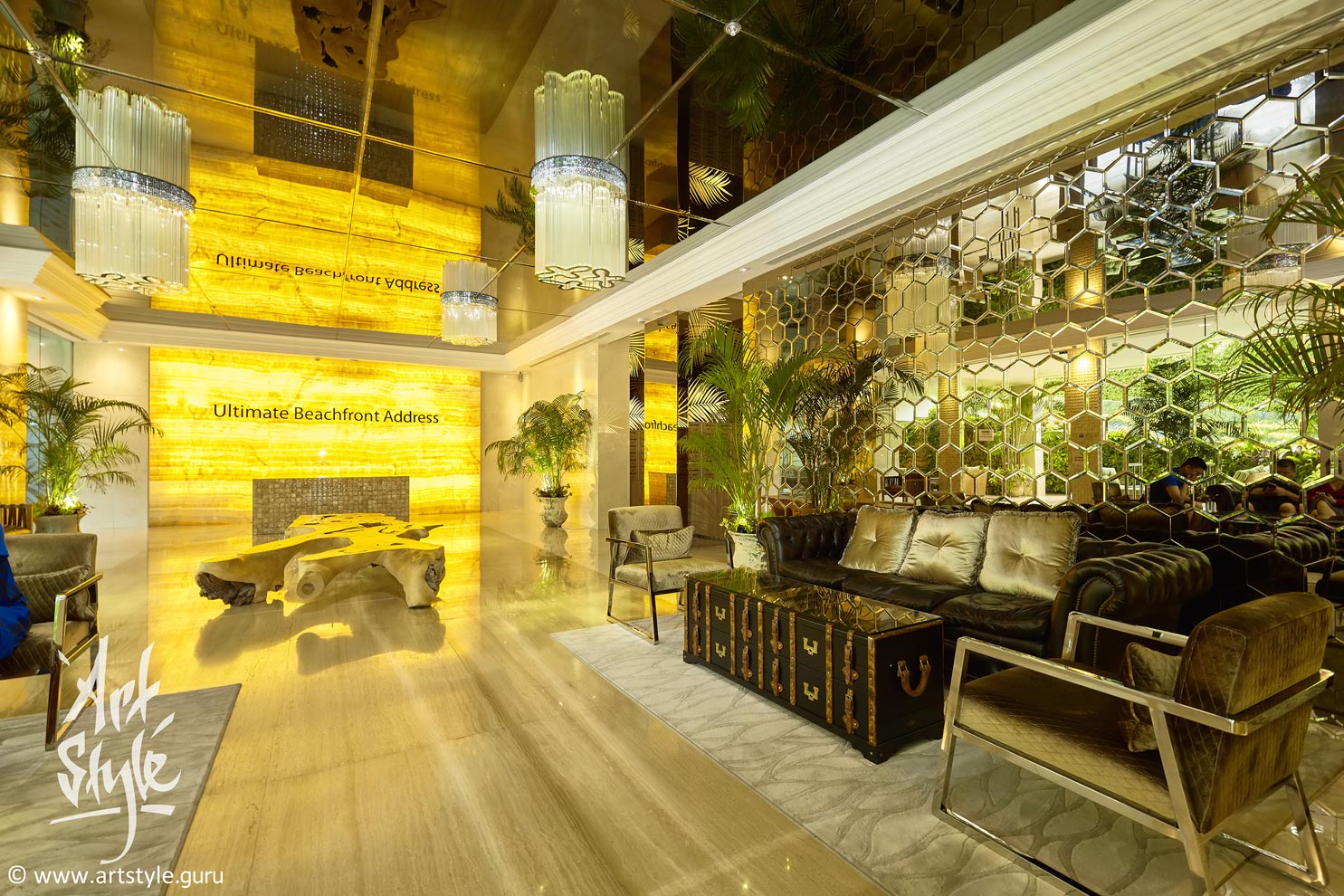
Shooting wide, it's important to control the number and placement of the convergence points — the spots where the imaginary perspective lines meet. In a professional, 'architectural' rendering of a shot there should be a single convergence point. Two at the most.
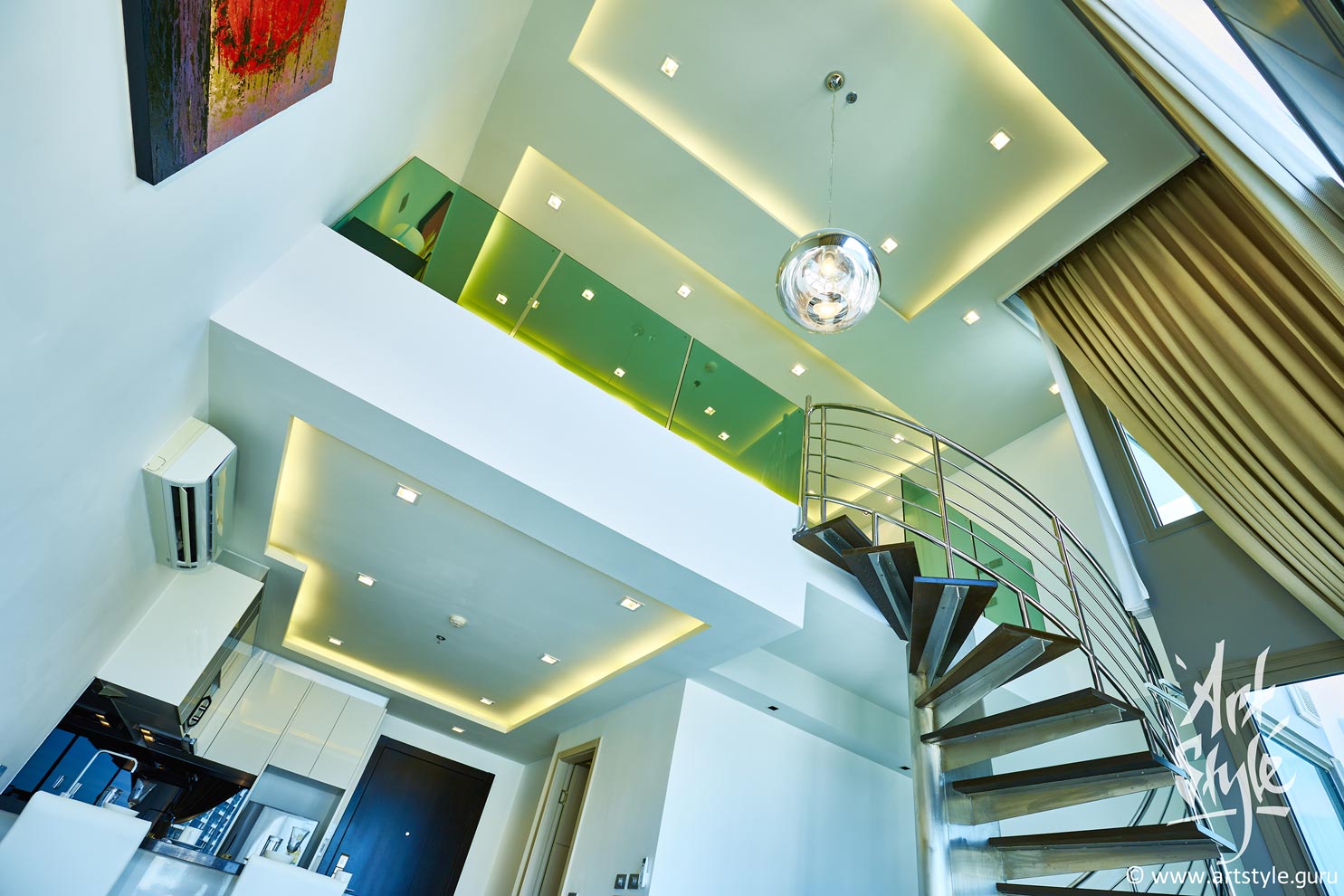
As a rule, architectural photography irons out geometric distortion — converging verticals first of all. The thinking is that this gives a more professional, 'designer' look and keeps the viewer from snagging on irrelevant detail. But there are shots that only gain from a non-standard perspective. Multi-level apartments and staircases of every kind are the classic case.
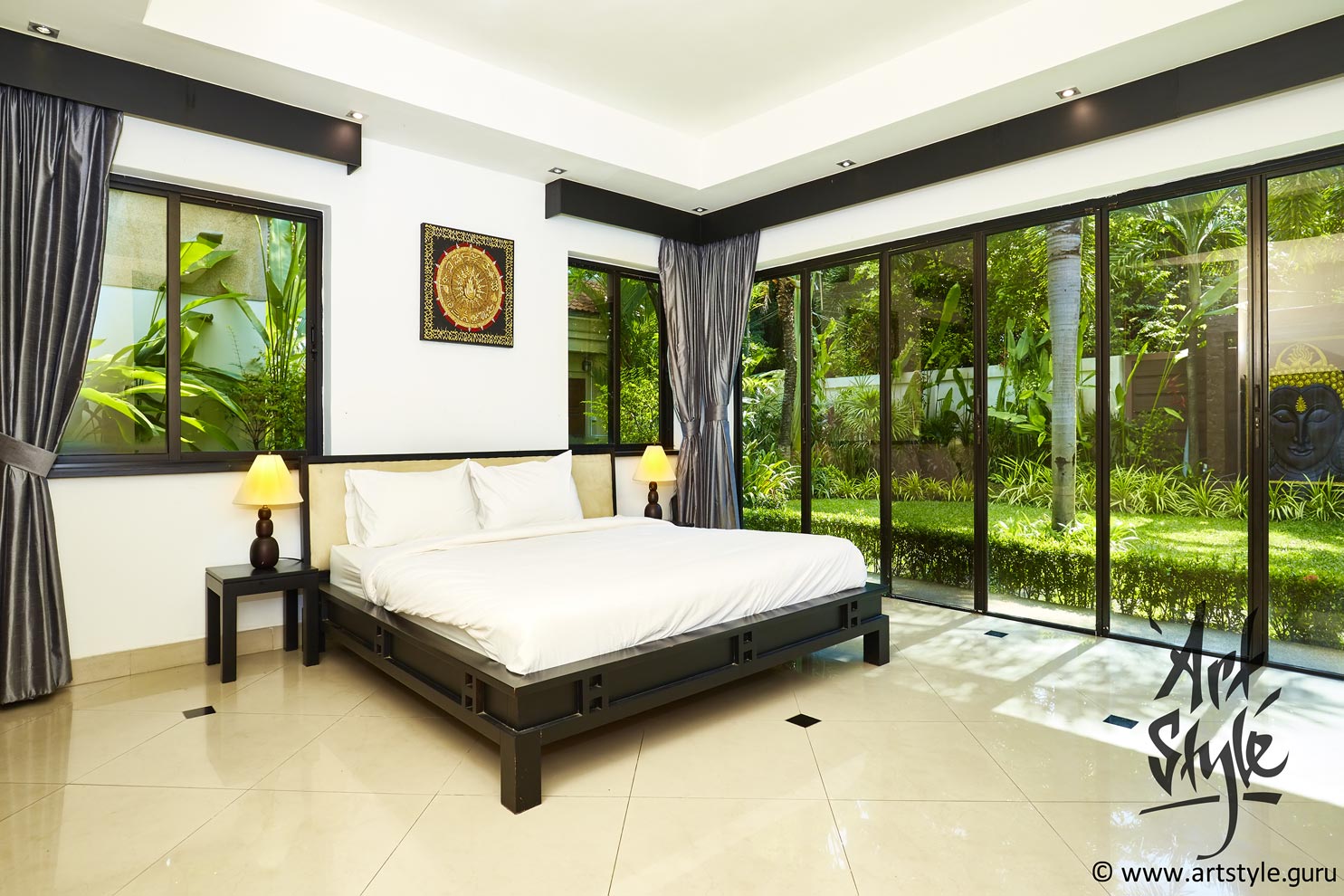
One of the secrets of shooting property is to bring windows into the frame wherever you can. It makes the rooms read more spacious and the interior 'airier', lighter. The catch is the huge gap in brightness between the view outside and the room itself. To smooth that contrast you either light the room with flash or shoot at dawn or dusk — the 'regime hour'.
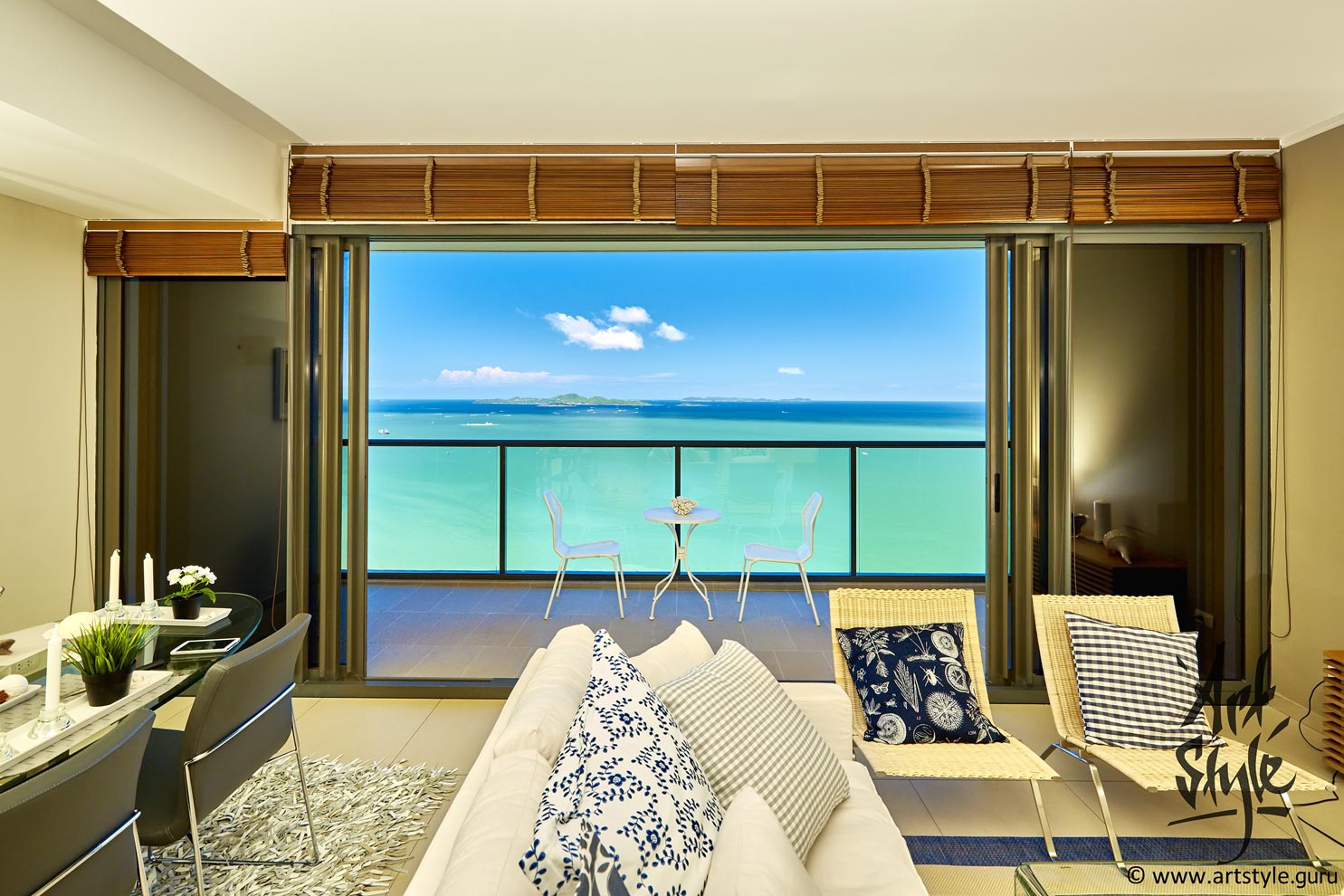
It's precisely this view of the sea and Koh Larn island that makes the condo cost around a million dollars — so the view from the balcony simply has to be shown. But shooting both the apartment and what's beyond the glass equally well is beyond many an interior photographer: it takes either HDR (laborious, and unconvincing in the end) or a battery of remote flashes (expensive, and far from easy to run).
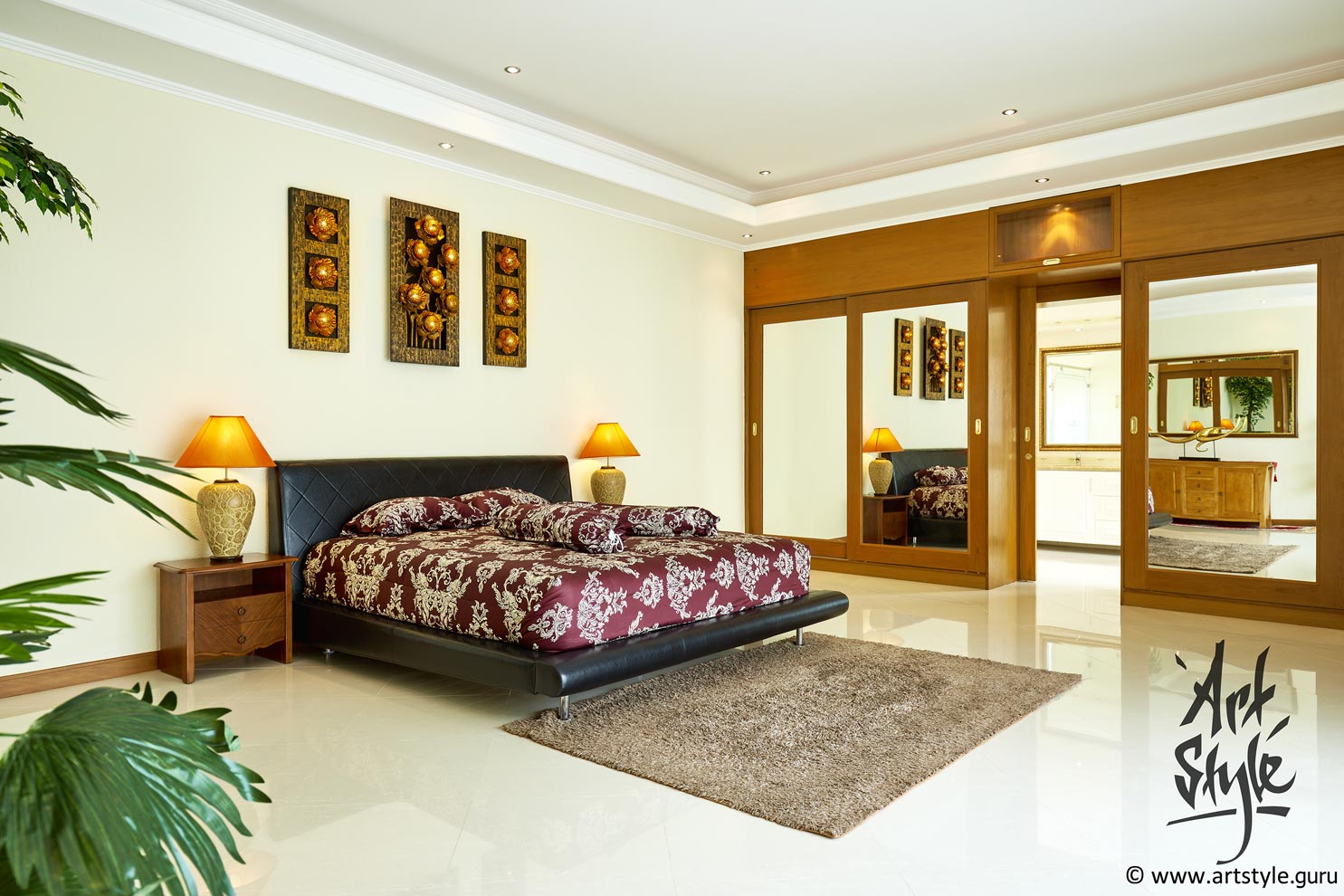
When you shoot real estate the client always wants the place to look bigger — the rent or the sale price depends on the floor area too, after all. One of the honest ways to grant that wish is to work with reflections and mirrors.
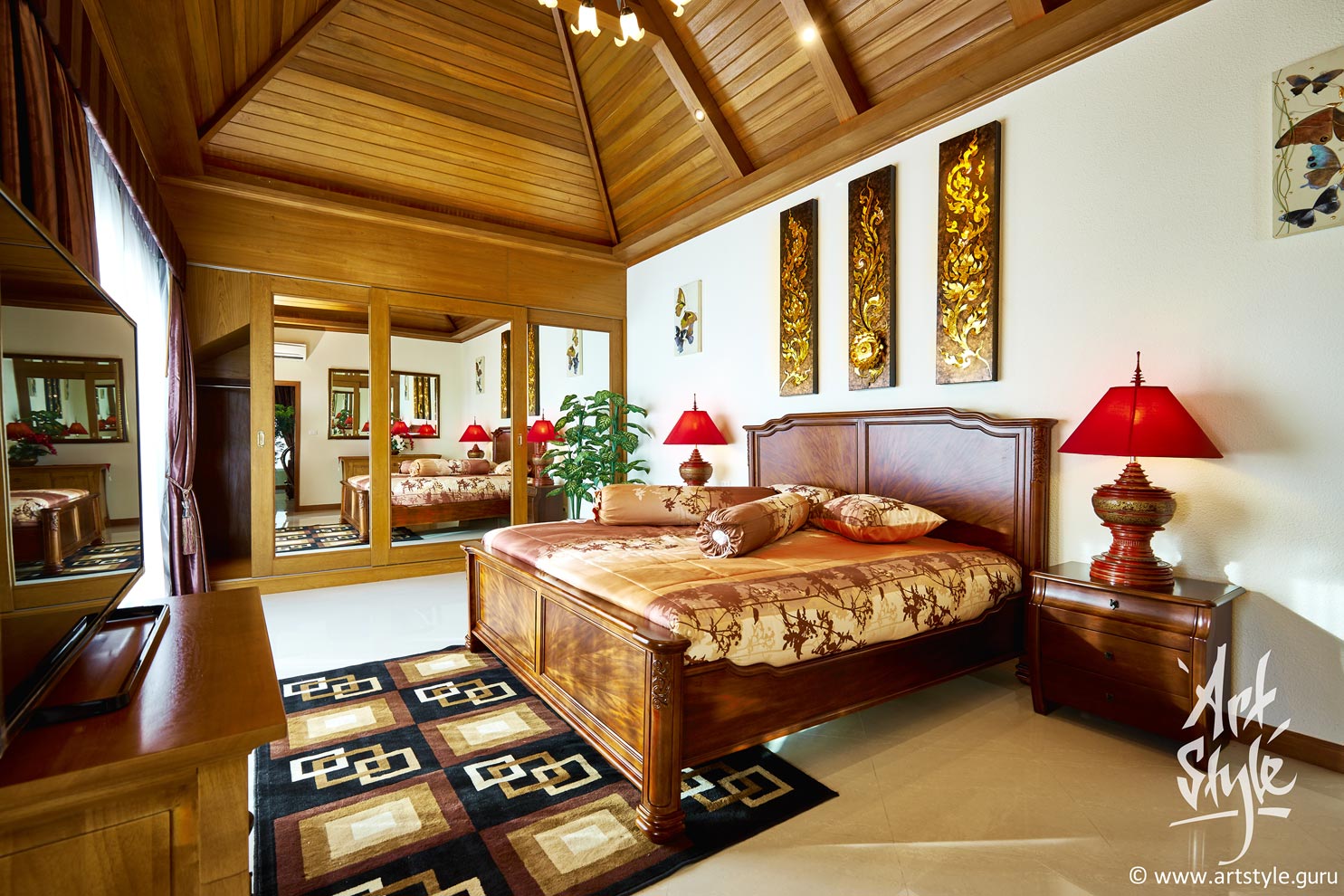
If a room has mirrors set opposite one another, a curious optical trick becomes possible — the 'infinite room'. Here there are in fact two table lamps, while the eye counts at least six.
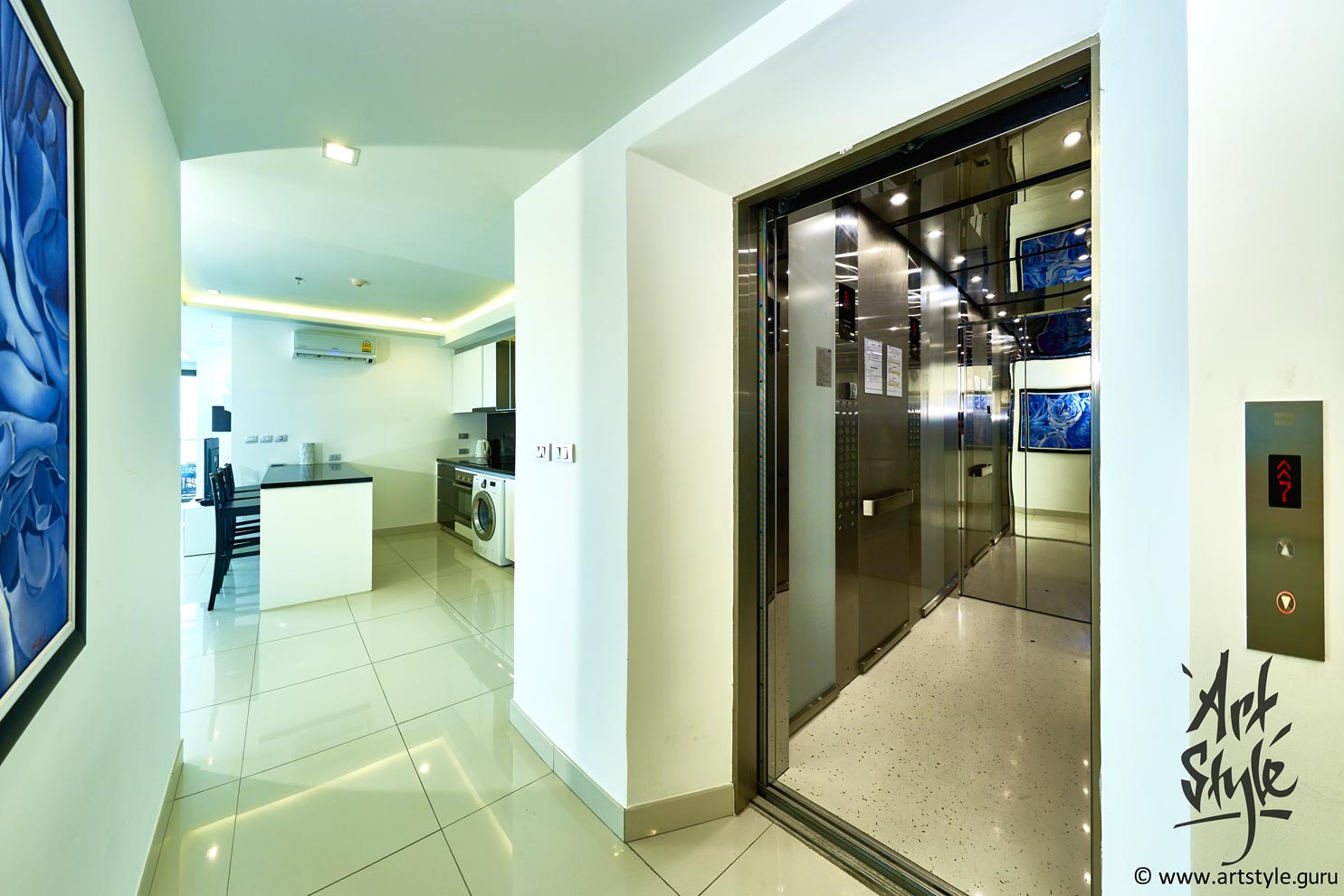
The shot looks simple, but there are two things going on. First, this is a condo apartment — with its own dedicated lift that opens straight into it. Second, the frame spans 180 degrees horizontally: the reflection of the picture on the left turns up in the mirror on the right — and yet the photographer is nowhere to be seen, and the space isn't distorted.
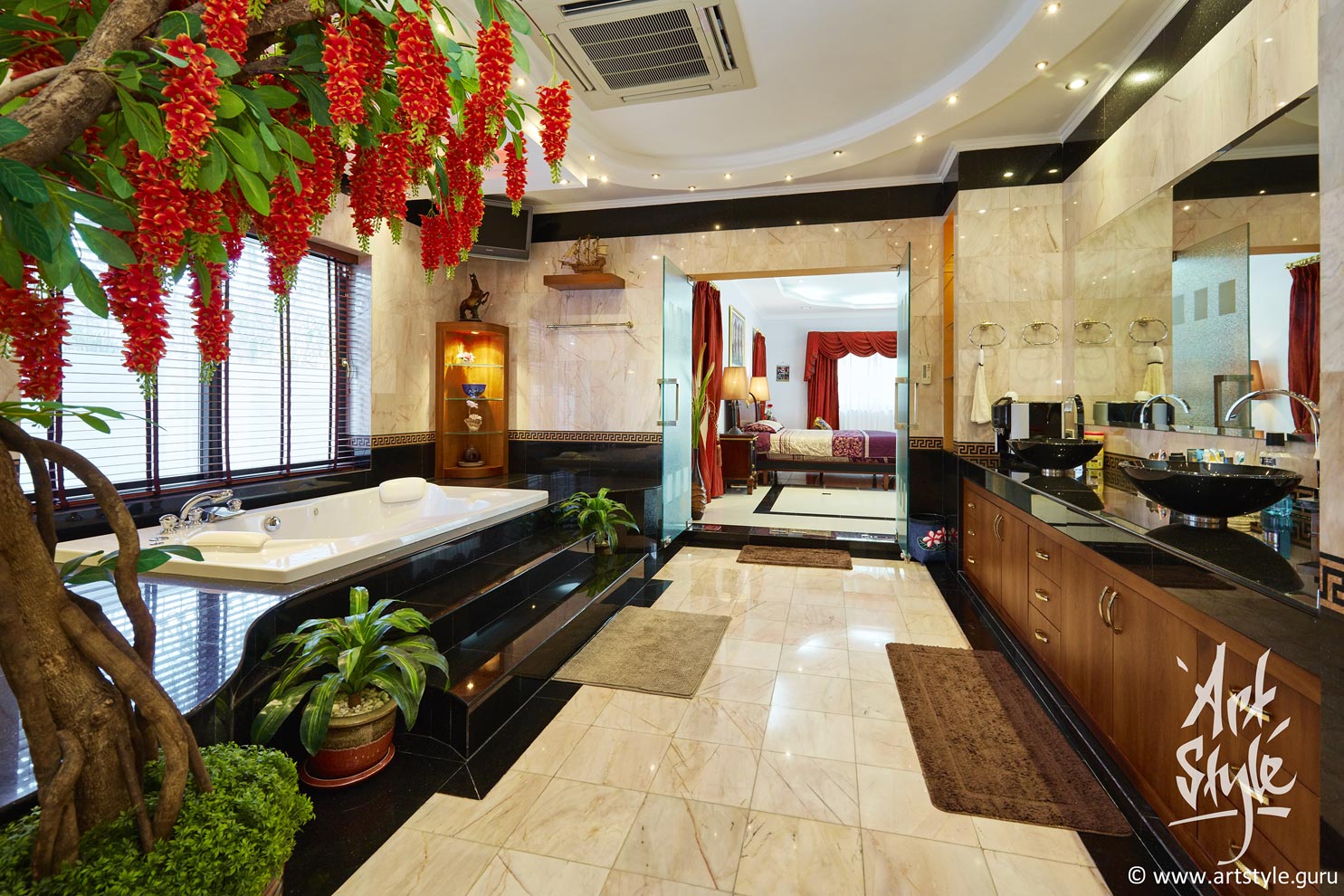
Probably the most luxurious bathroom I've ever photographed. And though it's larger than the living space of most ordinary flats, within the villa it's merely a 'corner' — the place runs to 1,200 square metres.
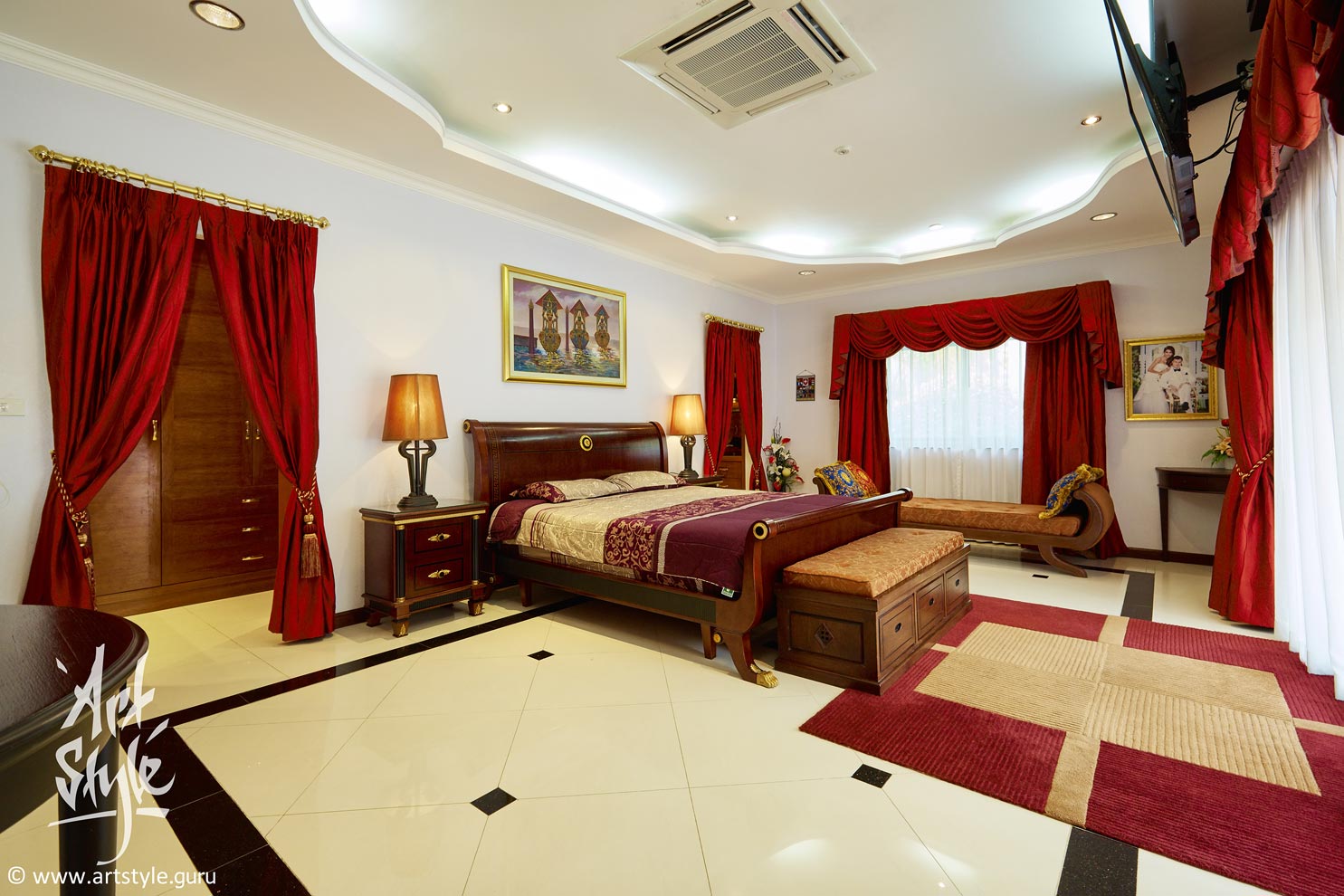
A blood-red master bedroom like this would suit a vampire — or simply someone who knows how to enjoy living in luxury.
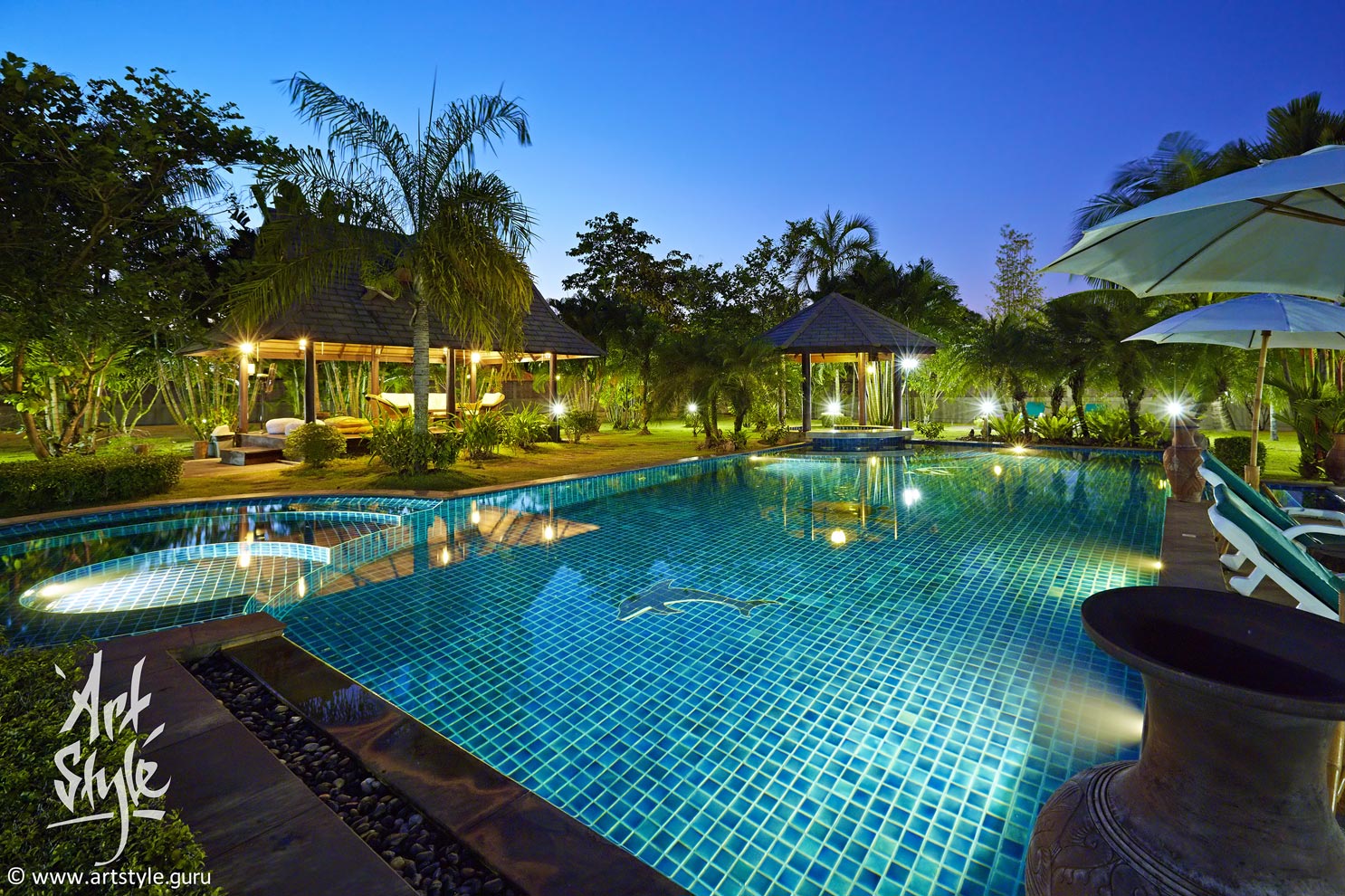
An evening shot by the pool of a private villa always looks good. But for the water to glow as if lit from within, you need a long exposure — often paired with a high ISO. So a tripod here is strongly advised: this frame was four seconds at ISO 1250.