
Light of the golden & blue hour
Light decides everything, and the best light of the day lives in two short windows. The first is the golden hour before sunset — warm, soft, ideal for people. The second is the blue hour, that half-hour after the sun is down, when the sky is still deep blue and the city lights are already on — the time for architecture and landscape. Both windows are brief and temperamental; here's how I work with them.
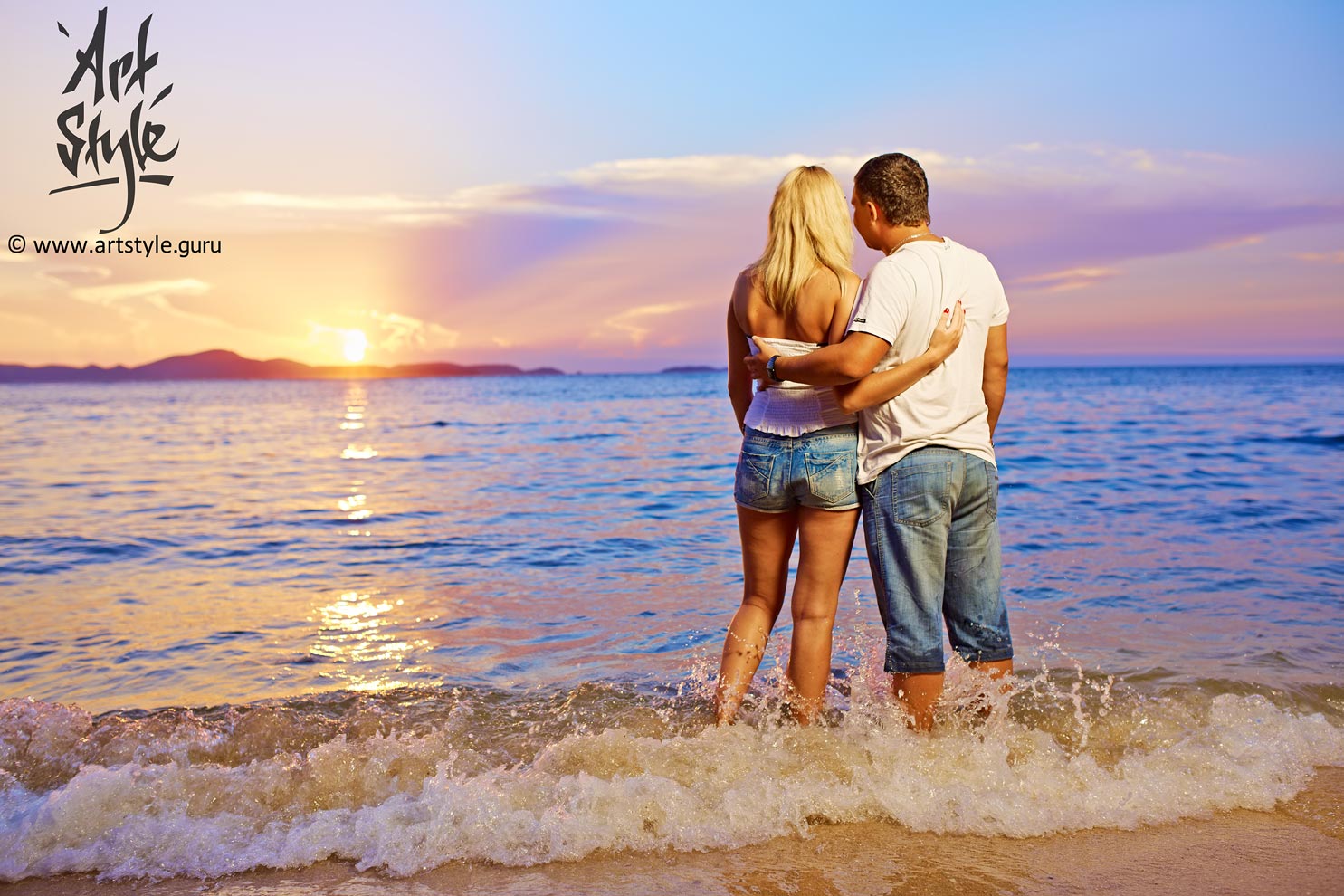
A sunset is always beautiful — but capturing it “the way the eye sees it” is very hard. Usually you get a frame of blown highlights and crushed shadows, with no trace of that rich sunset colour. The reason is the enormous brightness range: neither the eye nor the lens takes it all in at once — but the brain assembles it into a single picture. A camera can't do that on its own, so at sunset you almost always need an external light source.
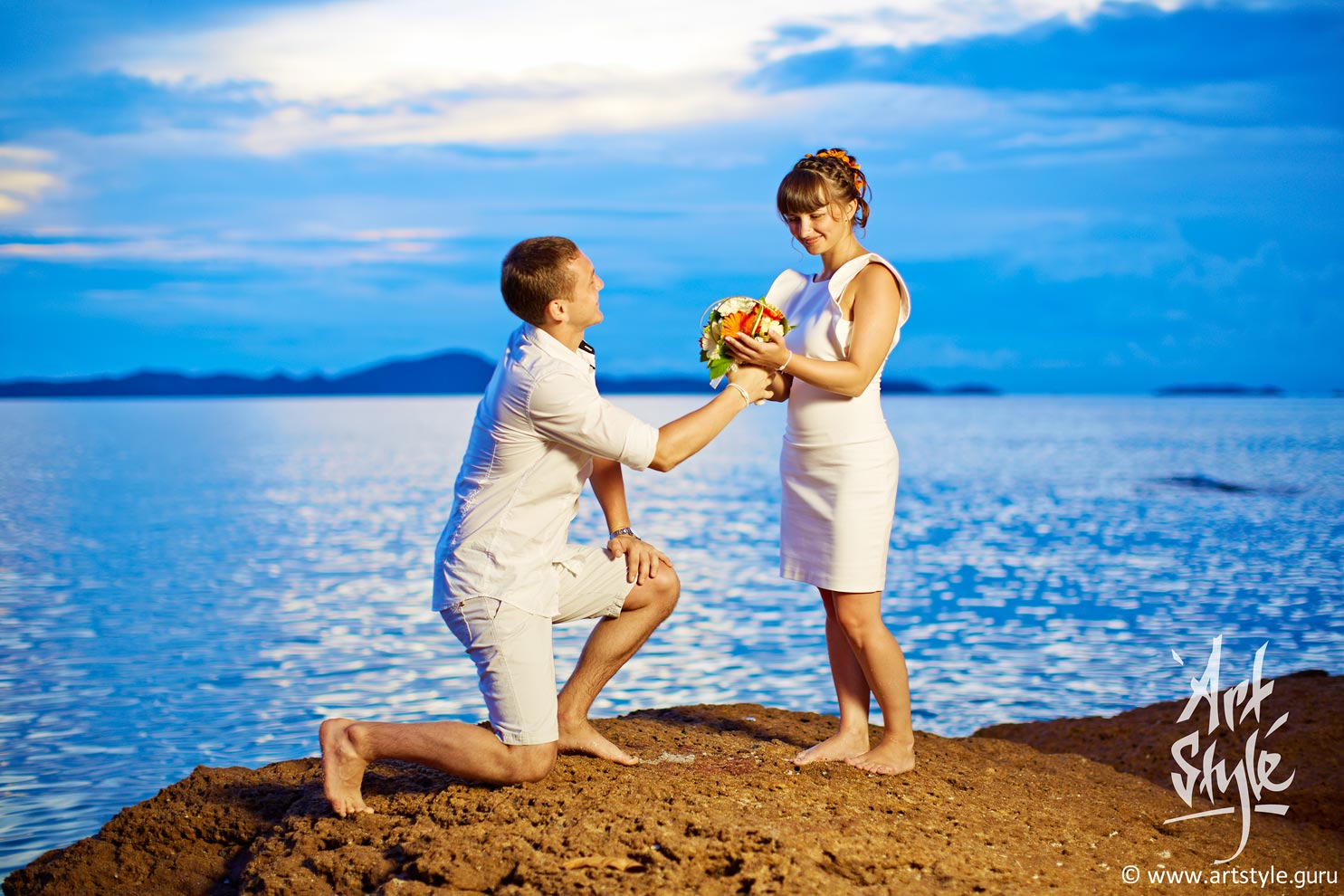
When the background is the sea, you rarely need much blur — and so you don't need an expensive fast or telephoto lens either. That apparent ease is exactly what lures beginners in. Most come away disappointed, though: a sunset's brightness range is huge, and there's no getting by without flash and careful post-processing. On top of that, the light at sunset changes fast — you have to react to within a second and know exactly what you're doing.

One of the most convenient stretches for photographing people begins a couple of hours before sunset and ends as the sun goes down. The sun is already low and its light is gentle — easy to marry natural and artificial light, and to sculpt expressive shadows.
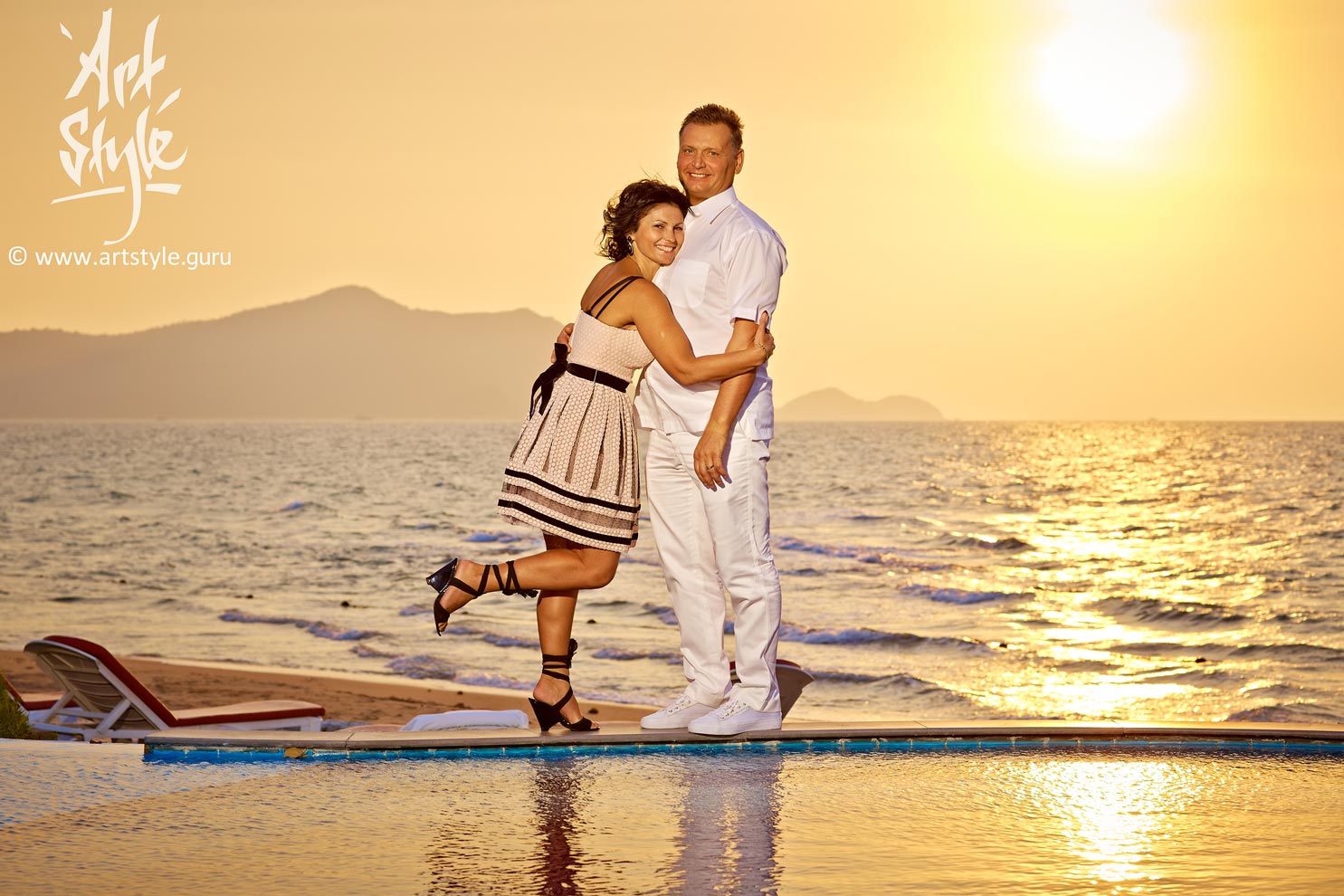
Colour has a powerful effect on a frame's mood. Here the warm yellow cast of the sunset deepens the sense of the couple's closeness and the harmony between them.
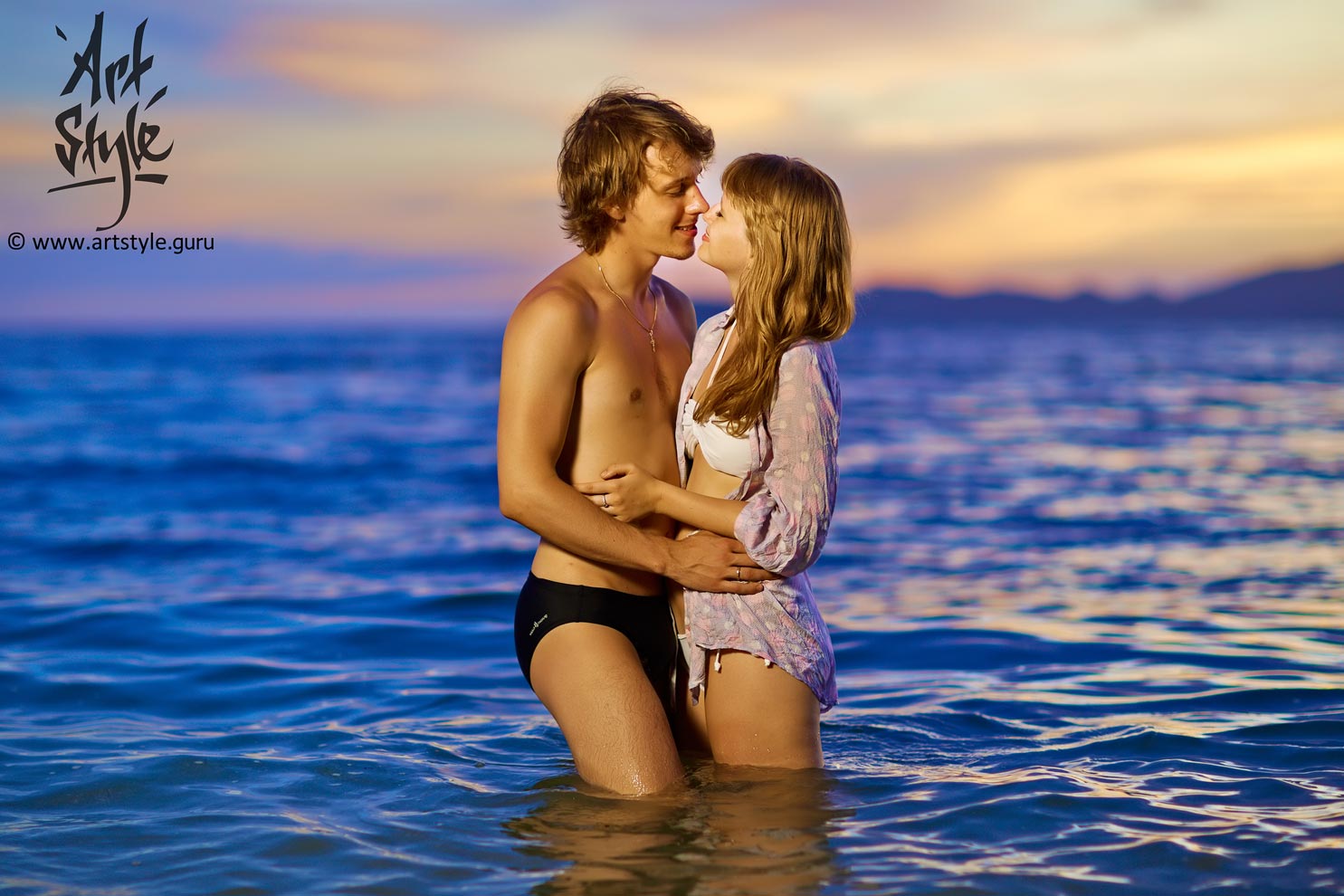
The right time of day, a fast lens, and an external light source — that's the whole secret of a good seaside shot at sunset.
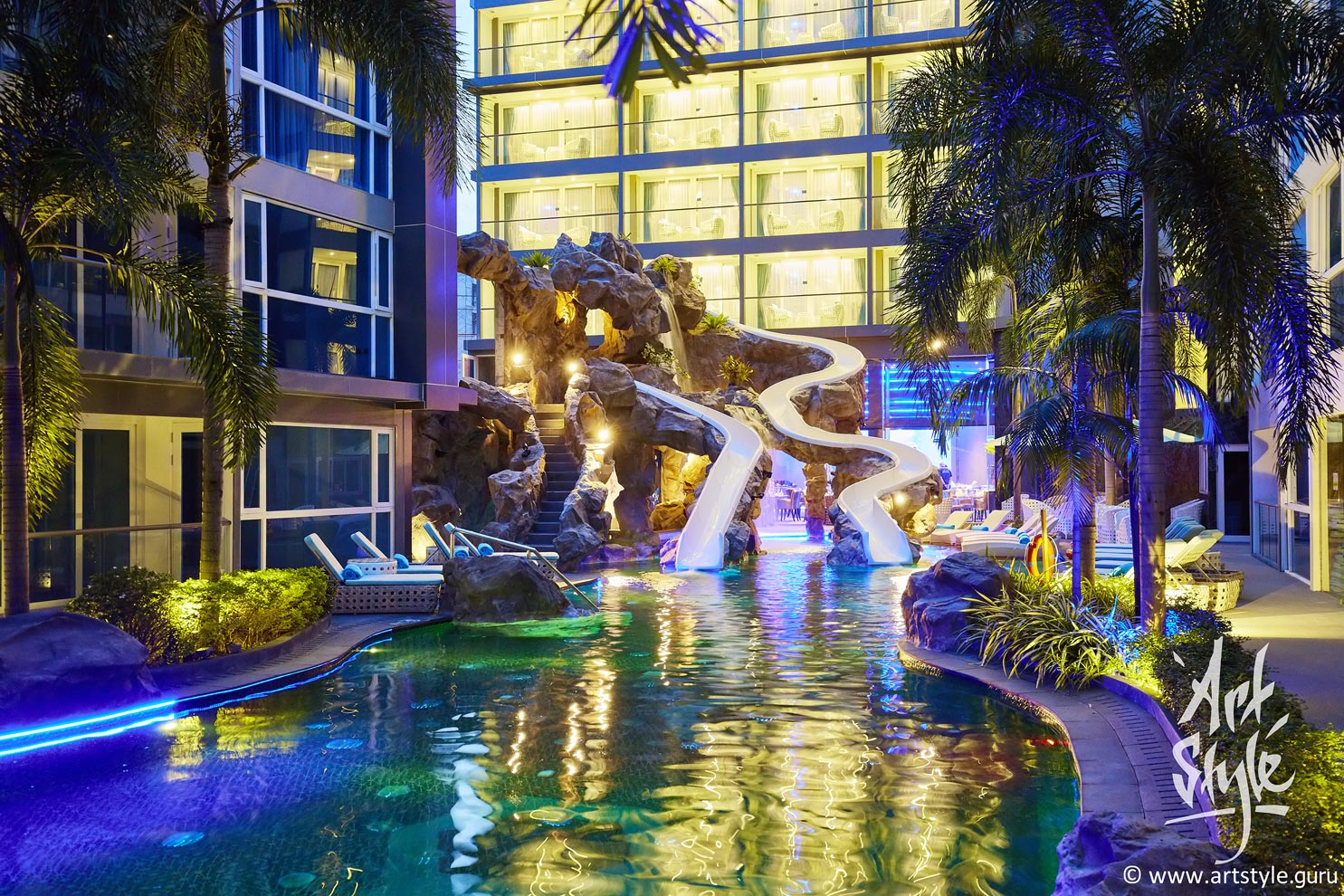
Any “night” shoot is ideally done during the blue hour — the 30 to 60 minutes after sunset. The sky by then isn't black but a deep, saturated blue, and the shadows are full of soft fill reflected down from it. That's what yields a frame of the highest artistic and technical quality.
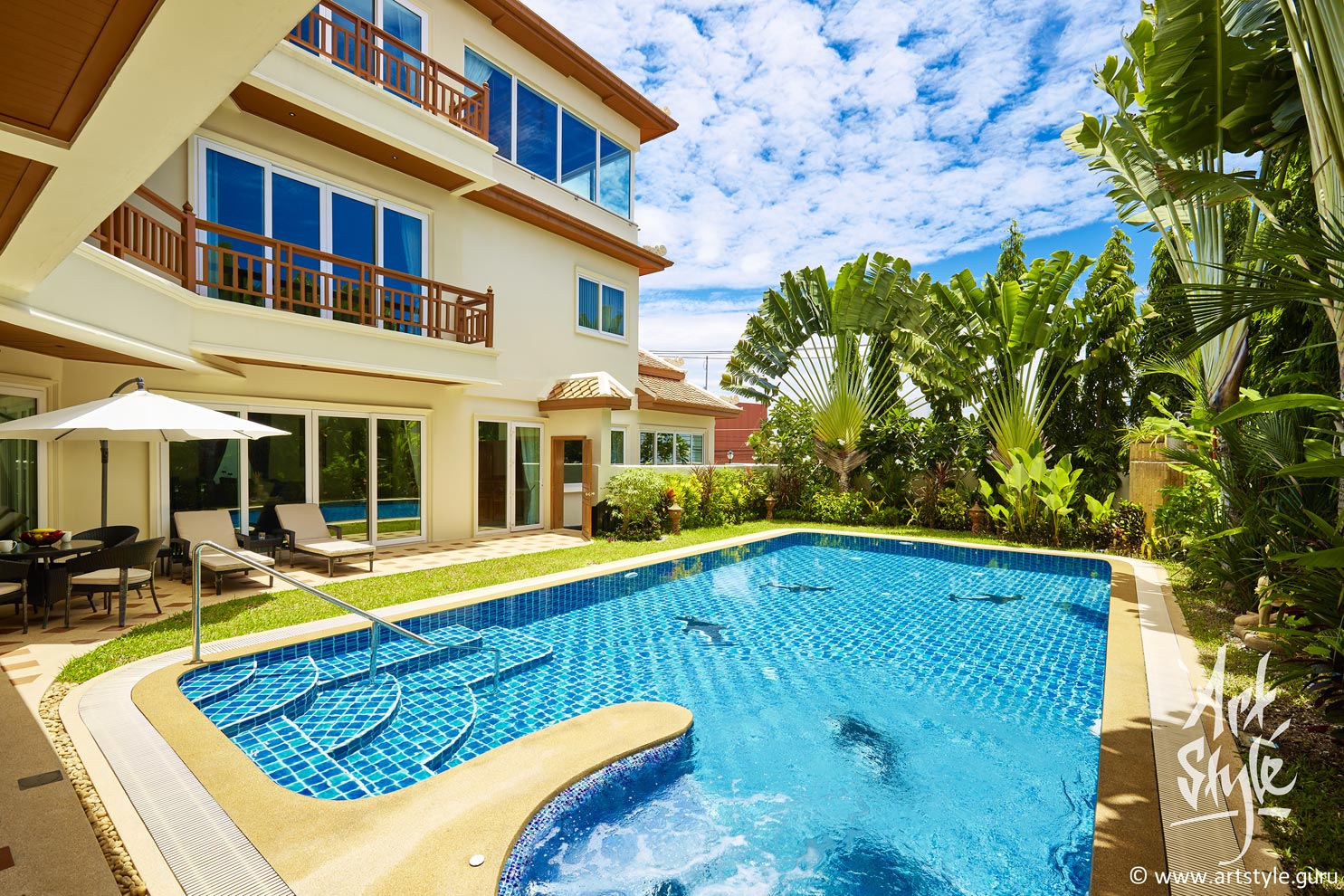
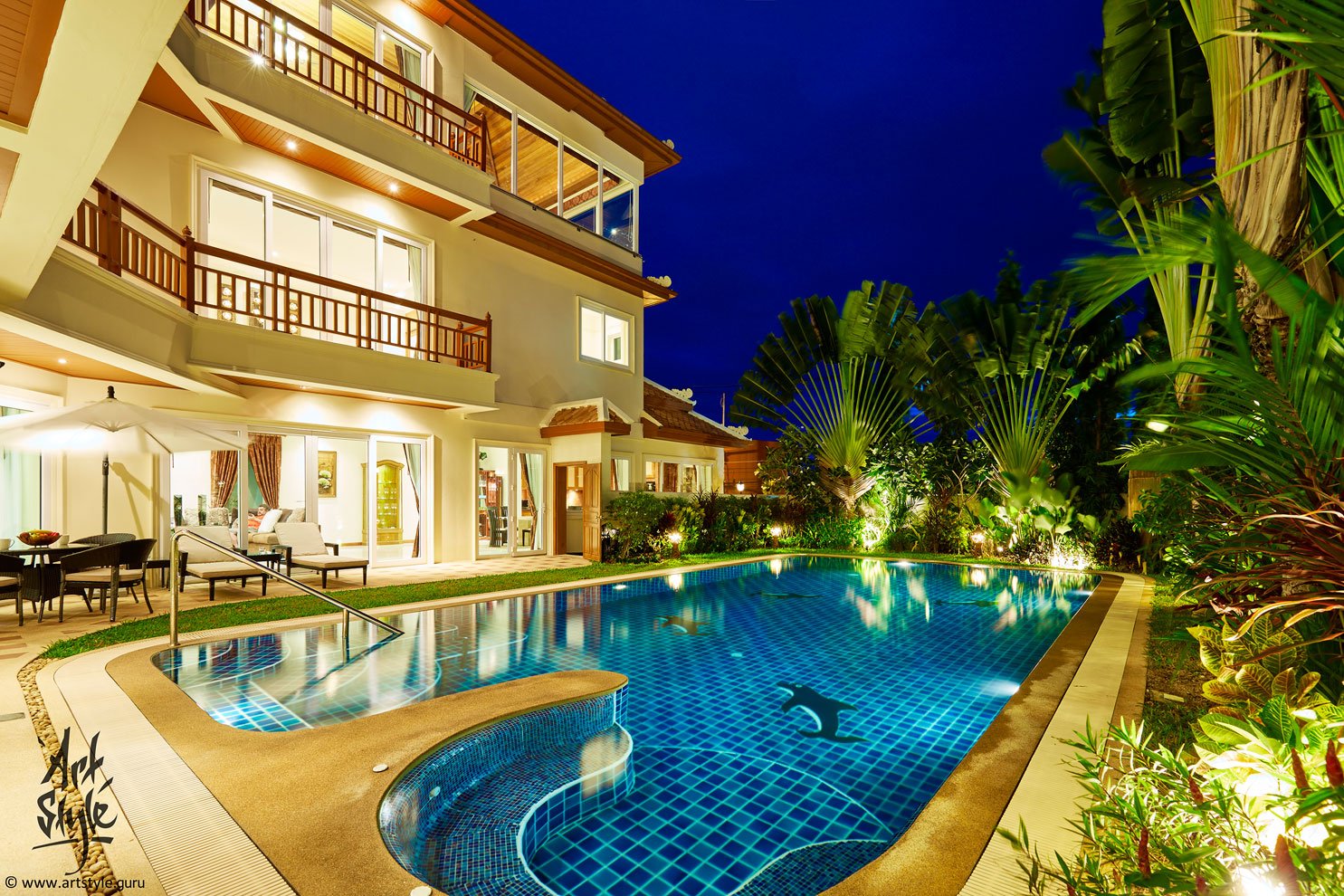
Shooting architecture or a landscape, a photographer usually can't influence the light — and then patience and observation are his main weapon. The same place can look utterly different from one light to the next: here's the same villa at midday and at the blue hour. The only trouble is that the right moment is often very short — the count runs, quite literally, in seconds.
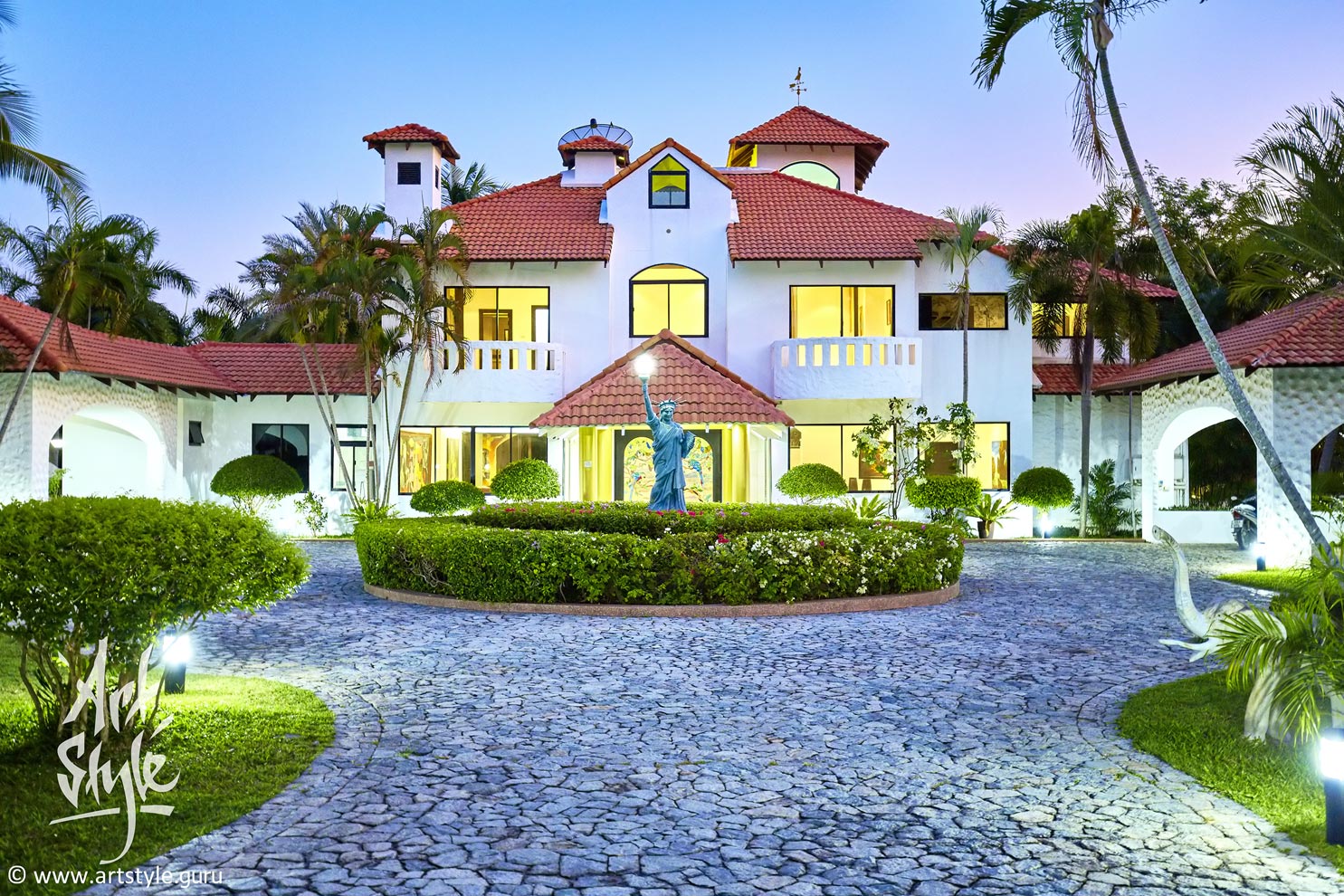
When you need to show both a building's lighting and the landscape around it, timing matters most of all. That half-hour either side of sunset is called the “regime,” or blue, hour: the sun no longer drowns out the artificial light with its strength, yet it's still bright enough to light the sky and bring out the colour, volume and texture of everything around.
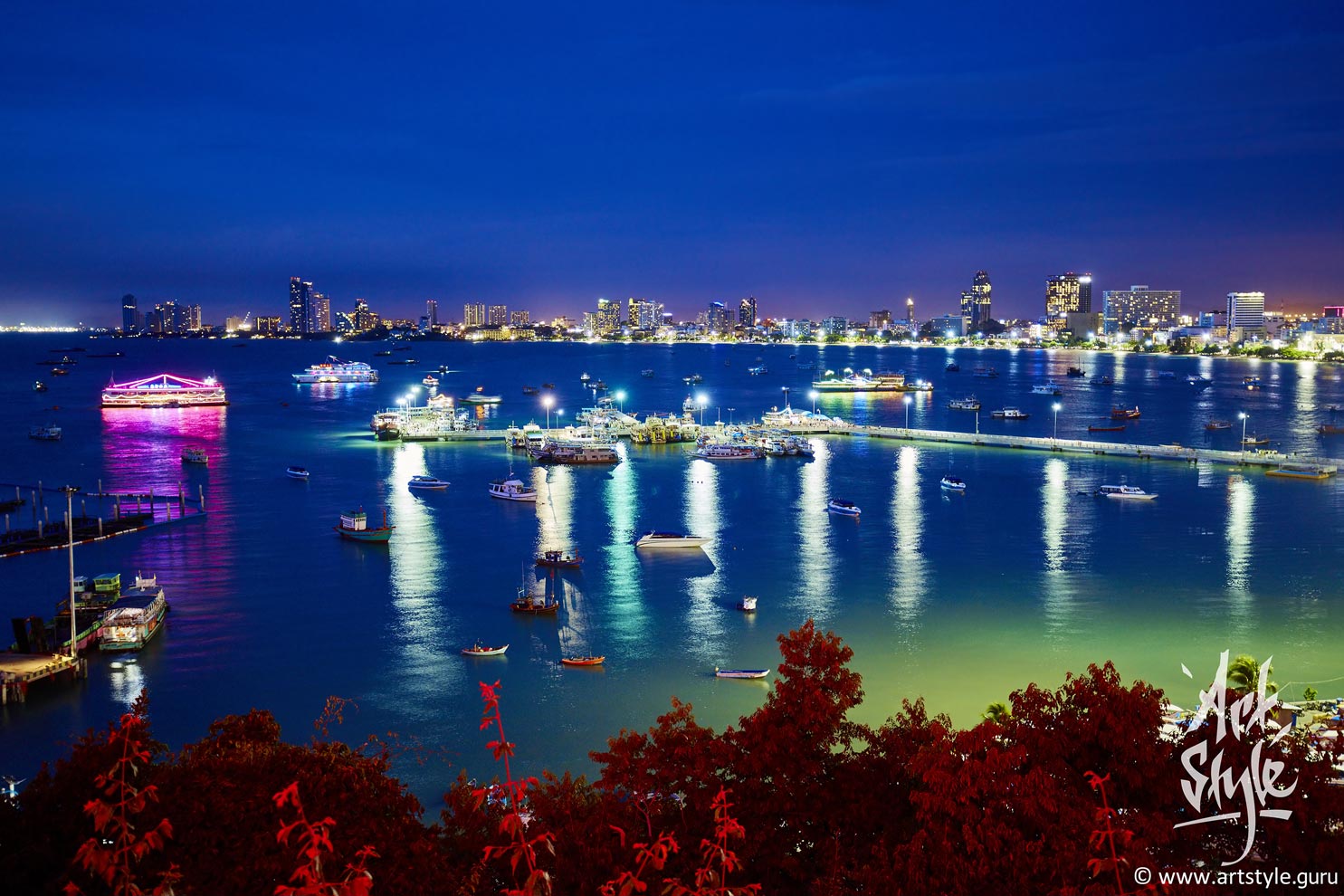
Pattaya at night. The colour here is real, with no processing at all. For colour to show up in a night frame, the frame has to be exposed enough: where there's light, colour appears.
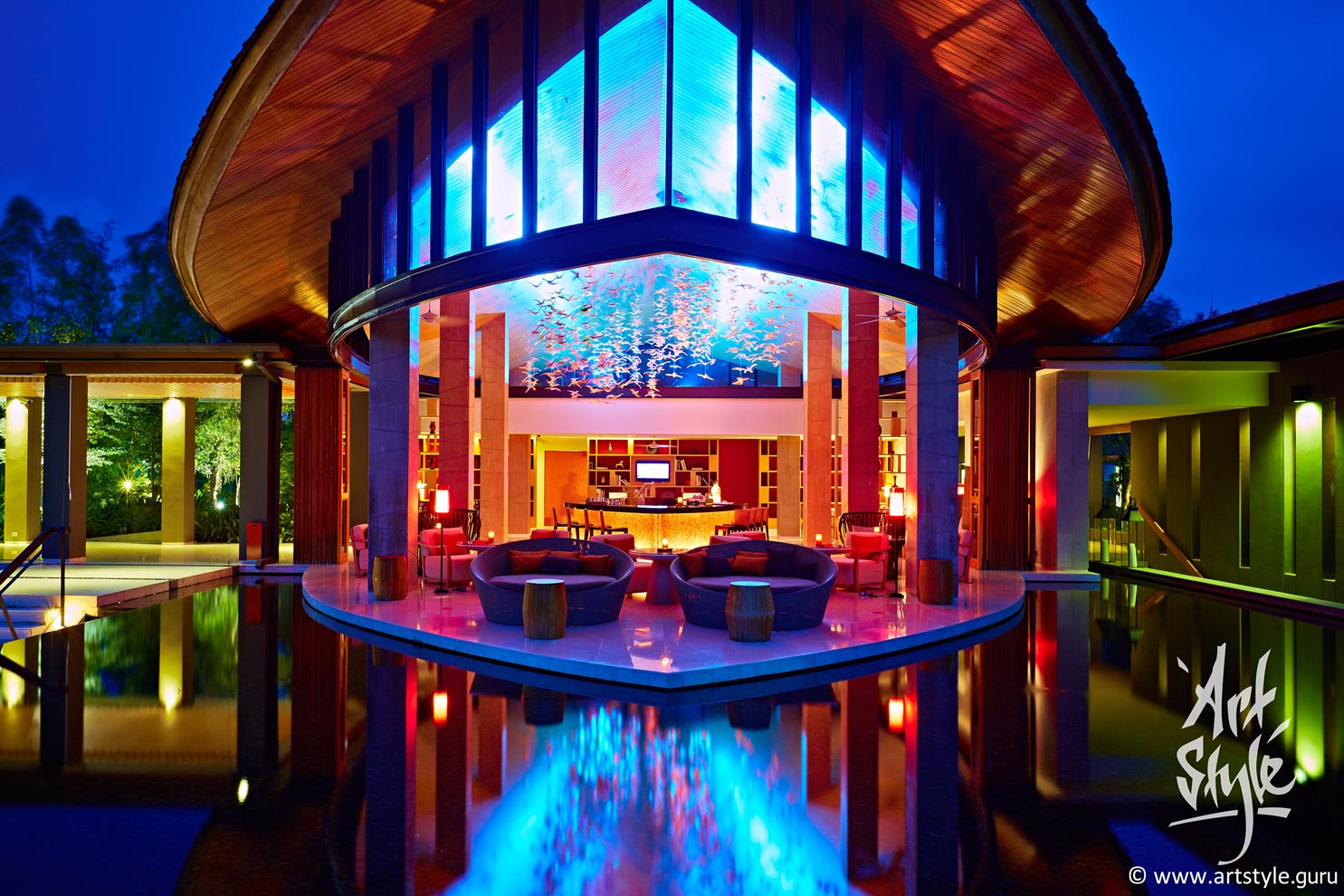
On a good frame, evening colours are deeply saturated. It seems as if reality never looks like that — when in fact this is the fullest reflection of reality there is. We see evening colours as washed-out only because, in twilight, our colour perception drops off sharply. A professional camera, on the other hand, works equally well in any light.