
Bestiary: primates
Primates are the most mirror-like thing in the whole zoo — it's far too easy to recognise your own family arrangements in theirs. Here are the monogamous gibbons, for whom marriage is a serious, lifelong affair; the matriarchal lemurs and macaques, where the female always has the last word; and the thoroughly free-living squirrel monkeys. The name and the camera settings are under each frame; the personalities, as ever, speak for themselves.
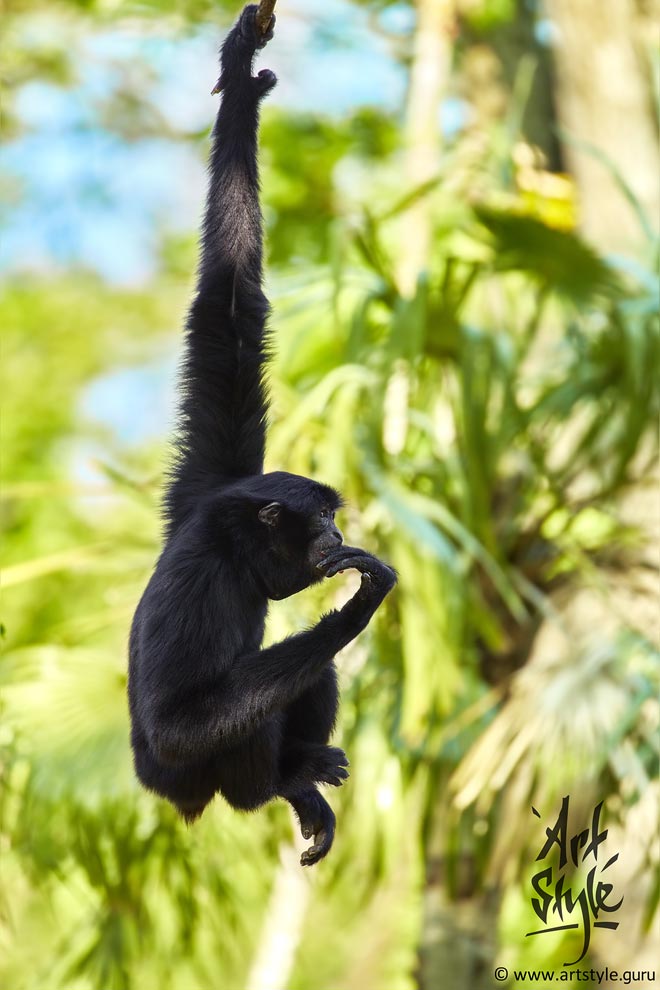
Siamang
Canon EOS 5D Mark III + EF 100-400/4.5-5.6 L IS II + 1.4 ext III · 560 mm · f/8 · 1/250 s · ISO 800
The largest of the gibbons — twice the size of its cousins, up to a metre tall and as much as fourteen kilos; black, arboreal, native to the forests of Malaysia, Thailand and Sumatra. And in Thailand everything is so spiritual that even a gibbon can hang there in the lotus position — meditating, contemplating the eternal.
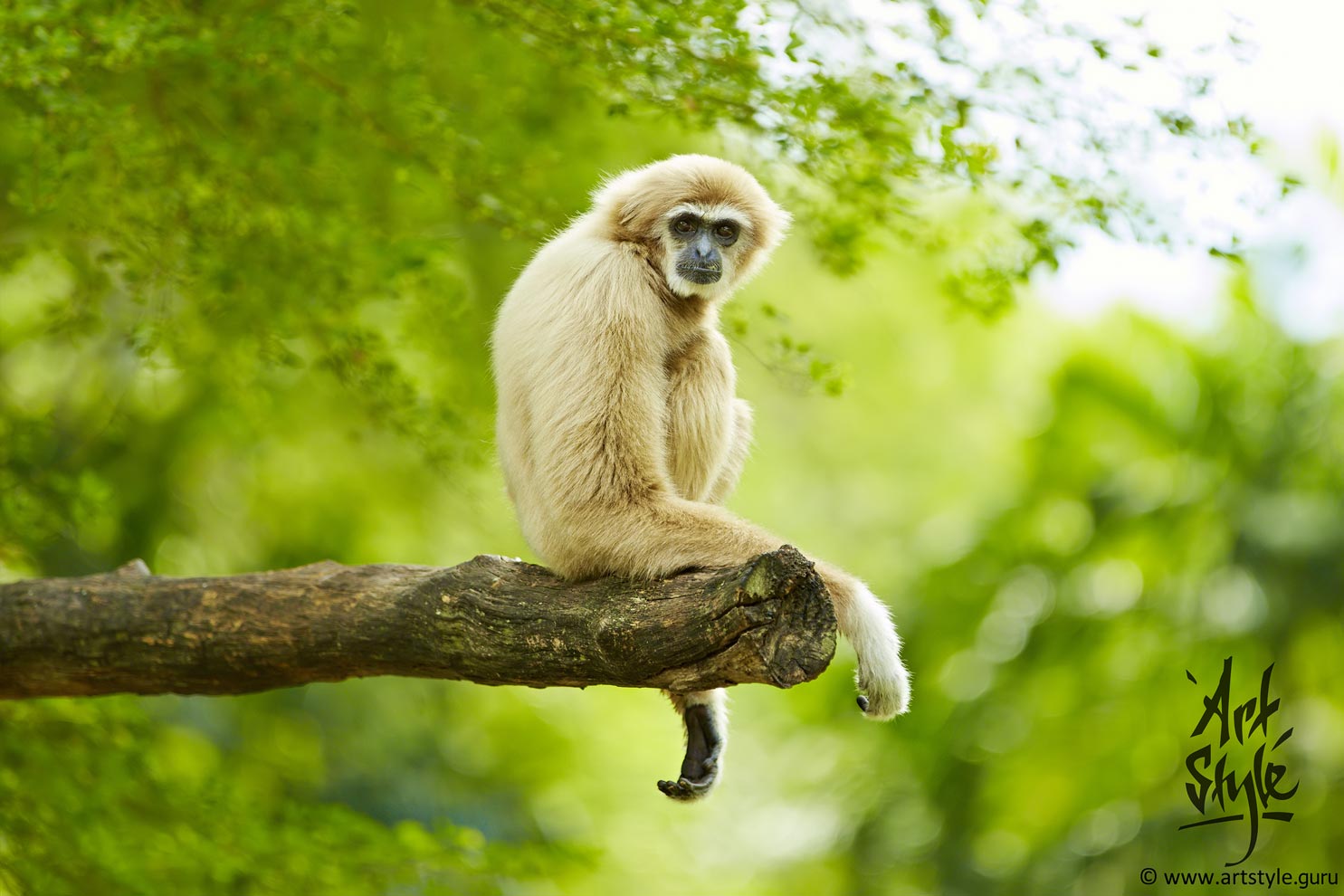
White-handed Gibbon, male
Canon EOS 5D Mark III + EF 70-200/2.8 L IS II + 1.4 ext III · 280 mm · f/4 · 1/320 s · ISO 640
A young gibbon, looking at you with a touch of quiet doom — because he already knows he's about to become a gibbon-dad.
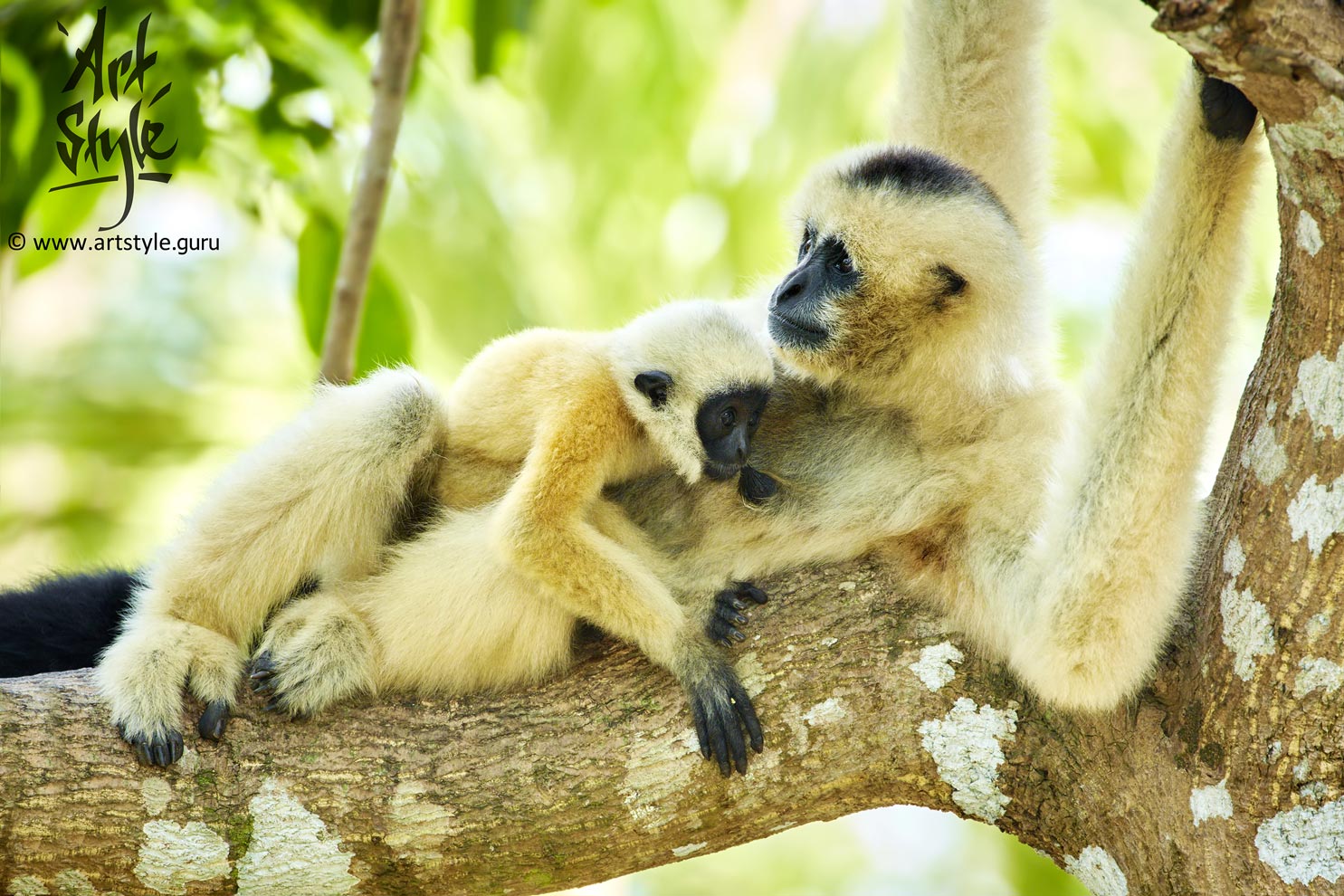
Pileated Gibbon, female with her baby
Canon EOS 5D Mark III + EF 100-400/4.5-5.6 L IS II + 1.4 ext III · 560 mm · f/8 · 1/100 s · ISO 800
A mother nursing her four-month-old — and even mid-feed she holds the pose, the very image of Rembrandt's Danaë. That's what the power of art does, even to monkeys. Gibbons keep no breeding season: a female has a single baby (very rarely two) on a strictly when-it-happens basis. Yet she's choosy about the father — no passing working-stiff gibbon will do; but once she's chosen, it's a monogamous pair for life.
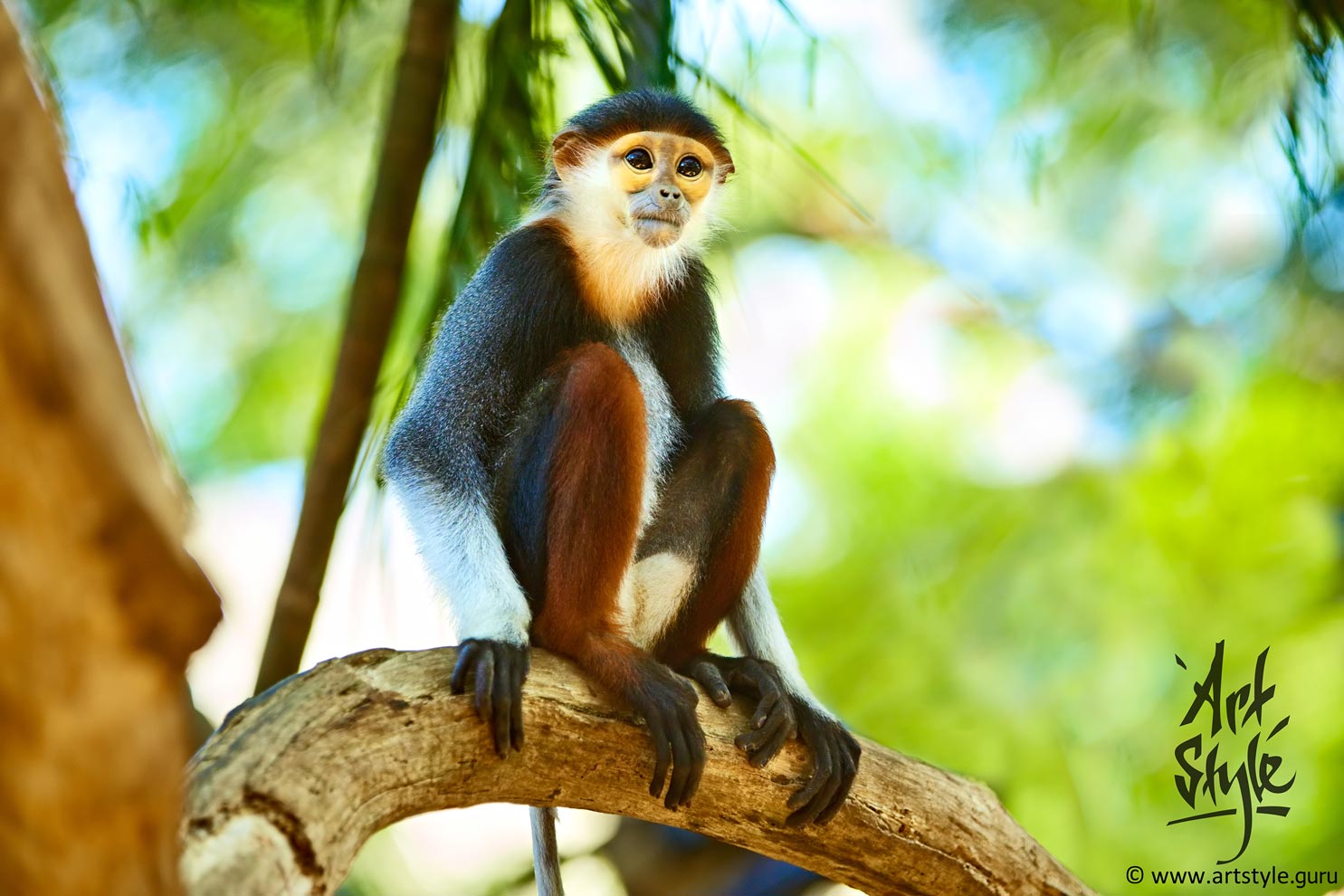
Red-shanked Douc Langur
Canon EOS 5D Mark III + EF 70-200/2.8 L IS II + 1.4 ext III · 205 mm · f/4 · 1/100 s · ISO 640
The douc langur is almost a camel of the jungle: it doesn't drink water at all, drawing every drop it needs from its food. Very few remain in Southeast Asia, and the species is on the IUCN Red List.
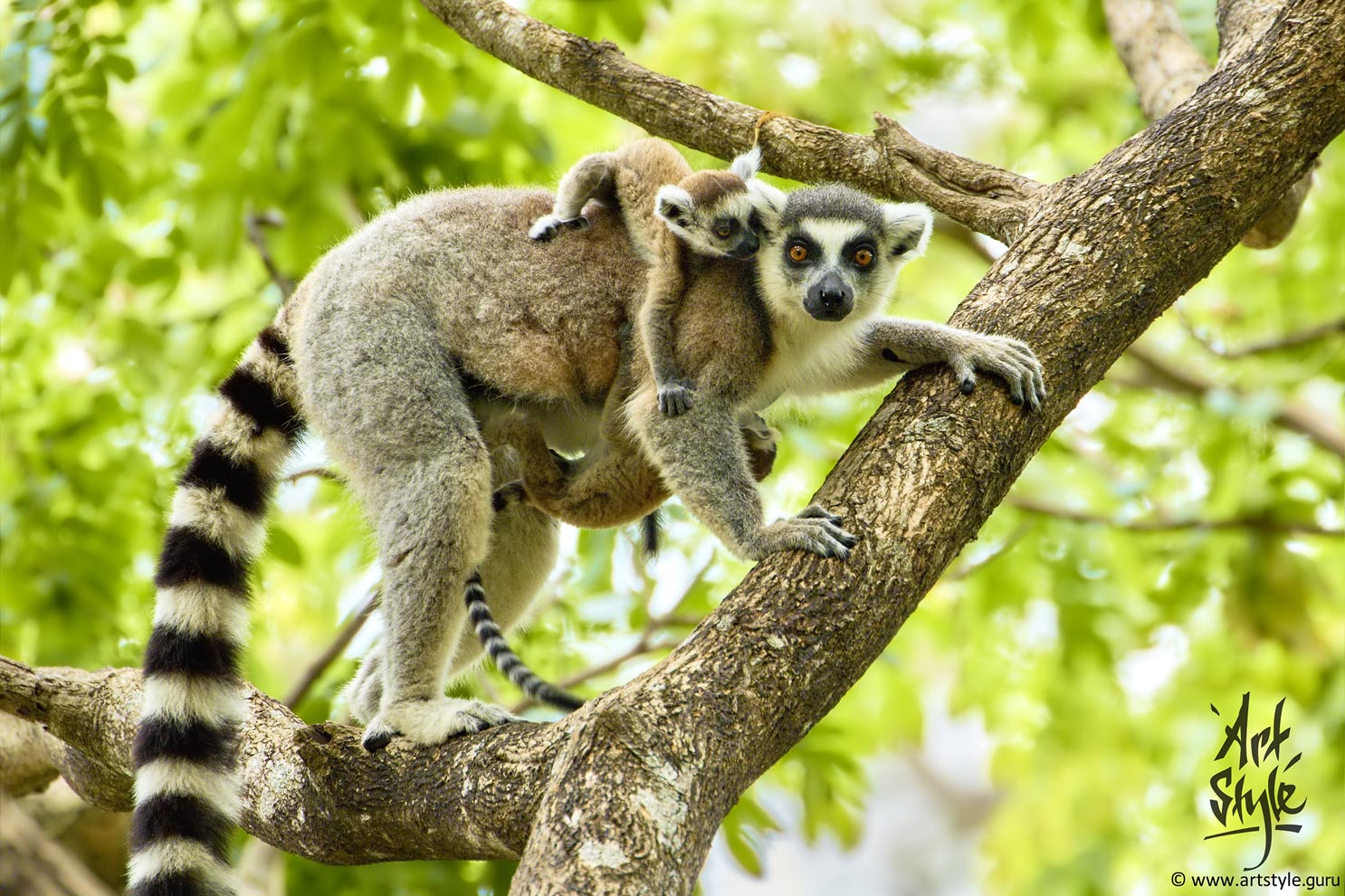
Ring-tailed Lemur, female with twins
Canon EOS 7D Mark II + EF 100-400/4.5-5.6 L IS II + 1.4x III · 560 mm · f/8 · 1/200 s · ISO 800
The mother looks faintly stunned: statistically a ring-tailed lemur almost always has a single baby — and here it's twins at once. Lemurs are famously henpecked: the female runs the troop and enforces her standing with bites, cuffs and other gentle persuasion. (The same behaviour in Homo sapiens was first described in detail in 1869 by Leopold von Sacher-Masoch — in a study entitled Venus in Furs.) Lemurs usually live in one big free-wheeling company — which many researchers put down to exactly that female rule.
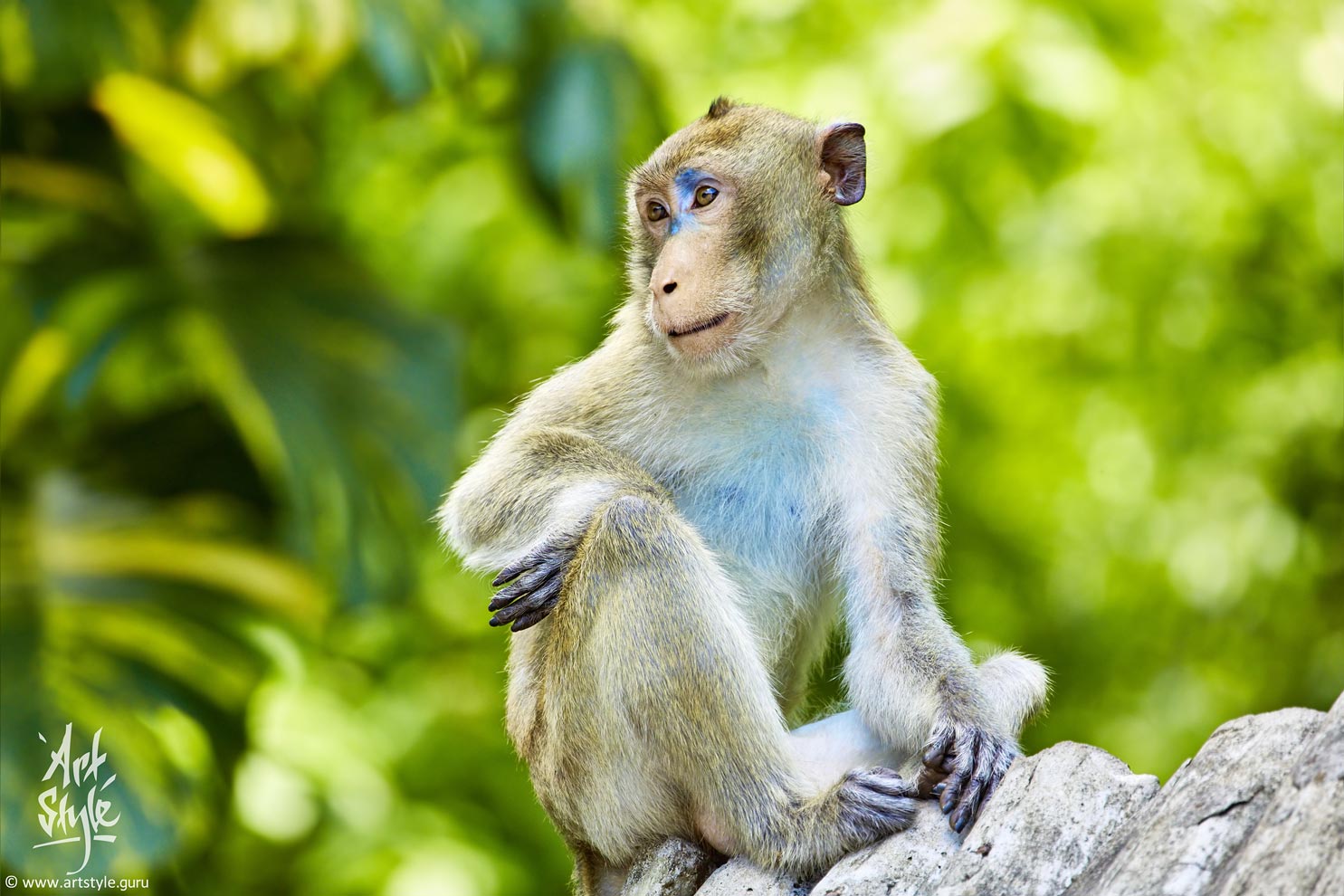
Crab-eating Macaque, male
Canon EOS 5D Mark III + EF 100-400/4.5-5.6 L IS II + 1.4x III · 560 mm · f/8 · 1/160 s · ISO 1250
Also known as the Java macaque, or the long-tailed macaque — a primate with a long and complicated history of living alongside humans: they've been reckoned crop pests, sacred temple animals and laboratory subjects in turn. And this male sits apart for a reason: the crab-eaters run a strict matriarchy, and grown males are simply shown the door. So this male now has just two roads ahead of him: become the alpha that everyone worships, or go off to the lab — as a test subject.
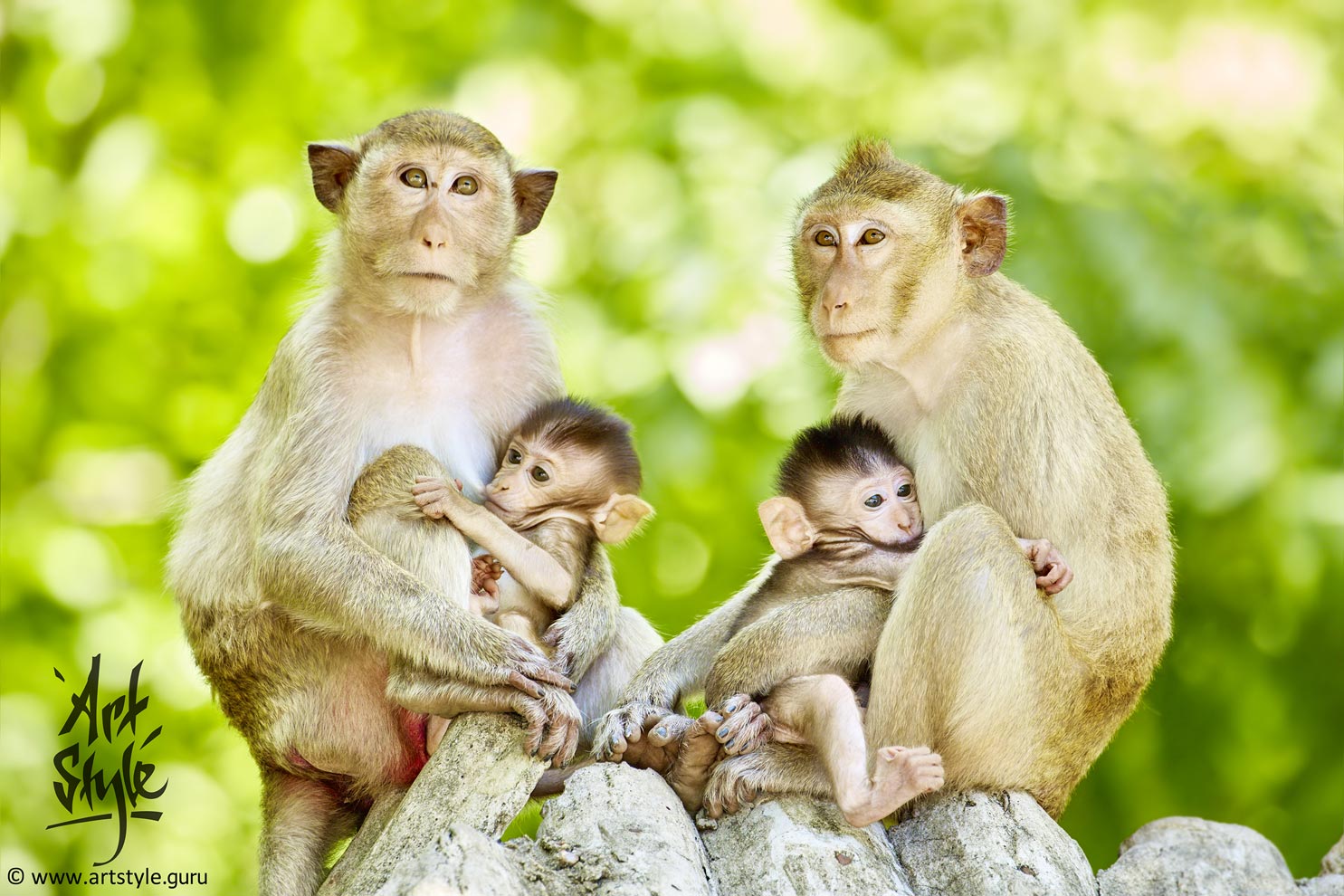
Macaque kindergarten (Crab-eating Macaques)
Canon EOS 5D Mark III + EF 100-400/4.5-5.6 L IS II + 1.4 ext III · 476 mm · f/8 · 1/200 s · ISO 1250
Young mothers with babies in their arms seem to be working out where to find themselves new husbands. No wonder: the matriarchy among crab-eaters is so severe that males are expelled the moment they come of age (see the lone fellow on the previous frame). Matriarchy is all very well, but it does leave the troop with a chronic shortage of men.
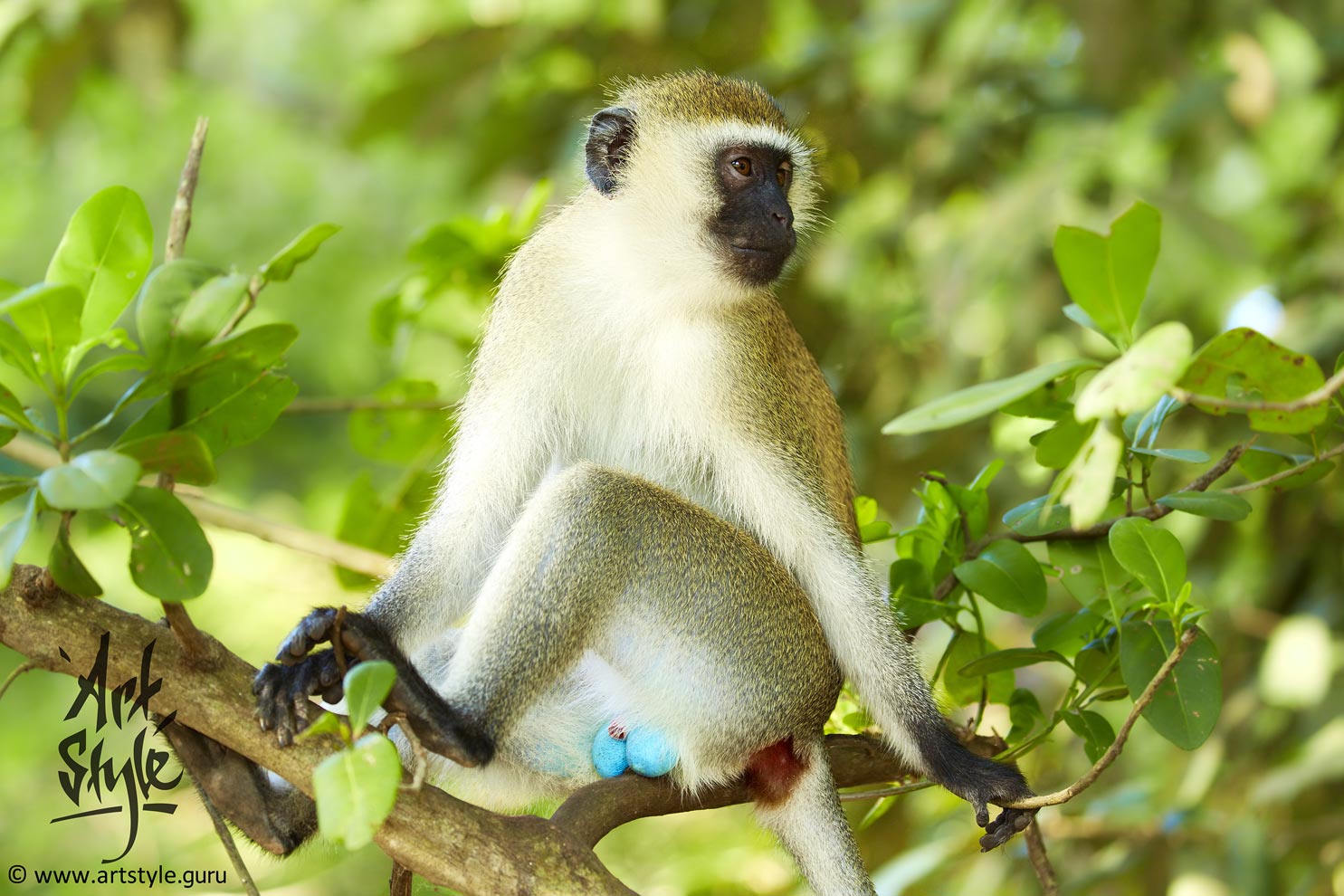
Vervet Monkey
Canon EOS 5D Mark III + EF 100-400/4.5-5.6 L IS II · 153 mm · f/5 · 1/40 s · ISO 400
Vervets range across much of southern and eastern Africa, towns included. They have a signalling system many specialists call a proto-language: the alarm call sounds different depending on which predator is approaching. But a male's real pride lies elsewhere — a bright-red penis and big blue testicles, which is why the locals dubbed them the “blue-balls monkey.” Proto-language is all very well, but the blue balls are, frankly, the more important feature.
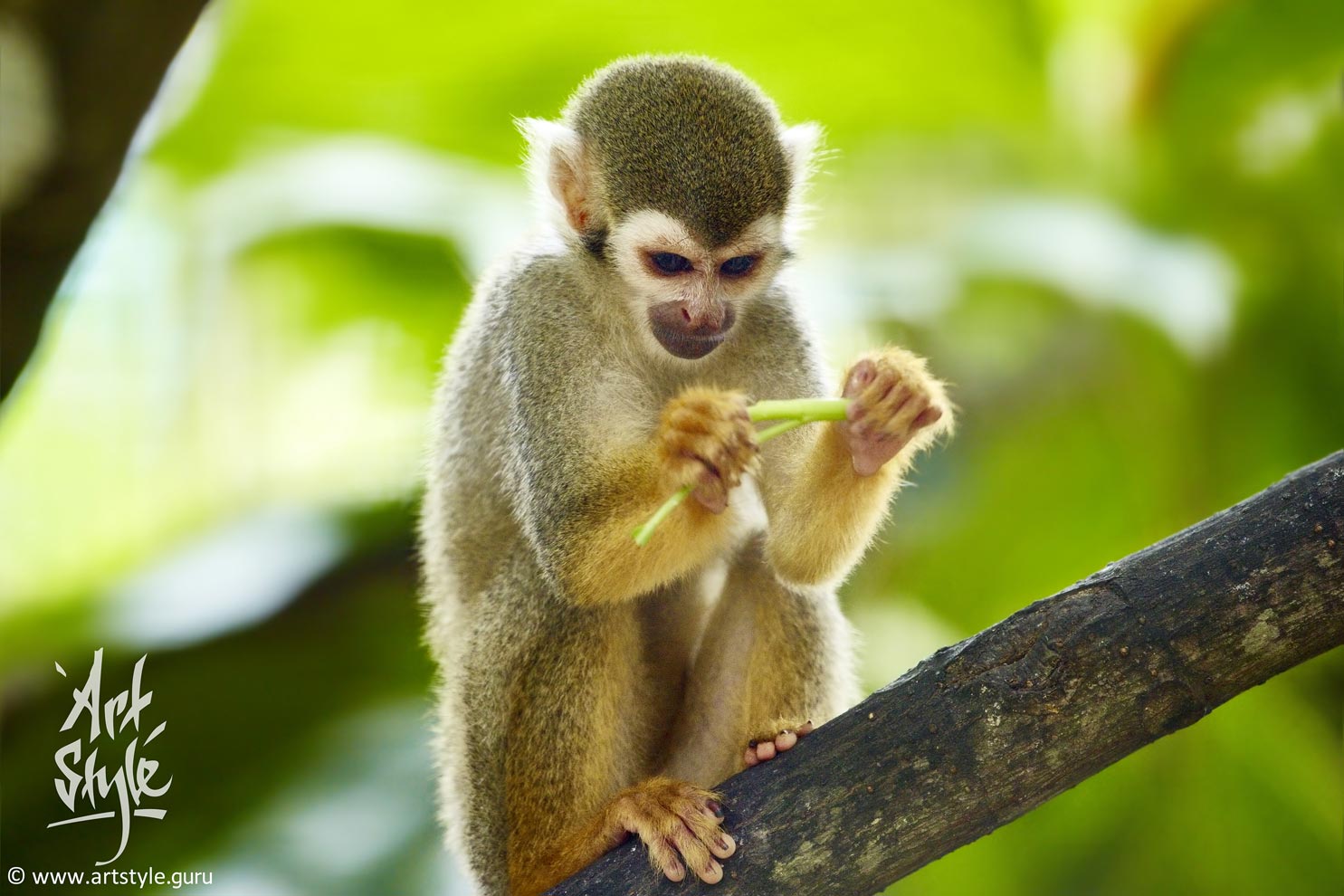
Common Squirrel Monkey
Canon EOS 5D Mark III + EF 100-400/4.5-5.6 L IS II · 400 mm · f/5.6 · 1/200 s · ISO 640
Socially, squirrel monkeys are quite the swingers: their family unit is made up of many males and many females at once, built around the grown mothers and their young. More curious still: by brain-to-body ratio (1/17) the squirrel monkey is the record-holder among primates — roughly twice as “brainy” as a human. Only, an experienced naturalist looking at this frame will sense a catch. And rightly so: that remarkable brain doesn't have a single fold in it.