
Bestiary: hornbills & the big birds
Thailand's big birds are characters first and species second. I shoot them the way you'd shoot people — waiting for the gesture, the look, the small absurdity that gives each one away. Here are the heavyweights: the hornbills first, then the rest of the giants. The name and the camera settings are under each frame; the personalities speak for themselves.
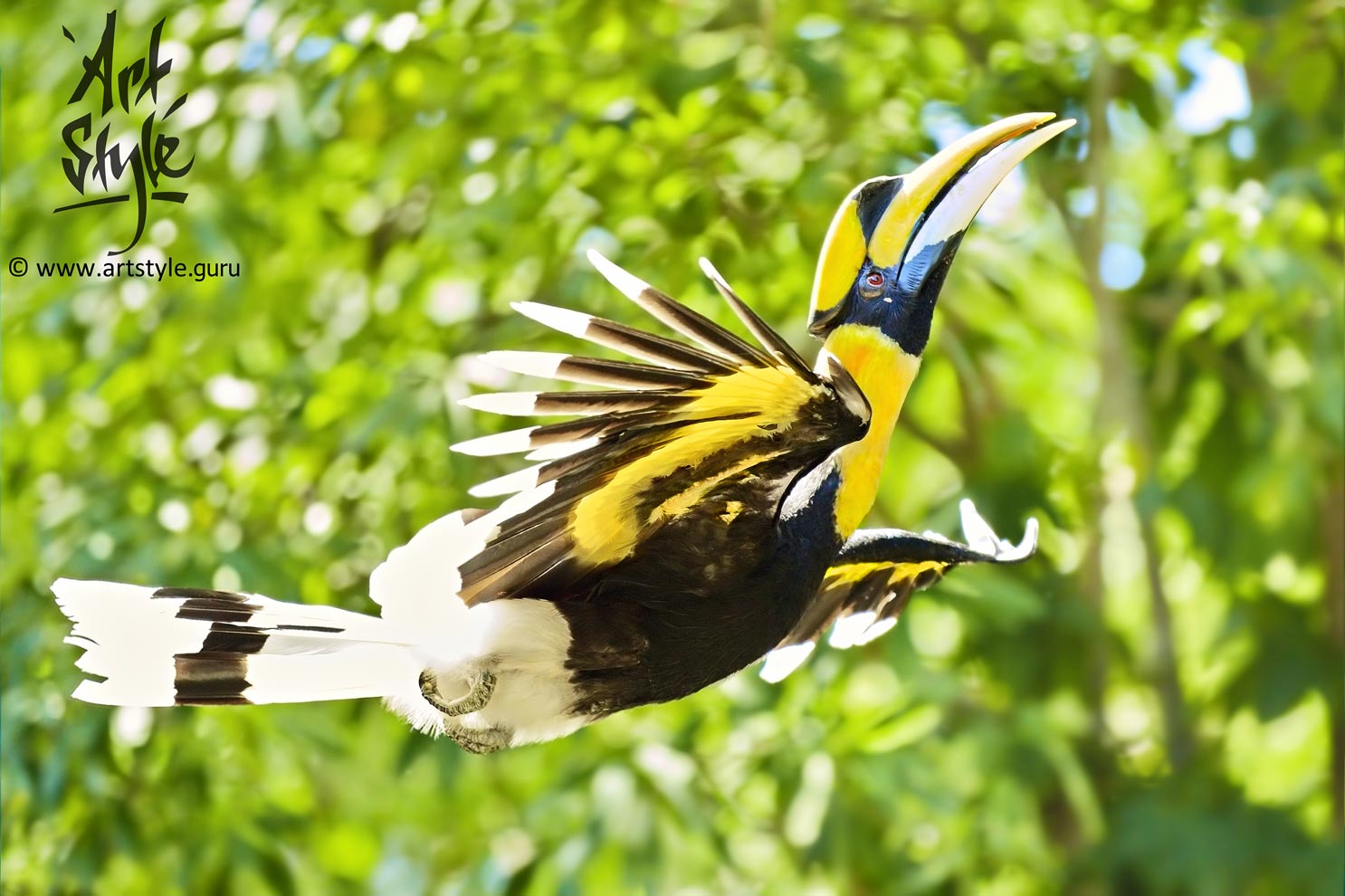
Great Hornbill, male
Canon EOS 5D Mark III + EF 70-200/2.8 L IS II + 1.4 ext III · 280 mm · f/4 · 1/1000 s · ISO 2500
The largest bird in Thailand — up to a metre and a half, and good for fifty years. “I took my run-up… tucked in my legs… spread my feathers… so why won't the thing lift off? I really shouldn't have eaten so much before take-off.” There's a tender piece of engineering to these birds: while building the nest the male brings the female twigs and odds and ends, and she, for want of cement, binds it all together with her own droppings. Then — wise creature — he walls her in, leaving just a hole big enough to pass the food he forages through, so she can concentrate on the eggs and not be distracted by shopping. Obviously, however much she might fancy one, a Louis Vuitton bag is never getting through that hole.
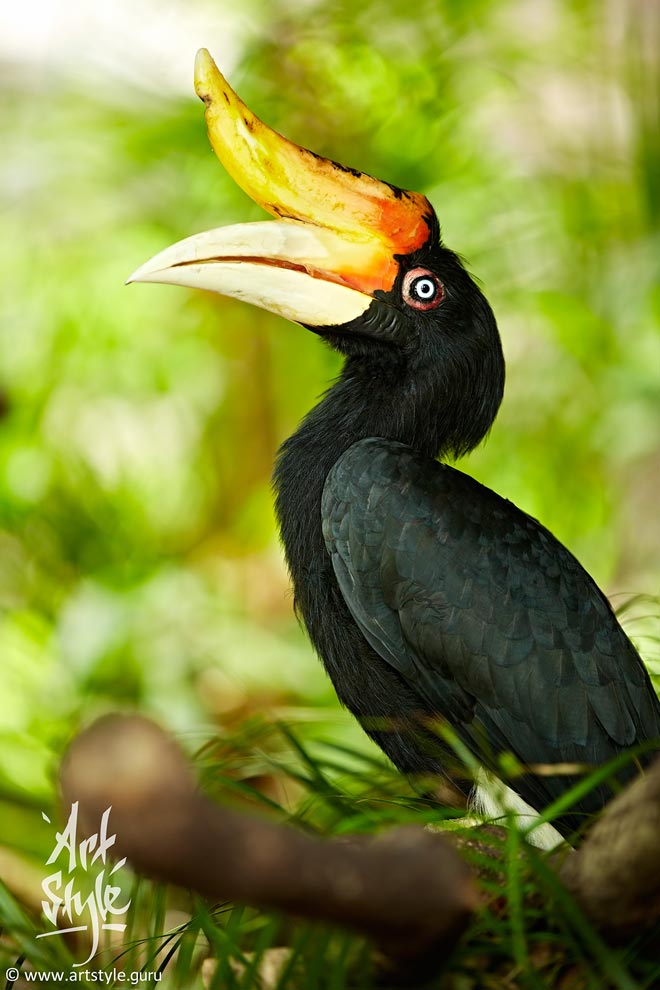
Rhinoceros Hornbill, female
Canon EOS 5D Mark III + EF 70-200/2.8 L IS II · 200 mm · f/2.8 · 1/50 s · ISO 640
Yes, female — that formidable casque notwithstanding. Courtship and the bond matter enormously here: she has to trust him to bring her everything while she's sealed away incubating and raising the chicks. And look closely — the casque is all nicks and scars, because she fought more than one battle with rival females over her male. As with people, worthy males run scarcer than worthy females, so the competition for them is fierce.
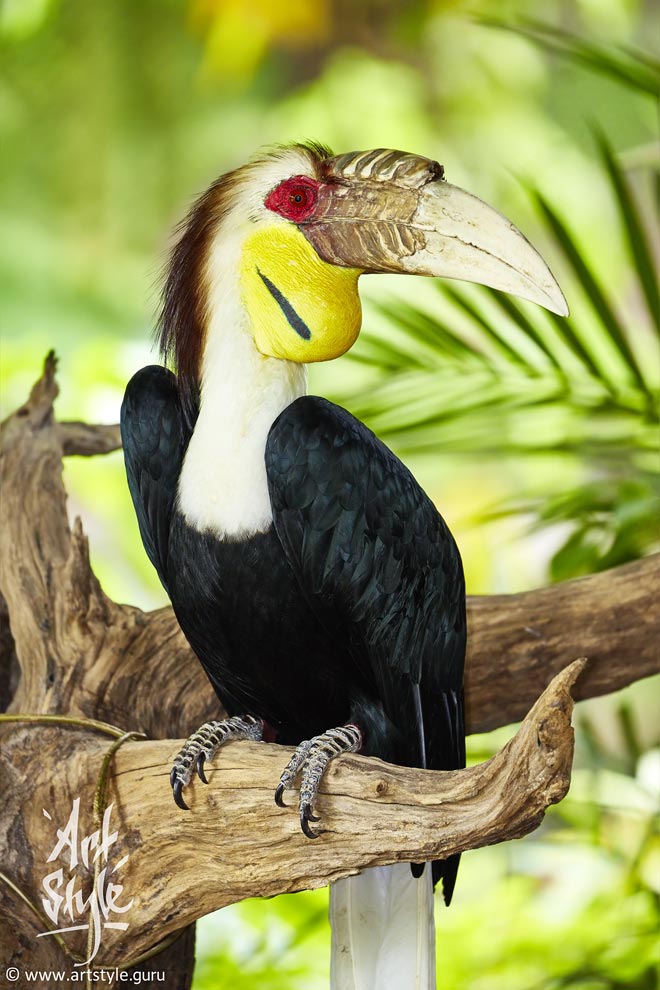
Wreathed Hornbill, male
Canon EOS 5D Mark III + EF 100-400/4.5-5.6 L IS II · 400 mm · f/5.6 · 1/200 s · ISO 1250
Hornbills can't hollow out a tree themselves, so they have to find a cavity of the right size. Once he's found one, the male invites the female to inspect the future home; if the place suits her, mating follows nearby. (By a strikingly similar algorithm, incidentally, courtship proceeds in big cities — Moscow, for instance.) A male who can't produce a cavity simply… doesn't get the girl. Rejected and desperate, he'll sometimes try to chisel one out himself — as this fellow did; you can see it in the beak, worn down to half its length. What can you do — the housing question has ruined better men than him.
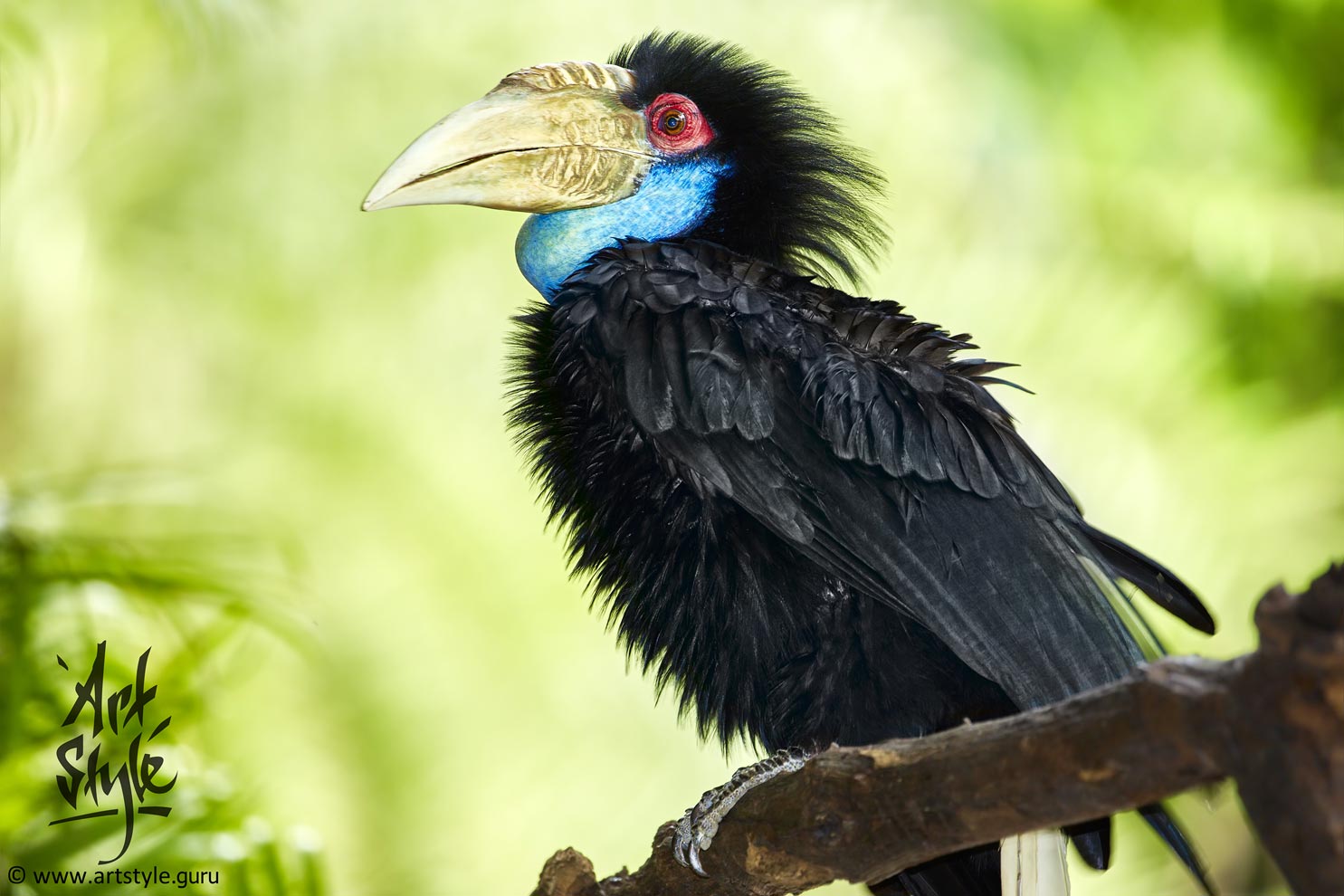
Wreathed Hornbill, female
Canon EOS 5D Mark III + EF 100-400/4.5-5.6 L IS II · 400 mm · f/5.6 · 1/50 s · ISO 320
The species ranges through the forests from far north-eastern India and Bhutan, east and south across mainland Southeast Asia to the Greater Sundas; she runs 75–100 cm and weighs anywhere from 1.4 to 2.7 kg. Wreathed hornbills settle their quarrels by inflating the bare skin of the throat in a threat display — bigger “chin” wins. Perhaps in that same tradition, a good many important human bosses acquire a second chin. The truly important ones manage a third.
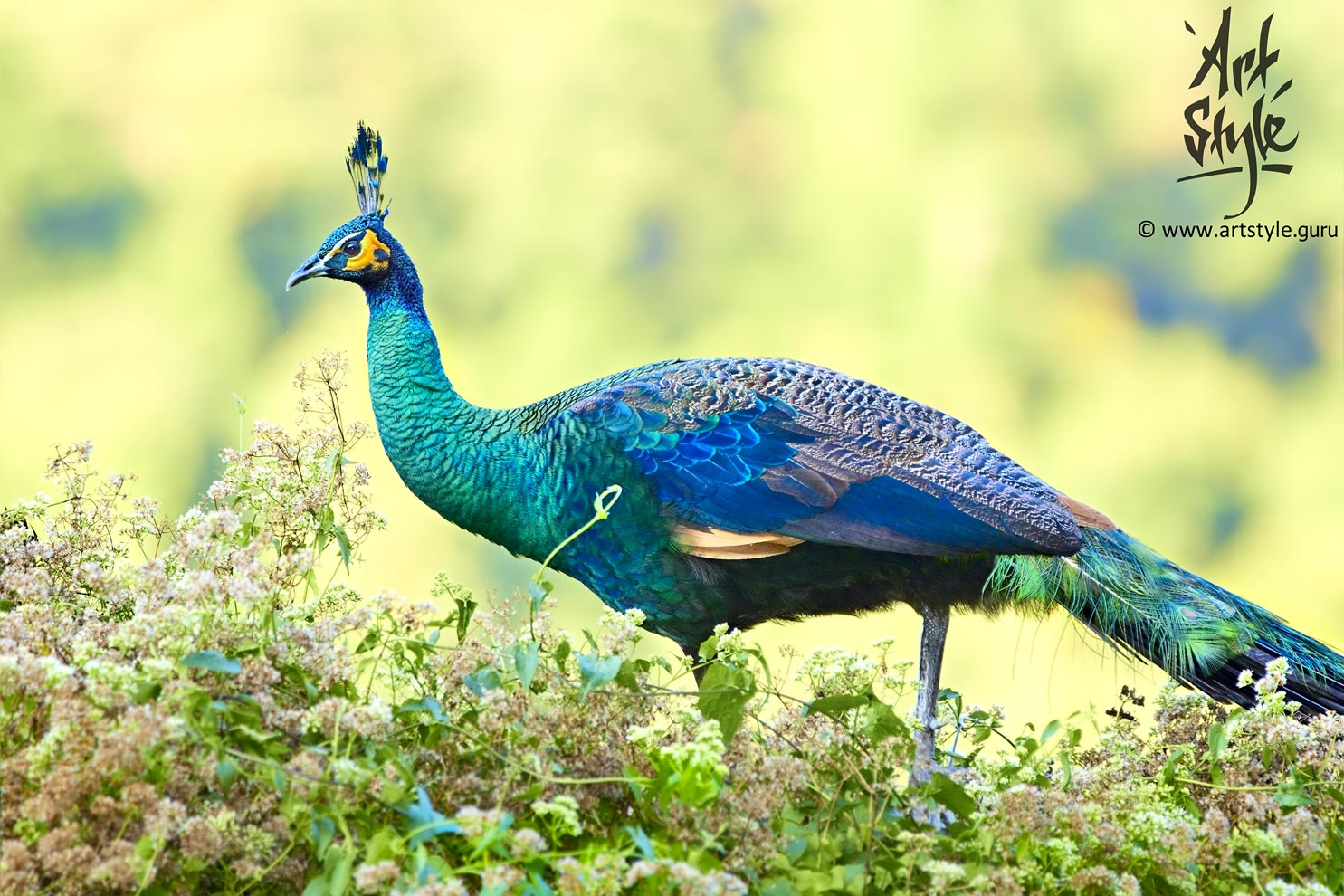
Indian Peafowl, female
Canon EOS M + EF 70-200/2.8 L IS II + 1.4 ext III · 280 mm · f/4 · 1/200 s · ISO 400
She's straightening the marital bed — the one she shares with the other wives, because peacocks are polygamous (which is why a handsome man is said to be “like a peacock”). Her husband, meanwhile, is striding off somewhere on important business. Almost certainly back to the harem.
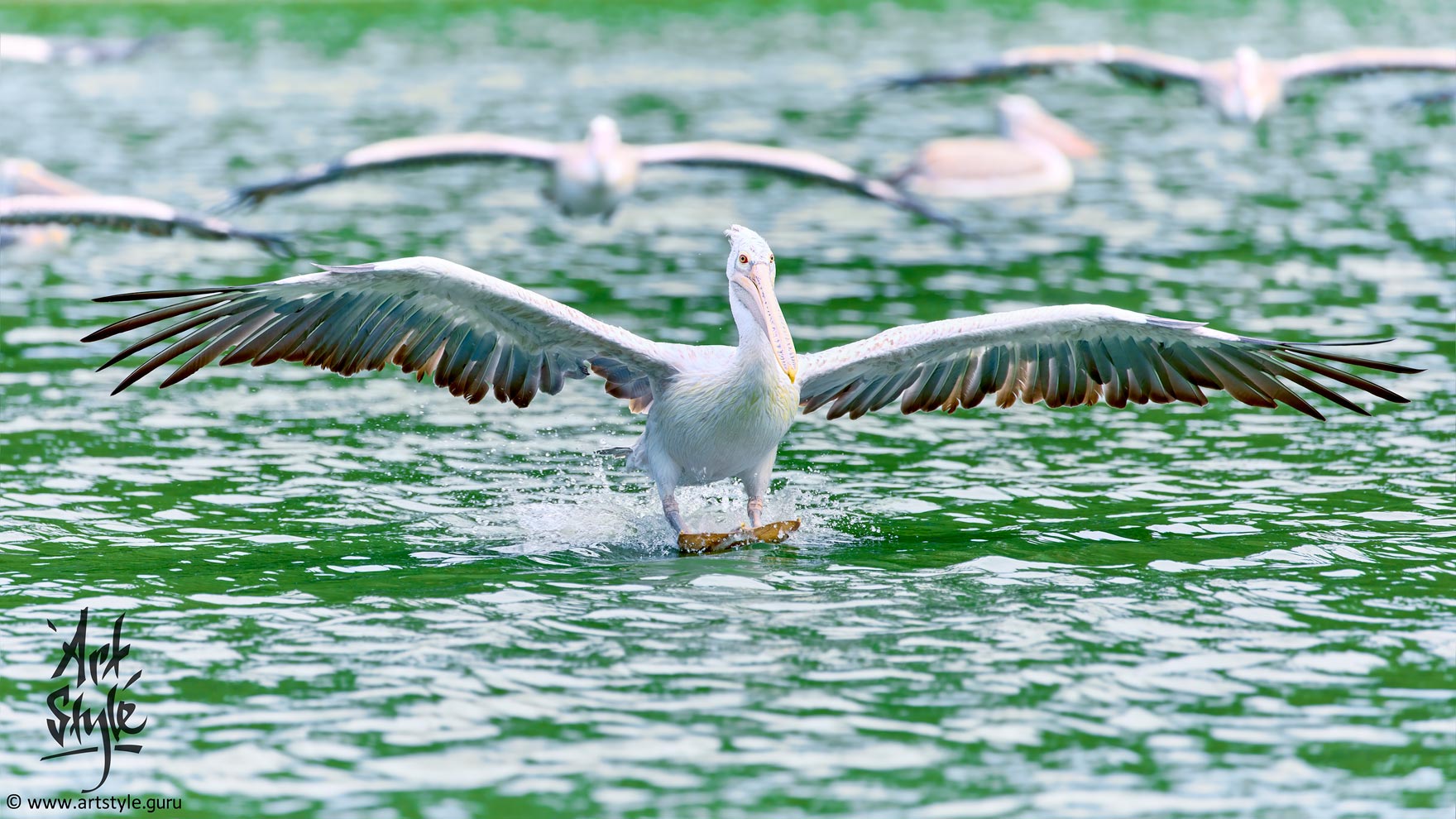
Spot-billed Pelican
Canon EOS R5 + EF 100-400/4.5-5.6 L IS II · 400 mm · f/5.6 · 1/800 s · ISO 400
It breeds across southern Asia, from southern Pakistan through India to Indonesia — a bird of big lakes and coastal water; on the small side for a pelican, but a large bird all the same at 125–152 cm and four to six kilos. Here he's putting on an aerobatics display for a prospective mate, and the practical female approves — a show is a show, but he might also snag a fish on the way. The funny thing: for all his standing as a water bird, a pelican physically cannot dive — too light, too full of air. There is, technically, one method: take off, build up speed, and belly-flop into the water along a parabola with everything you've got. After which, if he comes round from the shock before the fish he stunned on impact does, he gets dinner.
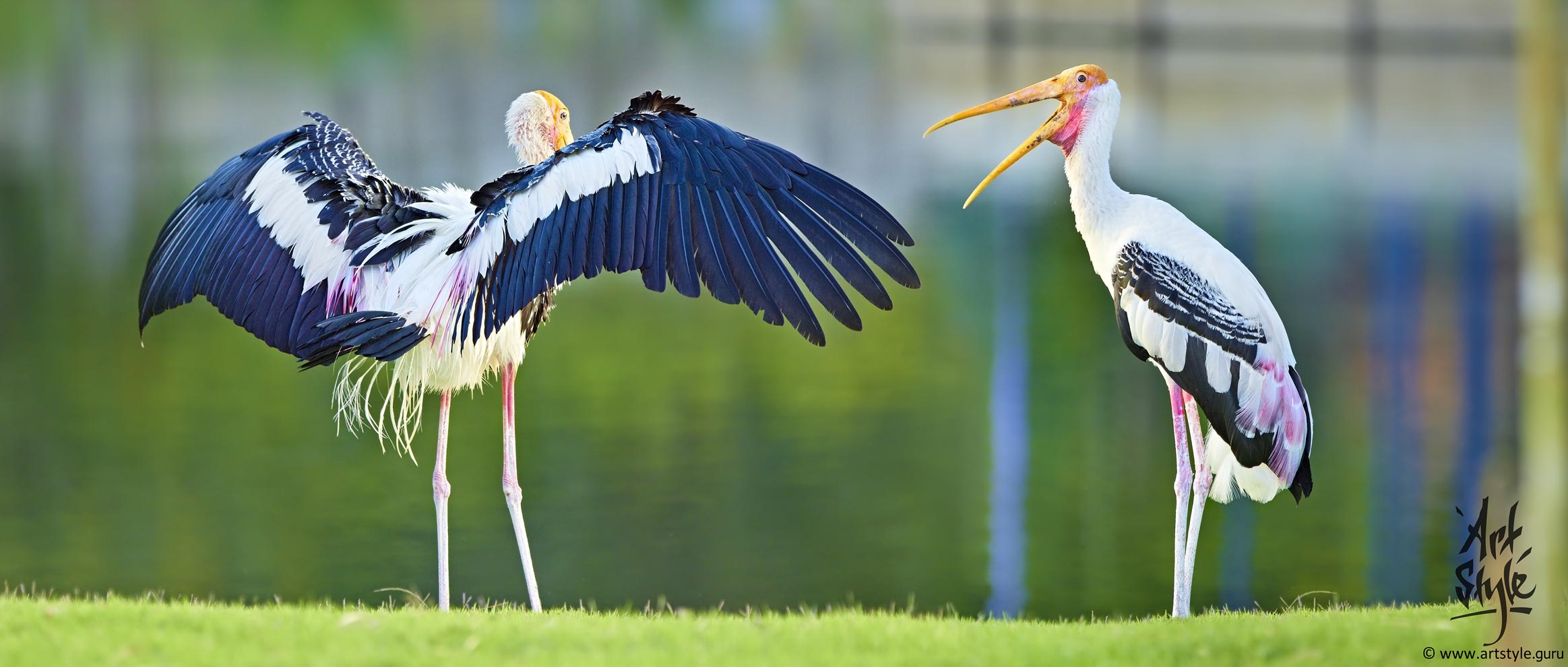
Painted Storks, a couple
Canon EOS M + EF 70-200/2.8 L IS II + 1.4 ext III · 280 mm · f/4 · 1/160 s · ISO 400
The male is demonstrating what a fine father he'd make to the future chicks; the female is, frankly, taken aback. As you can see, the urge to flaunt one's assets isn't confined to gentlemen in raincoats in quiet parks.
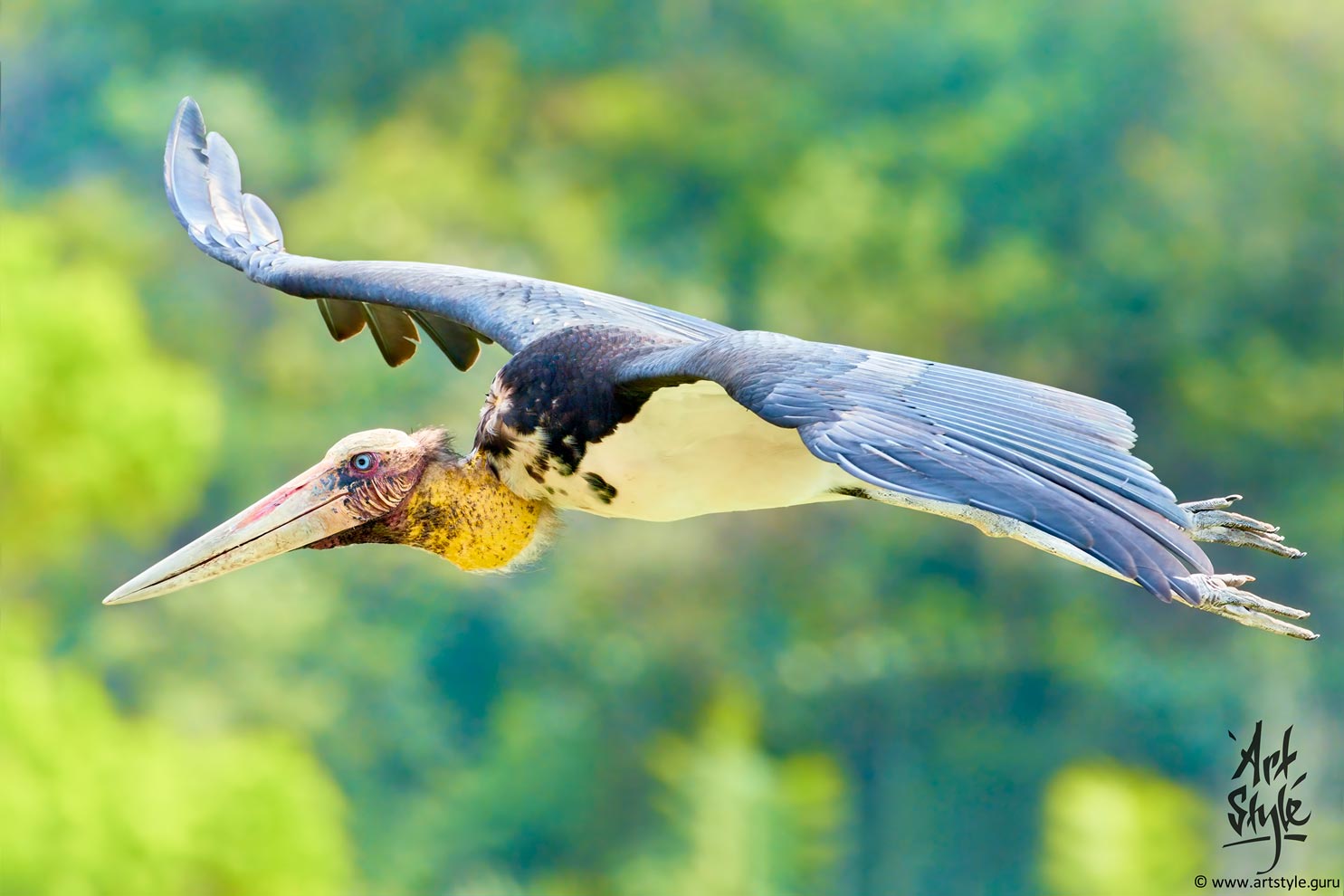
Lesser Adjutant
Canon EOS 7D Mark II + EF 70-200/2.8 L IS II + 1.4 ext III · 400 mm · f/5.6 · 1/1250 s · ISO 800
An evil genius in breeding plumage — the Professor Moriarty of the avian underworld — and even now, you can tell from the eyes, it's scheming. Hatching plans. Somebody's dinner, most likely.
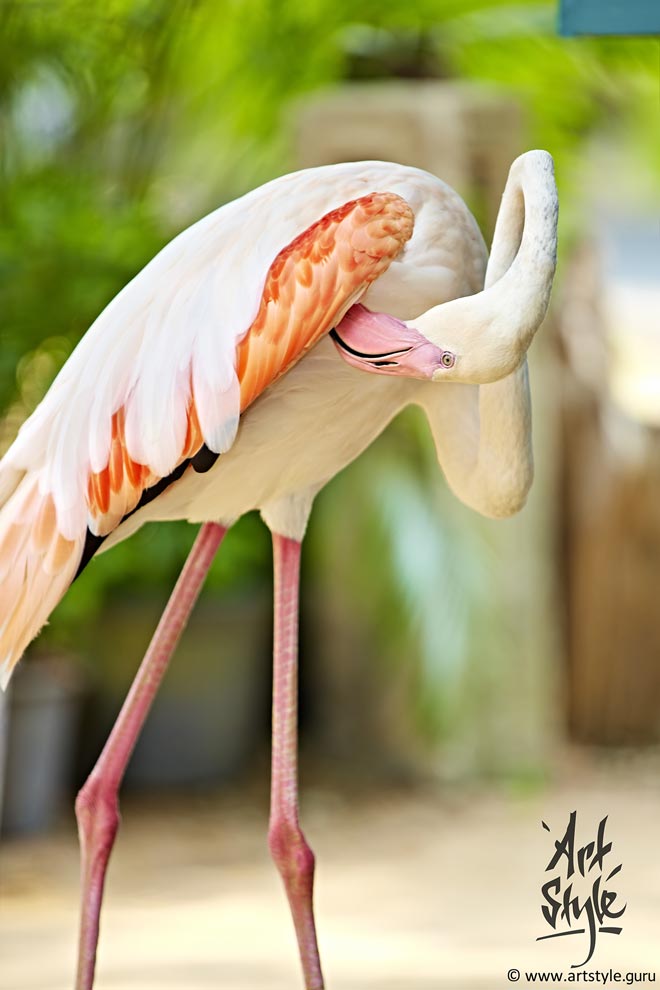
Greater Flamingo
Canon EOS 5D Mark III + EF 70-200/2.8 L IS II · 200 mm · f/2.8 · 1/125 s · ISO 320
At its ablutions in a full yoga pose. That intense colour is a good sign — it means the bird is eating well and healthily. They also say the finest golf clubs are fashioned from flamingo. (They say a lot of things.)
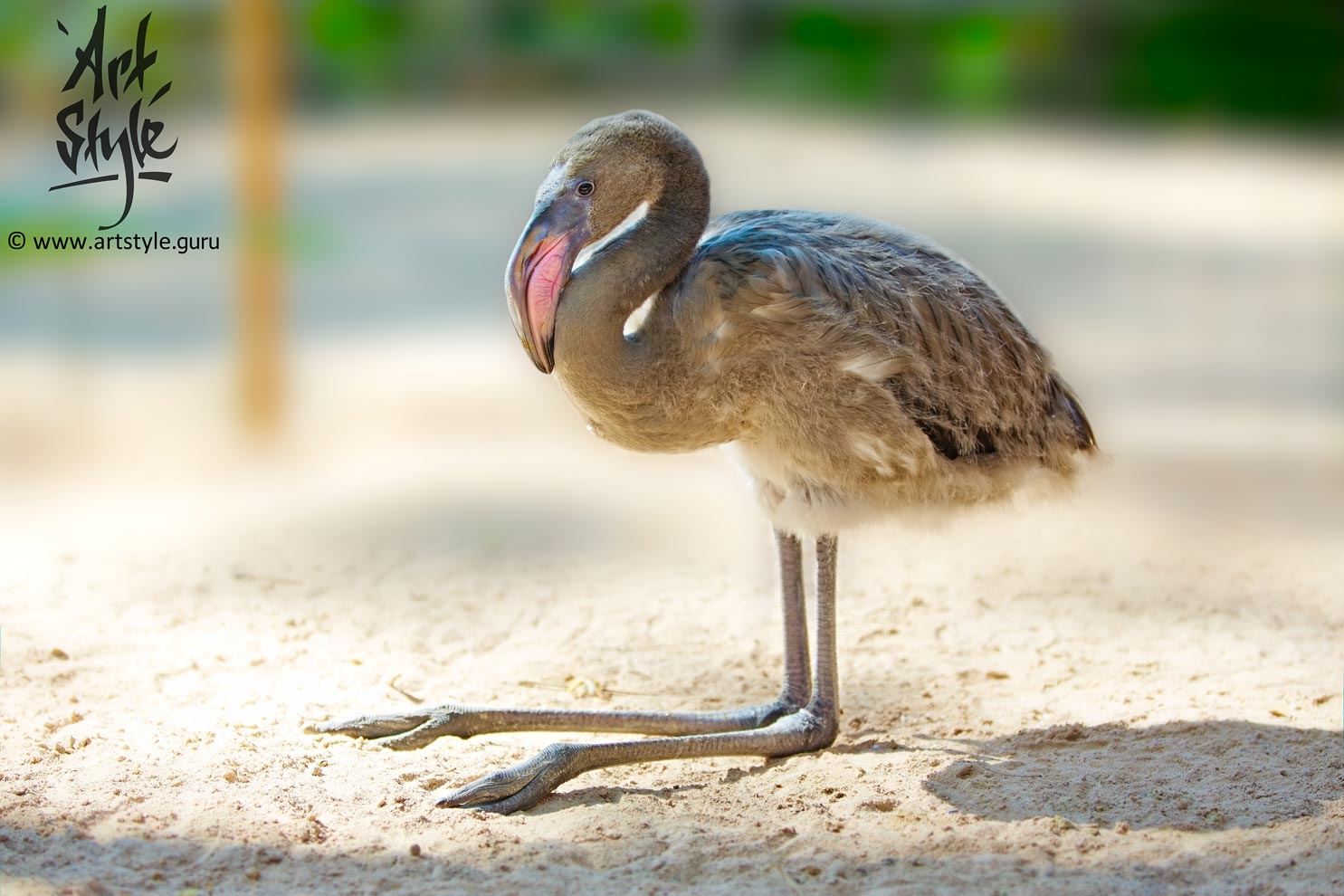
Greater Flamingo, a chick
Canon EOS 5D Mark III + EF 70-200/2.8 L IS II + 1.4 ext III · 98 mm · f/4 · 1/160 s · ISO 320
Four months old. He won't trade this grey for pink until he's three, and these birds can live past eighty — more than the average citizen of Belarus can count on. Flamingos have the longest legs relative to body length of any bird; the trouble is they're terribly fragile. This little one's are broken — the result of a brawl with the other chicks.